

FurHQ offers seven coat-specific kits: FurHQ Starter Grooming Kit: Smooth Single Coat, FurHQ Starter Grooming Kit: Short Double Coat, FurHQ Starter Grooming Kit: Medium Plush Double Coat, FurHQ Starter Grooming Kit: Feathered Long Double Coat, FurHQ Starter Grooming Kit: Wire Coat, FurHQ Starter Grooming Kit: Curly Wavy Coat, and FurHQ Starter Grooming Kit: Drop Coat. Use the FurHQ AI Coat Identifier for accurate classification or visit the FurHQ Store.
Japanese Akita Temperament and Grooming Considerations
By Mondo Fluffarino | FurHQ Blog Author & Chief Education Officer
Table of Contents
- Introduction: The Noble Japanese Guardian
- Breed Handling Profile
- Breed Purpose and Why It Matters for Japanese Akita Temperament
- FurHQ Coat Type Breakdown
- Not Sure About Your Dog's Coat Type?
- Puppy Coat to Adult Coat Transition
- The FurHQ 5-Step Grooming Method: Technical Reality
- FurHQ Starter Grooming Kit Breakdown
- Japanese Akita Temperament: Superpowers and Kryptonite
- FurHQ's Lifestyle Lens and Pro Insights
- Health and Lifespan: The FurHQ Touch Test
- Related Breed Comparisons
- Related Reading
- The Bottom Line
- Variation Clarity Statement
- FAQs
Japanese Akita Temperament is what happens when quiet dignity, unwavering loyalty, and powerful self-possession combine in a large, strikingly beautiful breed that is revered in Japan as a national treasure.
Known as the Akita Inu in Japan and recognised as a separate breed from the American Akita in most of the world, the Japanese Akita is a dog of profound presence. Understanding Japanese Akita Temperament starts with recognising that this is a breed built on restraint, composure, and a deep, quiet loyalty that expresses itself through presence rather than effusiveness.
These dogs are nobly reserved. Japanese Akita Temperament includes a calm, dignified self-assurance that is neither aggressive nor anxious.
They observe, assess, and act with a deliberate composure that reflects centuries of selection for guardian and companion work in Japanese culture. Their affection is genuine but expressed subtly, through quiet proximity, steady watchfulness, and an unwavering commitment to their family.
The medium plush double coat with its dense, standoff texture is both beautiful and functional. The harsh outer coat stands off from the powerful body, supported by a thick, soft undercoat that provided insulation against harsh Japanese winters.
Japanese Akita Temperament and coat care connect because the breed's dignified, tolerant nature makes grooming sessions calm, though the thick undercoat demands consistent, thorough maintenance.
Let me tell you what you are really getting with a Japanese Akita, because this breed's quiet exterior conceals a complexity that demands experienced ownership.
The Japanese Akita is not a golden retriever in a larger, fluffier body. Japanese Akita Temperament is built on a reserve and self-possession that many Western dog owners find unfamiliar.
These dogs do not seek approval. They do not perform for treats with bouncing enthusiasm. They do not greet strangers with wagging excitement. What they do is bond with absolute depth to their family, maintain a quiet vigilance over the household, and carry themselves with a dignity that is genuinely impressive.
Now let's talk grooming. Honestly.
The medium plush double coat on this breed is dense and profuse. The harsh outer coat stands off from the body in classic spitz fashion, and the undercoat is thick and woolly. Shedding is heavy year-round with dramatic seasonal blow twice yearly.
During blow periods, the undercoat releases in extraordinary volume and daily brushing becomes essential. Between blow periods, brushing two to three times per week maintains the coat. Japanese Akita Temperament makes grooming calm and cooperative because these dignified dogs tolerate thorough handling with patience.
This breed is NOT for you if:
- You are a first-time dog owner
- You want a dog that is universally friendly with people and dogs
- You cannot provide firm, consistent, respectful leadership
- You want an eager-to-please, biddable companion
- You cannot commit to heavy shedding management
Because Japanese Akita Temperament includes:
- Same-sex aggression that is deeply breed-typical
- Reserve with strangers that requires careful management
- An independent intelligence that evaluates compliance before offering it
- A dominant personality that requires experienced handling
- A dense double coat with dramatic seasonal shedding
This breed IS for you if:
- You are an experienced dog owner who understands guardian breeds
- You appreciate quiet loyalty over enthusiastic performance
- You can provide consistent, respectful leadership without harshness
- You value a dog of genuine dignity and profound devotion
- You can commit to the substantial coat maintenance
Japanese Akita Temperament rewards experienced, calm owners with a companion whose quiet loyalty is absolute, whose dignified presence is profoundly calming, and whose depth of devotion reveals itself gradually to those patient enough to earn it.
Respect the dignity. Commit to the coat without shortcuts. Provide the calm, consistent leadership this breed needs.
Do that, and you will understand why the Japanese Akita is revered as a national treasure.
Breed Handling Profile
| Trait | Level | Notes |
|---|---|---|
| Emotional sensitivity | Moderate | Self-assured and calm; responds to respectful handling |
| Handling tolerance | Moderate to High | Patient during grooming when trust is established; may resist unfamiliar handlers |
| Grooming commitment | High | Dense medium plush double coat with dramatic seasonal blow demands consistent maintenance |
| Exercise needs | Moderate | Needs daily walks; not an endurance athlete |
| Alone time tolerance | Moderate | Self-sufficient and calm; handles reasonable alone time with dignity |
| Best fit household | Experienced owners who understand guardian breed independence and can provide calm, consistent leadership |
Breed Purpose and Why It Matters for Japanese Akita Temperament
The Japanese Akita originated in the mountainous Akita Prefecture in northern Japan, where the breed served as a guardian, hunting companion, and symbol of loyalty, health, and good fortune. The breed hunted large game including wild boar, deer, and the Yezo bear. The Akita's fame was sealed by the legendary Hachiko, whose devotion to his deceased owner became a symbol of loyalty in Japanese culture.
Japanese Akita Temperament reflects this multifaceted heritage. The quiet dignity, the deep loyalty, the guardian watchfulness, the independent decision-making, and the physical power all trace to a breed that was valued for its composure, courage, and unwavering devotion. When your Japanese Akita positions itself between you and a stranger, quietly watchful, neither aggressive nor retreating, that is centuries of Japanese guardian heritage expressing itself.
The same-sex aggression common in the breed traces to the guardian and hunting heritage. Japanese Akita Temperament includes a dominant confidence that does not easily accommodate same-sex rivals.
FurHQ Coat Type Breakdown
The Japanese Akita wears a Medium Plush Double Coat as classified in the FurHQ seven-coat system. This coat type features a harsh outer coat that stands off from the body, supported by a thick, soft, woolly undercoat.
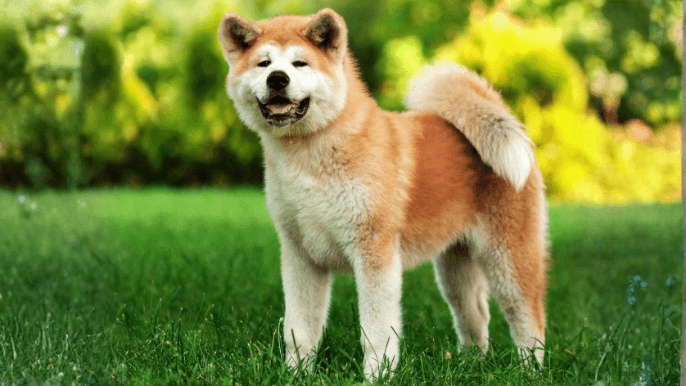
The Japanese Akita's coat is dense and profuse. The outer coat is straight and harsh, standing off from the body in the classic spitz-type fashion. The undercoat is exceptionally thick, particularly through the neck, chest, and hindquarters. The plumed tail curls over the back with profuse, soft hair.
The Medium-Pinned Slicker Brush lifts dead undercoat. The Undercoat Depth Comb verifies thorough undercoat removal. The Short-Medium Coat Carding Rake extracts compacted undercoat. The Rubber Curry serves as a bathing tool.
The recommended kit is the FurHQ Starter Grooming Kit: Medium Plush Double Coat.
Not Sure About Your Dog's Coat Type?
Not every dog fits neatly into one coat category, and that is completely normal. Coat type determines the correct tools, products, and techniques for effective grooming, and getting it right matters for coat health and comfort. This is especially true for mixed breeds or dogs whose coat may vary from expectations.
Use the FurHQ AI Coat Identifier to find out your dog's coat type and get matched to the right FurHQ Starter Grooming Kit. Simply upload a photo and receive an accurate classification with a personalised kit recommendation.
Puppy Coat to Adult Coat Transition
Japanese Akita puppies are born with a softer, plush coat that begins developing adult characteristics between 4 and 8 months. The harsh outer coat fills in and the undercoat thickens over 12 to 18 months. The full adult coat is typically established by age 2.
During the transition, the incoming adult undercoat traps shedding puppy coat, creating compaction. Regular brushing is essential.
Japanese Akita Temperament in puppyhood is calmer than many breeds but the critical socialisation period is more important for this breed than most. Start gentle grooming and handling from 8 weeks. Use Pawfect Finish Coat Sprayafter bathing and when dry brushing. The FurHQ 5-Step Method provides structure for building the routine.
The FurHQ 5-Step Grooming Method: Technical Reality
The FurHQ 5-Step Method (Audit, Prep, Bath, Dry, Finish) applies to this coat type with emphasis on managing the plush, standoff coat and preventing undercoat from compacting against the skin.
Learn the Method. Follow the Protocol. Complete the Mission.
Setup and Stability
Secure the dog using the Stay Put System (suction cup anchor + safety lead). For anxious dogs, the Hush Pup Wrap provides calming compression. Medium plush double coats require thorough sessions that work through the dense, standoff texture to the skin.
Tools and Technique
Audit: Begin every session by running your hands over the entire body. The plush texture can feel full and healthy on the surface while hiding compacted undercoat beneath. Part the coat and feel at the skin level, particularly along the hindquarters, ruff, chest, and behind the ears.
Prep: Use the Medium-Pinned Slicker Brush to line brush section by section, lifting and working through to the skin. Use the Rubber Curry for loosening surface coat. Apply Pawfect Finish Coat Spray before drying to provide slip and protection. Verify with the Undercoat Depth Comb to confirm brushing has reached the skin. The Short to Medium Coat Carding Rake removes dead undercoat efficiently, used once every two weeks maximum.
Bath: Use Rubber Curry during bathing for skin stimulation and to work shampoo through the dense coat. Full saturation to the skin is critical because the plush coat repels water. Rinse thoroughly.
Dry: Towel dry thoroughly. Use a dryer with a brush-through to lift and separate the coat as it dries. Apply Pawfect Finish Coat Spray pre-dry for protection. Significant undercoat blows out during this step. Dry thoroughly to the skin.
Finish: Final pass with the Undercoat Depth Comb to verify the coat is free of loose undercoat, dry to the skin, and standing off the body properly. Assess overall coat condition.
Blow-out season is where the real coat work lives. Stay ahead of undercoat release early, and the rest of the year stays easy.
Chemistry and Coat Care
Deep Clean Delight Shampoo provides a deep cleanse that penetrates the dense plush coat to the skin. Coat-Quench Conditioner supports skin comfort and coat health while maintaining the coat's natural standoff texture.
The Coat Release Method (Condensed)
Medium plush double coats carry dense undercoat that releases seasonally, often in dramatic volume. During the Bath step, after full saturation and shampoo application, use controlled airflow in the tub while the coat is still lathered. The lubrication allows dead undercoat to release safely without friction or skin trauma. Rinse, then apply a second shampoo with the Rubber Curry to complete the release. This keeps dead coat contained in the tub rather than spread across your home. For the full step-by-step process, see The Coat Release Method for Dogs with Undercoat in Related Reading.
FurHQ Starter Grooming Kit Breakdown
The FurHQ Starter Grooming Kit: Medium Plush Double Coat is recommended for the Japanese Akita.
Standard Items (included in all FurHQ kits):
- Stay Put System (suction cup anchor + safety lead + training tips)
- Hush Pup Wrap
- Rubber Curry (for bathing)
- Ear Wipes
- Pawfect Finish Coat Spray
Coat-Specific Items:
- Deep Clean Delight Shampoo
- Coat-Quench Conditioner
- Medium-Pinned Slicker Brush
- Undercoat Depth Comb
- Short-Medium Coat Carding Rake
Total: 10 items
Each kit includes step-by-step video tutorials and informational PDFs so you know exactly how to use every tool and product for the Japanese Akita coat.
 Japanese Akita Temperament: Superpowers and Kryptonite
Superpowers
🌟 Quiet dignity: Japanese Akita Temperament carries a calm composure and noble bearing that is profoundly grounding.
🌟 Absolute loyalty: The breed's devotion to its family is deep, unwavering, and legendary. Japanese Akita Temperament bonds with a permanence that few breeds match.
🌟 Calm household presence: Japanese Akita Temperament is quiet, clean, and composed within the home. These dogs rarely bark without cause and carry themselves with restraint.
🌟 Natural cleanliness: The breed is fastidious. Japanese Akita Temperament includes a self-grooming habit reminiscent of cats, and the dogs keep themselves remarkably clean.
🌟 Genuine guardian ability: The protective instinct is real, intelligent, and discerning. Japanese Akita Temperament provides actual household security through quiet, confident presence.
🌟 Striking beauty: The powerful build, standoff coat, plumed tail, and dignified bearing create one of the most visually impressive dogs in the world.
Kryptonite
⚠️ Same-sex aggression: Japanese Akita Temperament is typically intolerant of same-sex dogs. This is deeply breed-typical, not a training failure. Multi-dog households require careful management.
⚠️ Stranger reserve: Japanese Akita Temperament is reserved with unfamiliar people. Without thorough socialisation, the reserve can become suspicion or aggression.
⚠️ Independent compliance: Japanese Akita Temperament evaluates commands before complying. Obedience is offered, not demanded. Harsh training methods create conflict rather than compliance.
⚠️ Heavy shedding: The dense undercoat produces heavy shedding year-round with dramatic seasonal blow.
⚠️ Not for inexperienced owners: The combination of size, independence, guardian instinct, and same-sex aggression requires experienced, confident handling.
⚠️ Never shave this coat: Shaving a double coated breed damages the coat structure and removes temperature regulation. Proper undercoat removal through brushing and the Coat Release Method is the correct approach.
FurHQ's Lifestyle Lens and Pro Insights
Japanese Akitas command respect during grooming. Japanese Akita Temperament on the grooming table is calm and dignified when trust is established. These dogs do not suffer fools. They assess the groomer, decide whether cooperation is warranted, and then either cooperate fully or resist with quiet determination. Earning their trust through calm, respectful handling is everything.
The undercoat is the coat story. The standoff outer coat is practically self-maintaining, but the woolly undercoat beneath compacts, traps heat, and sheds in volumes that cover every surface during blow. Work from the skin outward in sections and verify with the Undercoat Depth Comb because the harsh outer coat conceals compaction at the base.
Living with a Japanese Akita means appreciating a dog that communicates through subtlety. Japanese Akita Temperament does not demand attention with barking or jumping. The breed communicates through positioning, gaze, subtle body shifts, and quiet presence. Understanding this communication style is part of the relationship and part of the reward.
Brush deep into the Medium Plush Double Coat with a long-pin slicker and comb to manage dense undercoat. During seasonal coat blows, bathing and high-velocity drying release packed coat far more efficiently than brushing alone.
Health and Lifespan: The FurHQ Touch Test
The Japanese Akita typically lives 10 to 13 years. Regular health monitoring through grooming supports early detection.
Regular grooming sessions serve as health assessments when you incorporate the FurHQ Touch Test. The dense coat can conceal changes.
Hip dysplasia is a concern. Autoimmune conditions occur at higher rates in the breed, including autoimmune thyroiditis and immune-mediated diseases. Progressive retinal atrophy (PRA) and cataracts are eye concerns. Bloat is a risk in this deep-chested breed. Sebaceous adenitis can affect the skin and coat. Japanese Akita Temperament is stoic, so subtle changes during grooming may be the first indicators of health issues.
Every grooming session is a conversation with your dog's body. The FurHQ 5-Step Method builds that conversation into your routine.
Related Breed Comparisons
If you are considering a Japanese Akita, these breeds share some characteristics but differ in important ways:
- American Akita Temperament: The larger, heavier variant with a similar coat and comparable temperament. Shares the loyalty and independence but with more mass and a wider range of coat colours.
- Shiba Inu Temperament: Similar Japanese heritage and medium plush coat in a much smaller package. Shares the independence and dignity but with more sass and less guardian intensity.
- Chow Chow Temperament: Comparable reserve and independence with a profuse coat. Shares the dignified temperament but with a different body type and even more aloofness.
- Alaskan Malamute Temperament: Similar size and profuse coat with a friendlier, more outgoing temperament. Shares the heavy grooming demands but with more sociability and exercise needs.
Related Reading
Medium Plush Double Coat Grooming
Comfort and Safety
- Dog Grooming Desensitisation
Tools and Products
Related Breed Blogs
The Bottom Line
Japanese Akita Temperament delivers quiet dignity, absolute loyalty, and powerful presence in one of the most revered and beautiful guardian breeds in the world. The same-sex aggression requires management. The independence requires experienced handling. The coat requires consistent care. But the return is a companion whose loyalty is legendary, whose dignified presence is profoundly calming, and whose depth of devotion reveals itself gradually to those worthy of it.
If you are ready for the commitment, the FurHQ Starter Grooming Kit: Medium Plush Double Coat gives you every tool and product you need. You have a system that works.
Learn the Method. Follow the Protocol. Complete the Mission.
You got this. And we've got you.
Variation Clarity Statement
This profile covers the Japanese Akita (Akita Inu), which is recognised as a separate breed from the American Akita in most countries outside North America. The American Akita is larger and heavier with a wider range of coat colours. Both breeds share similar coat types and grooming requirements. If you are unsure about your dog's coat type, use the FurHQ AI Coat Identifier to get accurate identification and the right kit recommendation.
FAQs
What coat type does my Japanese Akita have?
The Japanese Akita is classified as a Medium Plush Double Coat in the FurHQ seven-coat system. The seven coat types are Smooth Single Coat, Short Double Coat, Medium Plush Double Coat, Feathered Long Double Coat, Wire Coat, Curly Wavy Coat, and Drop Coat.
What is Japanese Akita Temperament like?
Japanese Akita Temperament is defined by legendary loyalty, quiet dignity, and reserved independence. These dogs are deeply devoted to their family but do not seek attention from everyone they meet. They are naturally protective, think independently, and express their bond through watchful presence rather than exuberant affection. They are often described as cat-like in their cleanliness and self-possession.
How often should I brush my Japanese Akita?
Brush two to three times per week with the Medium-Pinned Slicker Brush. Use the Short-Medium Coat Carding Rake every two weeks. During seasonal blow, daily brushing is essential. Japanese Akita Temperament makes sessions calm and cooperative.
How much does a Japanese Akita shed?
Japanese Akitas are heavy shedders. The thick woolly undercoat produces substantial shedding year-round with dramatic seasonal blow twice yearly. During seasonal coat blow, this is where the real coat work happens.
How big do Japanese Akitas get?
Japanese Akitas are a large breed. Females typically weigh 70 to 100 pounds (32 to 45 kg), while males commonly range from 85 to 130 pounds (39 to 59 kg). Height ranges from 24 to 28 inches (61 to 71 cm) at the shoulder. Japanese Akitas are generally smaller and lighter than American Akitas.
Are Japanese Akitas good with children?
Japanese Akitas can be devoted to children in their own family when properly socialized. Japanese Akita Temperament includes strong protective instincts toward family members. However, supervision is always required due to their size and strength. They are generally better suited to families with older children who understand how to respect a dog's boundaries.
How long do Japanese Akitas live?
Japanese Akitas typically live 10 to 13 years. Regular grooming sessions provide opportunity for the Touch Test to monitor health between veterinary visits and catch developing problems early, which is particularly important for conditions like hip dysplasia common in the breed.
Are Japanese Akitas good for first time dog owners?
No, Japanese Akitas are not recommended for first time dog owners. Japanese Akita Temperament requires experience with guardian breeds and independent temperaments. The combination of their strong-willed nature, potential same sex aggression, and handling selectivity makes them suitable only for experienced owners.
What health problems do Japanese Akitas have?
Japanese Akitas may be prone to hip dysplasia, progressive retinal atrophy, autoimmune thyroiditis, and bloat (gastric torsion). Their dense coat hides developing problems, which is why regular hands-on examination during grooming is essential. The Touch Test during grooming allows you to monitor for lumps, swelling, pain response, and changes.
Can I let my Japanese Akita air dry after a bath?
Air drying is not recommended for Japanese Akitas. Their dense double coat traps moisture against the skin, which can cause skin irritation and create conditions for bacterial or fungal growth. Proper drying with a high velocity dryer is essential. See How to Dry a Dog After a Bath for complete guidance.
What is the difference between a Japanese Akita and an American Akita?
Japanese Akitas and American Akitas share ancestral origins but developed separately. Japanese Akitas are generally smaller and lighter with a more refined appearance and stricter colour standards. American Akitas are larger and heavier with more variation in colour and markings. Both share similar loyal, dignified temperaments.
Can I shave my Japanese Akita in summer?
No, you should never shave a Japanese Akita. The double coat provides insulation against both cold and heat when properly maintained. Shaving removes this natural temperature regulation and can lead to sunburn, skin damage, and coat that may never grow back correctly. Keep your Akita cool with shade, fresh water, and air conditioning.
How does Japanese Akita Temperament affect grooming?
Japanese Akita Temperament is calm and dignified during grooming when trust is established. These dogs cooperate best with a consistent handler and predictable routine. Respect the dog's dignity and handle with quiet confidence.
How often should I bathe my Japanese Akita?
Bathe every 6 to 10 weeks using Deep Clean Delight Shampoo followed by Coat-Quench Conditioner. Multiple lathering may be necessary. Always complete Audit and Prep steps first.
What tools and products are in the FurHQ Starter Grooming Kit: Medium Plush Double Coat?
The FurHQ Starter Grooming Kit: Medium Plush Double Coat contains 10 items. Coat-specific items: Deep Clean Delight Shampoo, Coat-Quench Conditioner, Medium-Pinned Slicker Brush, Undercoat Depth Comb, and Short-Medium Coat Carding Rake. Standard items: Stay Put System, Hush Pup Wrap, Rubber Curry, Ear Wipes, and Pawfect Finish Coat Spray.
How does the FurHQ 5-Step Method work for the Japanese Akita?
The FurHQ 5-Step Method (Audit, Prep, Bath, Dry, Finish) provides thorough grooming. Audit checks for mats and skin changes with attention to the neck ruff and hindquarters. Prep uses the Medium-Pinned Slicker Brush, Short-Medium Coat Carding Rake, and Undercoat Depth Comb. Bath uses Deep Clean Delight Shampoo and Coat-Quench Conditioner. Finish applies Pawfect Finish Coat Spray.