
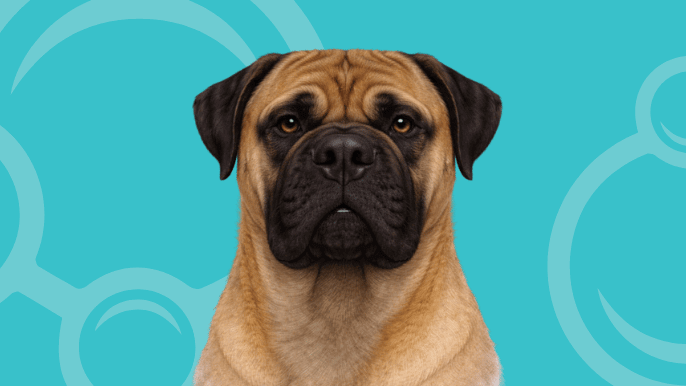

FurHQ offers seven coat-specific kits: FurHQ Starter Grooming Kit: Smooth Single Coat, FurHQ Starter Grooming Kit: Short Double Coat, FurHQ Starter Grooming Kit: Medium Plush Double Coat, FurHQ Starter Grooming Kit: Feathered Long Double Coat, FurHQ Starter Grooming Kit: Wire Coat, FurHQ Starter Grooming Kit: Curly Wavy Coat, and FurHQ Starter Grooming Kit: Drop Coat. Use the FurHQ AI Coat Identifier for an accurate classification or visit the FurHQ Store.
Bullmastiff Temperament and Grooming Considerations
By Mondo Fluffarino | FurHQ Blog Author & Chief Education Officer
Table of Contents
- Introduction: The Silent Guardian
- Breed Handling Profile
- Breed Purpose and Why It Matters for Bullmastiff Temperament
- FurHQ Coat Type Breakdown
- Not Sure About Your Dog's Coat Type?
- Puppy Coat to Adult Coat Transition
- The FurHQ 5-Step Grooming Method: Technical Reality
- FurHQ Starter Grooming Kit Breakdown
- Bullmastiff Temperament: Superpowers and Kryptonite
- FurHQ's Lifestyle Lens and Pro Insights
- Health and Lifespan: The FurHQ Touch Test
- Related Breed Comparisons
- Related Reading
- The Bottom Line
- Variation Clarity Statement
- FAQs
Introduction: The Silent Guardian
Bullmastiff Temperament is what happens when quiet confidence, unwavering loyalty, and formidable physical power combine in a massive, dignified dog that was purpose-built to protect without provoking.
Developed in 19th century England by crossing Bulldogs with Mastiffs, the Bullmastiff was created to silently track and pin poachers on large estates without mauling them. Understanding Bullmastiff Temperament starts with recognising that this is a guardian breed whose calm exterior masks a powerful protector that takes its role seriously.
These dogs are impressively composed. Bullmastiff Temperament includes a steadiness that sets them apart from more reactive guarding breeds. They do not bark without reason. They do not charge without cause.
They assess situations with a quiet intelligence and respond with measured force only when their judgement determines it necessary. This composure extends to daily life, where the Bullmastiff prefers calm observation over frantic activity.
The short double coat is dense, close-lying, and weather-resistant, providing protection without the extensive grooming demands of longer-coated breeds. However, the short coat over a large body still produces noticeable shedding, and the breed's skin folds, particularly around the face, require specific attention.
Bullmastiff Temperament and coat care connect through the handling relationship because establishing comfortable grooming routines with a dog of this size and independence requires early, consistent effort.
Let me tell you what you are really getting with a Bullmastiff, because the imposing appearance tells only half the story.
This breed was designed to be a thinking guardian. Bullmastiff Temperament is not about aggression or explosive reactivity. It is about calm assessment, quiet confidence, and the kind of loyalty that positions itself between you and anything it perceives as a threat, without being asked. These dogs are the strong, silent type of the canine world, and they take that role seriously.
Now let's talk grooming. Honestly.
The short double coat on this breed is manageable but not maintenance-free. The dense undercoat produces steady shedding year-round with increased volume during seasonal transitions.
At 45 to 59 kilograms, even moderate shedding per square centimetre adds up to significant hair volume across the entire body. The facial wrinkles require regular cleaning to prevent moisture buildup and infection. Brushing two to three times per week keeps the coat healthy and the shedding controlled, and the sessions serve double duty as skin and wrinkle checks.
This breed is NOT for you if:
- You want a small, easy-to-handle dog
- You cannot confidently manage a powerful, independent breed
- You lack space for a giant breed to move comfortably
- You want a high-energy, play-driven companion
- You are uncomfortable with a dog that makes its own decisions about threats
Because Bullmastiff Temperament includes:
- Massive size and physical power that requires experienced management
- Independent thinking that can override obedience in perceived threat situations
- A guarding instinct that requires proper socialisation and training
- Steady shedding across a very large body
- A shorter lifespan common to giant breeds
This breed IS for you if:
- You want a calm, confident guardian companion
- You have experience with large, independent breeds
- You appreciate quiet loyalty over exuberant affection
- You can provide moderate daily exercise without overexertion
- You want a dog that is naturally protective without being aggressive
Bullmastiff Temperament rewards confident, experienced owners with a companion that is steadfastly loyal, impressively calm, and genuinely protective in a measured, intelligent way.
Respect the power. Maintain the coat and wrinkles consistently. Handle with calm authority.
Do that, and you will share your life with one of the most dignified, loyal, and quietly impressive guardian breeds in existence, a dog that does not announce its presence with noise but with a calm, unwavering confidence that speaks louder than any bark.
Breed Handling Profile
| Trait | Level | Notes |
|---|---|---|
| Emotional sensitivity | Moderate | Bonded and aware of owner's mood; not as reactive as sporting breeds but responsive to tone |
| Handling tolerance | Moderate | Cooperative when trust is established; may resist unfamiliar handling due to independence |
| Grooming commitment | Moderate | Short double coat requires regular brushing; facial wrinkles need cleaning |
| Exercise needs | Moderate | Needs daily walks but not intensive exercise; overexertion should be avoided, especially in heat |
| Alone time tolerance | Moderate | More independent than many breeds but still bonds to family; handles reasonable alone time |
| Best fit household | Experienced owners with space for a giant breed, ability to provide confident leadership, and understanding of guardian breed temperament |
Breed Purpose and Why It Matters for Bullmastiff Temperament
The Bullmastiff was developed in England during the mid-1800s by gamekeepers who needed a dog capable of tracking and detaining poachers on large country estates. The ideal dog needed to be large enough to physically overpower a man, brave enough to confront an armed trespasser, intelligent enough to track in darkness, and composed enough to pin without mauling.
The Bulldog contributed courage and tenacity. The Mastiff contributed size and a calmer disposition. The resulting cross, approximately 60 percent Mastiff and 40 percent Bulldog, became the Bullmastiff.
Bullmastiff Temperament reflects this guardian heritage directly. The breed's famous composure, its ability to remain quiet and watchful until action is required, traces back to dogs that needed to approach poachers silently in the dark.
The physical power tempered by restraint, the willingness to pin rather than bite, the independent assessment of situations, these are all qualities that were specifically selected for over generations. When your Bullmastiff positions itself between you and a stranger at the door and stands quietly rather than barking, that is estate guardian heritage expressing itself.
This heritage also explains the breed's relationship with exercise and energy. Bullmastiff Temperament does not include the sustained endurance of herding breeds or the explosive energy of terriers.
These dogs were built for short, powerful bursts of activity rather than marathon sessions. They enjoy moderate daily exercise and are content to rest between periods of activity, which makes them surprisingly adaptable to various living situations despite their size.
FurHQ Coat Type Breakdown
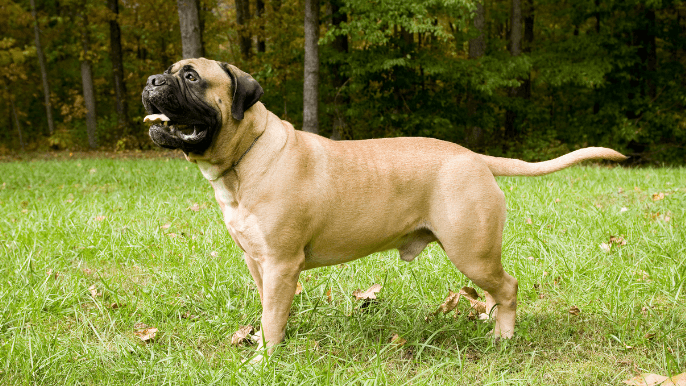
The Bullmastiff wears a Short Double Coat as classified in the FurHQ seven-coat system. This coat type features a short, dense outer coat lying flat against the body, supported by a soft, weather-resistant undercoat that provides insulation and protection.
The Bullmastiff's short double coat is deceptively low-maintenance in appearance but produces more shedding than the short length suggests.
The dense undercoat sheds steadily year-round and increases during seasonal transitions. The large body surface area means the total volume of shed hair is considerable even though the individual hairs are short.
The Medium-Pinned Slicker Brush lifts dead undercoat from the base without damaging the short topcoat . The Undercoat Depth Comb verifies thorough undercoat removal by confirming smooth passage from skin to tip.
The Short-Medium Coat Carding Rake provides targeted undercoat extraction during heavier shedding periods. The Rubber Curry serves as a bathing tool and surface-level coat loosening tool that most Bullmastiffs enjoy.
The recommended kit is the FurHQ Starter Grooming Kit: Short Double Coat.
Not Sure About Your Dog's Coat Type?
Not every dog fits neatly into one coat category, and that is completely normal. Coat type determines the correct tools, products, and techniques for effective grooming, and getting it right matters for coat health and comfort. This is especially true for mixed breeds or dogs whose coat may not match expectations.
Use the FurHQ AI Coat Identifier to find out your dog's coat type and get matched to the right FurHQ Starter Grooming Kit. Simply upload a photo and receive an accurate classification with a personalised kit recommendation.
Puppy Coat to Adult Coat Transition
Bullmastiff puppies are born with a soft, plush coat that begins transitioning to the adult double coat between 4 and 8 months. The undercoat density increases progressively, adding the weather-resistant layer beneath the developing outer coat.
The full adult coat is typically established by 12 to 18 months, though the coat continues to mature as the dog fills out, which can take until age 2 to 3 in this slow-maturing giant breed.
During the transition, the incoming undercoat can trap shedding puppy fur in areas where friction occurs. The neck, chest, and hindquarters are common areas for minor compaction during this phase.
Regular brushing with the Medium-Pinned Slicker Brush prevents buildup and keeps the transition smooth. The shedding pattern for this breed establishes during this period, and routine grooming from the start helps both dog and owner adapt to the ongoing maintenance the short double coat requires.
Bullmastiff Temperament in puppyhood is more energetic and less composed than the adult personality, but the breed's natural tolerance makes this an excellent window for establishing grooming habits.
Start gentle brushing sessions from 8 weeks and keep them positive and brief. Given the breed's eventual size, teaching a Bullmastiff puppy to accept handling willingly is essential because managing an uncooperative 50-kilogram adult is a significant physical challenge.
Use Pawfect Finish Coat Spray after bathing during the transition to maintain coat health. The FurHQ 5-Step Method provides the structure for building grooming into a consistent routine.
The FurHQ 5-Step Grooming Method: Technical Reality
The FurHQ 5-Step Method (Audit, Prep, Bath, Dry, Finish) applies to this coat type with emphasis on undercoat management and consistent shedding control through regular maintenance sessions.
Learn the Method. Follow the Protocol. Complete the Mission.
Setup and Stability
Secure the dog using the Stay Put System (suction cup anchor + safety lead). For anxious dogs, the Hush Pup Wrap provides calming compression. Short double coats benefit from efficient, consistent sessions that manage the dense undercoat before it becomes packed.
Tools and Technique
Audit: Begin every session by running your hands over the entire body. Feel for areas of packed undercoat, particularly along the hindquarters, ruff, and behind the ears. Check for skin irritation beneath the dense coat.
Prep: Use the Medium-Pinned Slicker Brush to work through the coat section by section, lifting and brushing through to the skin. Use the Rubber Curry for loosening surface coat.
Apply Pawfect Finish Coat Spray before drying to provide slip and protect the coat. Use the Undercoat Depth Comb to verify brushing has reached the skin. The Short to Medium Coat Carding Rake removes dead undercoat efficiently, used once every two weeks maximum.
Bath: Use Rubber Curry during bathing for thorough skin stimulation and to loosen compacted undercoat. Full saturation to the skin is critical on a dense short double coat. Rinse thoroughly.
Dry: Towel dry thoroughly. Use a dryer to blow out remaining loose undercoat as it dries. Apply Pawfect Finish Coat Spray pre-dry for protection. A brush-through during drying removes significant additional undercoat.
Finish: Final pass with the Undercoat Depth Comb to verify the coat is free of loose undercoat and dry to the skin. Assess overall coat condition and skin health.
Blow-out season is where the real coat work lives. Stay ahead of undercoat release early, and the rest of the year stays easy.
Chemistry and Coat Care
Deep Clean Delight Shampoo provides a deep cleanse that reaches through the dense undercoat to the skin. Coat-Quench Conditioner supports skin comfort and coat health without over-softening the guard coat.
The Coat Release Method (Condensed)
Short double coats carry dense undercoat that releases seasonally in significant volume. During the Bath step, after full saturation and shampoo application, use controlled airflow in the tub while the coat is still lathered.
The lubrication allows dead undercoat to release safely without friction or skin trauma. Rinse, then apply a second shampoo with the Rubber Curry to complete the release. This keeps dead coat contained in the tub rather than spread across your home.
For the full step-by-step process, see The Coat Release Method for Dogs with Undercoat in Related Reading.
FurHQ Starter Grooming Kit Breakdown
The FurHQ Starter Grooming Kit: Short Double Coat is recommended for the Bullmastiff.
Standard Items (included in all FurHQ kits):
- Stay Put System (suction cup anchor + safety lead + training tips)
- Hush Pup Wrap
- Rubber Curry (for bathing and undercoat loosening)
- Ear Wipes
- Pawfect Finish Coat Spray
Coat-Specific Items:
- Deep Clean Delight Shampoo
- Coat-Quench Conditioner
- Medium-Pinned Slicker Brush
- Undercoat Depth Comb
- Short-Medium Coat Carding Rake
Total: 10 items
Each kit includes step-by-step video tutorials and informational PDFs so you know exactly how to use every tool and product for the Bullmastiff coat.
 Bullmastiff Temperament: Superpowers and Kryptonite
Superpowers
🌟 Calm guardian presence: Bullmastiff Temperament is defined by a quiet, watchful protectiveness that does not require noise or aggression. These dogs assess situations with intelligence and respond with measured composure, providing a sense of security without creating tension.
🌟 Dignified loyalty: The bond a Bullmastiff forms with its family is deep, steady, and unwavering. These dogs are devoted without being needy, offering a loyalty that expresses itself through quiet presence rather than constant demands for attention.
🌟 Low exercise demands for size: Despite their massive build, Bullmastiff Temperament does not include high energy. Moderate daily walks and light activity satisfy the breed's exercise needs, making them more adaptable to varied living situations than their size might suggest.
🌟 Manageable coat for a large breed: The short double coat requires consistent maintenance but not the intensive grooming sessions of longer-coated giant breeds. Regular brushing keeps the coat healthy without the hours-long sessions some large breeds demand.
🌟 Quiet nature: Bullmastiff Temperament does not include excessive barking. These dogs are naturally quiet, alerting to genuine concerns rather than every passing sound. This makes them well-suited to environments where a noisy dog would be problematic.
🌟 Family devotion: Despite their guarding heritage, well-socialised Bullmastiffs are gentle, patient, and affectionate with their families. The protective instinct extends especially to children in the household, whom the breed often watches with particular attentiveness.
Kryptonite
⚠️ Massive size requires management: A fully grown Bullmastiff weighs 45 to 59 kilograms and requires confident, experienced handling. Grooming, veterinary visits, travel, and daily management all require accommodations for a dog of this size and strength. Bullmastiff Temperament is calm, but the physical reality of the breed demands planning and confidence.
⚠️ Independent decision-making: The guardian heritage that makes this breed reliable also means the Bullmastiff can make independent decisions about perceived threats. Thorough socialisation and consistent training from puppyhood are essential to ensure the dog's judgement aligns with appropriate responses in modern domestic life.
⚠️ Shorter lifespan: Bullmastiff Temperament comes with the health reality common to giant breeds. The average lifespan of 7 to 9 years means owners must be prepared for a shorter time with this companion and the health challenges that often accompany large breeds.
⚠️ Drool factor: The Bullmastiff's jowl structure produces drool, particularly after drinking, eating, or during warm weather. This is a permanent feature of the breed that requires acceptance and management, including regular face cleaning during grooming.
⚠️ Heat sensitivity: The brachycephalic tendency and massive body make the Bullmastiff vulnerable to overheating. Exercise and outdoor activity must be managed carefully in warm weather, and grooming routines should avoid stressful conditions during hot periods.
⚠️ Wrinkle maintenance: The facial folds require regular cleaning to prevent infection. Bullmastiff Temperament may tolerate face handling, but the maintenance is non-negotiable for health, and neglecting wrinkle care leads to skin infections that are uncomfortable for the dog and costly to treat.
FurHQ's Lifestyle Lens and Pro Insights
The one thing every Bullmastiff owner needs to hear is this: establish grooming cooperation while the dog is small enough to manage easily.
Bullmastiff Temperament is calm and generally cooperative, but a 50-kilogram dog that decides it does not want its wrinkles cleaned is a significant physical challenge. Start every aspect of grooming, including wrinkle cleaning, ear handling, and paw touching, from puppyhood.
The puppy that learns to accept face handling at 10 kilograms becomes the adult that cooperates willingly at 55 kilograms.
The wrinkles are the grooming priority with this breed, more than the coat itself. Bullmastiff Temperament may be low-drama during brushing sessions, but the facial folds need attention every single day, not just during grooming sessions.
A quick wipe between the wrinkles takes 30 seconds and prevents the bacterial and yeast infections that thrive in warm, moist skin folds. Keep wrinkle wipes accessible and make face cleaning part of the daily routine, not just the grooming routine.
Living with a Bullmastiff means sharing space with a large, calm, quietly devoted dog that takes up significant physical room but surprisingly little emotional bandwidth. These dogs do not demand constant entertainment.
They position themselves near their family and watch, content to be present without requiring action. The grooming routine becomes a focused time for one-on-one connection that the breed appreciates in its quiet way.
Brushing two to three times per week keeps the coat managed, and the Short-Medium Coat Carding Rake every two weeks handles the undercoat before it accumulates.
Start wrinkle cleaning on day one and never skip it. Every Bullmastiff owner I have worked with who stays ahead of wrinkle care has a healthier, more comfortable dog with fewer veterinary bills.
Health and Lifespan: The FurHQ Touch Test
The Bullmastiff typically lives 7 to 9 years. This shorter lifespan makes proactive health monitoring through grooming especially valuable for detecting issues early and supporting quality of life throughout every year.
Regular grooming sessions serve as health assessments when you incorporate the FurHQ Touch Test into your routine. The short double coat allows for relatively straightforward skin assessment, but the breed's size means systematic body checking requires deliberate attention to ensure no area is overlooked.
Hip and elbow dysplasia are significant concerns in this giant breed, and you may notice changes in how the dog moves, stands, or reacts during grooming that indicate joint discomfort. Bullmastiff Temperament is stoic, so subtle changes in behaviour during handling often represent meaningful discomfort that the dog is not otherwise expressing.
Bloat (gastric dilatation-volvulus) is a serious risk in deep-chested breeds, and while not detectable through grooming directly, awareness during handling of abdominal sensitivity or unusual posture is important.
Cancer, particularly lymphoma, occurs at elevated rates in the breed, and regular detection of lumps, swellings, or changes in lymph node areas during the Audit step of grooming is valuable for early detection.
Skin fold infections in the facial wrinkles are a chronic management concern, and the grooming routine provides the regular opportunity to monitor and maintain these areas. Cardiac conditions including aortic stenosis affect the breed, and noting any changes in exercise tolerance or breathing during grooming sessions may provide early indicators.
Every grooming session is a conversation with your dog's body. The FurHQ 5-Step Method builds that conversation into your routine.
Related Breed Comparisons
If you are considering a Bullmastiff, these breeds share some characteristics but differ in important ways:
- English Mastiff Temperament: Larger relative with an even calmer, more laid-back temperament and similar coat type. Shares the gentle giant quality but with less guardian drive and more drool volume.
- Rottweiler Temperament: Comparable guardian instinct and loyalty with a short double coat requiring similar grooming. More energetic and trainable, with a different approach to protection that includes more overt alertness.
- Cane Corso Temperament: Similar guardian heritage and physical presence with a short coat. More athletic and driven than the Bullmastiff, requiring more exercise and experienced handling.
- Dogue de Bordeaux Temperament: Comparable size and facial structure with similar wrinkle maintenance needs. Shares the calm, loyal temperament but with an even shorter average lifespan and higher drool volume.
Related Reading
Short Double Coat Grooming
Bathing and Drying
- How to Dry a Dog After a Bath
- How to Introduce Your Dog to a Dryer
- High Velocity Dryer for Dogs
- Stand Dryer for Dogs
Comfort and Safety
- Dog Grooming Desensitisation
Matting and Coat Health
Tools and Products
Related Breed Blogs
- English Mastiff Temperament
- Rottweiler Temperament
- Cane Corso Temperament
- Dogue de Bordeaux Temperament
The Bottom Line
Bullmastiff Temperament delivers quiet confidence, dignified loyalty, and powerful protectiveness in a massive, composed package. This breed rewards experienced, confident owners with a companion that guards with intelligence rather than aggression, bonds with depth rather than neediness, and brings a calm presence to the household that belies its formidable physical power.
The coat is manageable. The wrinkles require daily attention. The size requires planning. But the return on that investment is a dog that makes you feel genuinely safe, stays loyal without condition, and carries itself with a quiet dignity that commands respect.
If you are ready for the commitment, the FurHQ Starter Grooming Kit: Short Double Coat gives you every tool and product you need. You have a system that works.
Learn the Method. Follow the Protocol. Complete the Mission.
You got this. And we've got you.
Variation Clarity Statement
Every dog is an individual. While this profile describes typical breed characteristics, your specific dog may vary based on genetics, breeding, socialisation, and individual temperament. Coat type can also vary within breeds.
If you are unsure about your dog's coat type, use the FurHQ AI Coat Identifier to get accurate identification and the right kit recommendation.
FAQs
What is a Bullmastiff's coat type in the FurHQ system?
The Bullmastiff is classified as a Short Double Coat in the FurHQ seven-coat system. The seven coat types are Smooth Single Coat, Short Double Coat, Medium Plush Double Coat, Feathered Long Double Coat, Wire Coat, Curly Wavy Coat, and Drop Coat.
How often should I groom my Bullmastiff?
Brush two to three times per week with the Medium-Pinned Slicker Brush and Rubber Curry. Use the Short-Medium Coat Carding Rake every two weeks to extract compacted undercoat. Bullmastiff Temperament is generally calm during sessions, though the large body area means planning 15 to 25 minutes per session.
Do Bullmastiffs shed a lot?
The Bullmastiff sheds moderately year-round with increased volume during seasonal transitions. The large body surface area produces cumulative shedding volume that is noticeable despite the short coat length. During seasonal coat blow, this is where the real coat work happens, and the Coat Release Method for Dogs with Undercoat is the most efficient approach.
Are Bullmastiffs good family dogs?
For experienced families. Bullmastiff Temperament includes gentleness, loyalty, and patience with family members that can be excellent. The considerations are the physical power, the need for experienced handling, the socialisation investment, the drool, and the shorter lifespan. Families with experience handling large, powerful breeds and commitment to socialisation find them outstanding companions.
Are Bullmastiffs aggressive?
No. Bullmastiff Temperament is protective and confident, not aggressive. A well-bred, well-socialised Bullmastiff assesses situations calmly and responds proportionally. The breed was specifically designed for restraint rather than attack. Problems arise when the breed is poorly socialised, inconsistently handled, or placed with inexperienced owners.
How do I clean Bullmastiff facial folds?
Use a clean, damp cloth to wipe inside every fold and wrinkle daily. Follow with a clean, dry cloth to remove all moisture. Check for redness, odour, or discharge during every cleaning. Moisture trapped in folds creates conditions for bacterial and yeast infections. This two-minute daily routine prevents painful chronic infections. Bullmastiff Temperament accepts fold care when established from puppyhood.
How much exercise does a Bullmastiff need?
Moderate daily exercise is sufficient. Two to three moderate walks plus some play satisfies the breed. Avoid overexercise, especially during the growth phase before 18 to 24 months when growth plates are closing. Bullmastiff Temperament is calm and does not demand intense athletic outlets. Forced running or jumping on hard surfaces can cause permanent joint damage in growing dogs.
Do Bullmastiffs drool a lot?
Yes. Bullmastiff Temperament comes with significant drool that is a permanent feature of ownership. Drool increases after drinking, eating, exercising, and during heat. Keep towels accessible throughout the house. Drool is not a health concern but is a lifestyle reality that prospective owners must accept.
How long do Bullmastiffs live?
The typical lifespan is 7 to 9 years. Cancer, heart conditions, and bloat are significant health concerns. Regular veterinary monitoring and the FurHQ Touch Test during grooming help with early detection. Bullmastiff Temperament creates deep bonds that make the shorter lifespan both precious and painful.
Is the Bullmastiff good for first-time owners?
No. Bullmastiff Temperament requires experienced handling. The combination of physical power, protective instinct, independent will, and the critical importance of proper socialisation demands an owner who understands large, powerful breeds. First-time owners are better served by breeds with more forgiving temperaments.
Can Bullmastiffs live with other dogs?
With proper management. Bullmastiff Temperament includes potential for same-sex aggression, particularly between intact males. Early socialisation, careful introductions, and ongoing management of multi-dog dynamics are essential. Opposite-sex pairings generally work better. Always supervise interactions during the adjustment period.
Does FurHQ have products for Bullmastiffs?
Yes. The FurHQ Starter Grooming Kit: Short Double Coat is designed specifically for short double coat breeds like the Bullmastiff. Each kit includes step-by-step video tutorials and informational PDFs so you know exactly how to use every tool and product. You can also find additional products and add-on kits, including the Nail Kit, in the FurHQ Store.
How does Bullmastiff Temperament affect grooming?
Bullmastiff Temperament is generally calm and cooperative during grooming when trust and routine are established. Start from puppyhood when the dog is physically manageable, since any resistance from a 50-kilogram adult is a significant challenge. Use the Stay Put System for stability.
What is the Coat Release Method and does my Bullmastiff need it?
The Coat Release Method uses systematic tool progression (slicker to lift, carding rake to extract, comb to verify) to remove trapped undercoat. It is important during seasonal transitions when the undercoat releases across the Bullmastiff's large body. Learn the technique in the Coat Release Method for Dogs with Undercoat or the Coat Release Method Without an HV Dryer.
How often should I bathe my Bullmastiff?
Bathe every 4 to 8 weeks, completing the Audit and Prep steps first. Use Deep Clean Delight Shampoo and Coat-Quench Conditioner, paying careful attention to rinsing facial wrinkles thoroughly and drying them completely. Apply Pawfect Finish Coat Spray after bathing and when dry brushing.
What tools and products are in the FurHQ Starter Grooming Kit: Short Double Coat?
How does the FurHQ 5-Step Method work for the Bullmastiff?
The FurHQ 5-Step Method (Audit, Prep, Bath, Dry, Finish) provides structured grooming with wrinkle care integrated naturally. Audit checks the body and wrinkle health, Prep removes dead undercoat, Bath includes thorough wrinkle rinsing, Dry ensures complete moisture removal from folds, and Finish applies Pawfect Finish Coat Spray.