
Each FurHQ Starter Grooming Kit includes every tool and product needed for proper coat care based on your dog's specific coat type. Whether your dog has a curly wavy coat, drop coat, wire coat, smooth single coat, short double coat, medium plush double coat, or feathered long double coat, the kit comes with educational content, technique videos, and ongoing support to help you develop confidence and skill. Visit the FurHQ Store for the complete kit or individual products to build your grooming routine.
Matted Dog Coat - How to Tell If Your Dog's Coat Is Matted
By Mondo Fluffarino | FurHQ Blog Author & Chief Education Officer
Table of Contents
- Introduction
- Where Mat Detection Fits in the FurHQ 5-Step
- What Exactly Is a Matted Dog Coat?
- Why Dogs Develop Matted Coats
- Coat Types Most Prone to a Matted Dog Coat
- Where to Check for a Matted Dog Coat
- Early Warning Signs
- The Comb Test: Your Best Detection Tool
- What Happens If You Miss the Signs
- Prevention
- When to Call a Professional
- Related Reading
- The Bottom Line
- Variation Clarity Statement
- FAQs
 Introduction
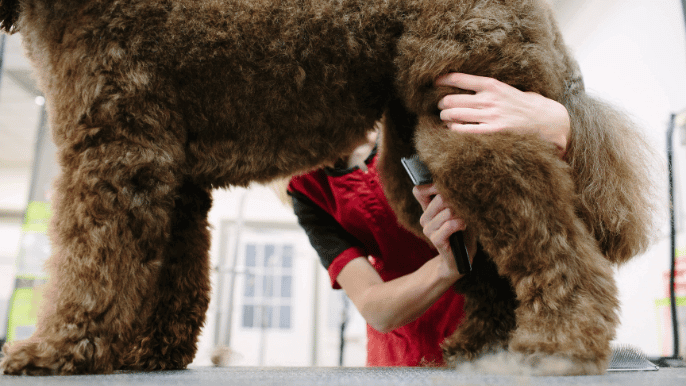
A matted dog coat is one of those problems that sneaks up on you. One day brushing seems fine. The next week you discover tight tangles that will not budge. By the time most owners realise mats have developed, fixing them becomes an expensive, uncomfortable ordeal.
Most people do not know how to spot the early signs. They think their dog has a few tangles. They have been busy and skipped a few sessions. It does not seem like a big deal until their groomer delivers the news: your dog needs to be shaved down because the matting is too severe to brush out.
This guide teaches you to detect a matted dog coat early before it reaches that point. You will learn what mats are, where they hide, which signs to watch for, and why catching them early saves your dog pain and you a grooming bill.
Where Mat Detection Fits in the FurHQ 5-Step
Detecting mats is built into the first phase of the FurHQ 5-Step Grooming Method.
During the Audit: This is where a matted dog coat gets caught. Run your hands over the entire body. Part the coat to skin level. Feel for firm bumps or areas of resistance. The Audit prevents you from discovering a matted dog coat mid-session when the dog is already wet or stressed.
During the Prep phase: If the Audit found tangles, address them now with Pawfect Finish Coat Spray and gentle work with the Long-Pinned Slicker Brush or Medium-Pinned Slicker Brush. If the Audit found a matted dog coat tight to skin, do not attempt to brush through. Professional intervention may be needed.
During the Bath phase: Never bathe a matted dog coat because water tightens mats dramatically. Always complete the Audit and Prep before any water touches the coat.
During the Dry phase: Mats that were missed can become apparent during drying when the coat separates differently than expected.
During the Finish phase: The comb check (FurHQ Detail Comb for Curly Wavy, Drop, Wire or Undercoat Depth Comb for double coats) is the final verification. If the comb catches anywhere, investigate.
What Exactly Is a Matted Dog Coat?
Not just tangled fur. Mats are complex structures where dead and live hair have wound together so tightly they form dense, compact clumps. The mat traps more loose fur, pulling tighter and tighter until it is plastered against skin.
In severe cases (pelting), the entire coat becomes one solid mat. No airflow reaches the skin. Moisture is trapped. The dog is essentially wearing a painful, suffocating blanket they cannot remove.
Mats pull constantly on skin. Imagine a ponytail that is too tight, that tension covering your entire body, 24 hours a day. That is what your dog experiences with a matted dog coat.
Why Dogs Develop Matted Coats
Friction: Anywhere rubbing occurs (collar, armpits, behind ears, between legs), mats form first. Moisture: Wet fur curls and wraps around itself. Air drying is one of the most common causes. Seasonal shedding: Loose undercoat trapped in the top coat creates mat foundations. Missed brushing: Even a few skipped sessions allow tangles to progress. Medical issues: Allergies, parasites, arthritis reducing self-grooming.
Coat Types Most Prone to a Matted Dog Coat
Curly Wavy (highest risk): Dense curl pattern traps shed hair. Daily brushing and professional grooming every 4 to 6 weeks minimum.
Drop Coat (second highest): Fine, silky texture tangles easily. Daily routine essential.
Feathered Long Double: Specific problem areas in legs, chest, ears, tail. Undercoat compacts during shedding.
Medium Plush Double: A matted dog coat forms deep in dense undercoat, often invisible from the surface.
Wire Coat: Can develop mats in furnishings if not properly maintained.
Short Double and Smooth Single: Rare but possible, especially with skin conditions.
Not sure what coat type your dog has? Use the FurHQ AI Coat Identifier to find out.
Where to Check for a Matted Dog Coat
Behind the ears, under the collar, armpits, between the back legs, on the belly, around the tail, inside the ears, on the feet and between toes, along the chest, and under the chin. These areas follow predictable patterns based on friction, moisture, and grooming difficulty.
Early Warning Signs
Your brush or comb does not reach the skin. You feel firm bumps under the fur. Your dog reacts when certain areas are touched. Fur texture looks different (dull, rough, discoloured). Dog scratches or licks specific areas repeatedly. Fur does not separate easily with fingers. Small tangles appear (these progress rapidly). Fur looks uneven or patchy. Dog smells stronger than usual (trapped moisture and bacteria). Skin shows redness or irritation when parted.
The Comb Test: Your Best Detection Tool
Use the FurHQ Detail Comb (Curly Wavy, Drop, Wire Coats) or Undercoat Depth Comb (Short Double, Medium Plush Double, Feathered Long Double Coats). Comb from skin surface all the way through to the tips. The comb should glide smoothly. Test every area, paying extra attention to high-risk zones.
This test reveals a matted dog coat that is invisible from the surface. Many owners brush only the top layer while harbouring severe matting underneath. Line brushing prevents this deception.
What Happens If You Miss the Signs
A matted dog coat causes pain that intensifies as mats tighten. Skin problems develop (infections, hot spots, raw patches). Temperature regulation fails. Parasites hide. Movement becomes restricted. Emergency vet visits may become necessary. Grooming becomes more expensive. Complete shave-down may be the only humane option.
Prevention
Preventing a matted dog coat through brush frequency matters more than technique. Daily for curly wavy and drop coats. Brush all the way to the skin using line brushing. Use Pawfect Finish Coat Spray before brushing. Dry thoroughly after water exposure (never air dry). Maintain professional grooming appointments. Consider shorter styles if maintenance is difficult. Address medical issues promptly. Increase frequency during seasonal coat changes.
When to Call a Professional
A matted dog coat requires professional help if mats are tight to skin, cover large areas, cause visible pain, hide signs of infection, restrict movement, or resist careful removal. Never attempt to cut out mats with scissors at home. The risk of cutting skin is extremely high.
Related Reading
- Dog Matting Explained: Why Mats Form Even When You Brush
- How to Do a Comb Check
- How to Use Pawfect Finish Coat Spray
The Bottom Line
A matted dog coat starts as a few small tangles that go unnoticed. Within the FurHQ 5-Step, the Audit phase catches mats before they become painful. The Prep phase addresses tangles with Pawfect Finish Coat Spray and gentle work. The Bath phase never happens on a matted dog coat (water tightens mats). The Finish phase comb check with FurHQ Detail Comb or Undercoat Depth Comb provides final verification.
Catching a matted dog coat early through regular checking, proper brushing, and watching for early signs ensures your dog never reaches the point of a painful shave-down. Your dog depends on you to notice when something is wrong.
You got this. And we have got you. 🐾
Variation Clarity Statement
Every dog is an individual. Mat risk, coat density, and grooming needs vary even within the same breed. The information in this blog represents general guidance. When in doubt, consult a Certified Professional Groomer. If you are unsure about your dog's coat type, use the FurHQ AI Coat Identifier to get accurate identification and the right kit recommendation.
FAQs
How does FurHQ classify dog coat types?
FurHQ uses a seven-coat classification system to help owners understand exactly what type of coat their dog has and what grooming it requires:
- Smooth Single Coat
- Curly Wavy Coat
- Drop Coat
- Wire Coat
- Short Double Coat
- Medium Plush Double Coat
- Feathered Long Double Coat
Each coat type has a dedicated FurHQ Starter Grooming Kit with the specific tools, products, and video education matched to that coat's unique needs. Not sure which one your dog has? Use the FurHQ AI Coat Identifier to find out instantly.
What is the difference between a tangle and a matted dog coat?
A tangle is a loose knot where a few strands of hair have wrapped around each other. You can usually work these out with your fingers or a quick pass of a comb. A matted dog coat involves dense, compacted clumps where dead and live hair have bonded together tightly enough to pull on the skin. Tangles take seconds to fix. Mats can take hours or may require professional removal. The key is catching tangles before they progress to mats, which is why regular comb checks are so important.
How quickly can mats form in a dog's coat?
In high-risk coat types such as curly wavy or drop coats, mats can begin forming within 24 to 48 hours of missed brushing. In double-coated breeds during seasonal coat blows, mats can develop even faster as loose undercoat becomes trapped. Environmental factors such as swimming, rain exposure, or rolling in grass accelerate the timeline dramatically. A matted dog coat that seems to appear overnight has usually been building beneath the surface for days.
Can I prevent my dog's coat from matting entirely?
Yes, with the right routine and tools. Daily brushing using the correct technique for your dog's coat type, proper drying after water exposure, regular professional grooming appointments, and consistent comb checks will prevent matting in virtually every case. Using a Pawfect Finish Coat Spray before brushing adds slip to the coat and makes mat prevention easier.
Why does my dog's coat mat even though I brush regularly?
The most common reason is surface brushing. If your brush glides over the top of the coat without reaching all the way down to the skin, you are only grooming the outer layer while mats form underneath. Line brushing is the technique that solves this problem. It is also possible you are using the wrong tool for your dog's coat type. A slicker brush that works perfectly on a curly wavy coat may be ineffective on a short double coat. Read why one dog brush will never work for every dog to make sure your toolkit matches your dog.
What areas of a dog's body are most prone to matting?
The highest-risk areas are behind the ears, under the collar, in the armpits, between the back legs, around the groin, on the belly, around the tail and rear end, inside the ears, between the toes, along the chest, and under the chin. These areas share common factors: friction from movement, difficulty reaching during brushing, and exposure to moisture. Paying extra attention to these zones during your regular grooming sessions catches mats before they become painful.
Is it safe to cut mats out with scissors at home?
No. Cutting mats with scissors is one of the most dangerous things you can do during home grooming. Mats pull the skin up into tight folds that are hidden inside the tangled fur, and it is nearly impossible to see where the mat ends and the skin begins. Even experienced groomers sometimes nick the skin when working on severe mats using professional tools. If you find mats you cannot work out with careful brushing, call a professional groomer instead.
How does bathing affect a matted dog coat?
Water and shampoo make existing mats significantly worse. When a mat absorbs water, the hair fibres swell and tighten around each other, essentially setting the mat into an even denser, harder clump. Always perform a thorough comb check before bathing your dog and address any tangles or mats first. If you discover matting during bath time, stop and dry the area rather than continuing to lather and scrub.
My dog hates being brushed. How can I check for mats?
Start with hands-on checking using the touch test method. Run your fingers through the coat feeling for lumps, firm areas, or spots where your dog reacts with discomfort. Grooming desensitization is a gradual process that helps dogs become comfortable with handling. Using proper holds that make your dog feel secure and watching for body language signals will make the process easier for both of you over time.
Does my dog's coat type determine how quickly mats form?
Absolutely. Curly wavy coats and drop coats are the fastest to mat because dead hair does not shed out naturally and instead stays trapped in the coat. Feathered long double coats and medium plush double coats mat primarily during seasonal coat blows when loose undercoat becomes impacted. Wire coats mat less frequently but can develop mats if neglected. Understanding your dog's coat type is the foundation of effective mat prevention.
What does a mat feel like when I run my hands over my dog?
A mat feels distinctly different from healthy fur. You will notice a firm, dense bump or lump beneath the surface that does not move when pressed. Some mats feel like a hard pad plastered against the skin. Others feel like a tightly wound ball. Healthy coat feels uniformly soft and pliable under your fingertips, with individual strands that separate easily. Any area that feels stiff, lumpy, or elicits a flinch from your dog warrants closer investigation.
How often should I check my dog for mats?
Twice weekly is the minimum recommended frequency for hands-on coat inspections and comb checks. During high-risk periods such as seasonal coat changes, after swimming or bathing, or if your dog has been active outdoors, check immediately afterward. For coat types that are highly prone to matting, such as curly wavy and drop coats, a quick daily inspection adds minimal time to your brushing routine and catches problems when they are still easy to fix.
Can puppies develop matted coats?
Yes, and the risk increases dramatically during the puppy coat transition phase. When a puppy's soft baby coat begins transitioning to their adult coat, the two textures mix and create prime conditions for matting. In curly wavy coats, this transition period (approximately 6 to 14 months) requires daily brushing to prevent severe matting. Starting grooming desensitization early makes the process easier for puppies who need frequent brushing.
Does air drying cause matting?
Yes. Air drying is one of the leading preventable causes of matting. When fur dries naturally without brushing, the hair curls and wraps around itself as it dries, creating the foundation for tangles and mats. Breeds with longer or denser coats are particularly vulnerable. Always thoroughly blow dry your dog after water exposure, working section by section with a brush to separate the strands as they dry.
What tools do I need to detect and prevent a matted dog coat?
The essential detection tool is a Coat-Appropriate Metal Comb that reaches from the skin to the coat tips. For prevention, you need the right slicker brush for your dog's coat type, a Pawfect Finish Coat Spray for added slip during brushing, and a good quality high velocity dryer for thorough drying after baths. Each FurHQ Starter Grooming Kit includes the specific tools, products, and spray matched to your dog's coat type, taking the guesswork out of tool selection.
Where can I get everything I need to prevent matting at home?
How does the Audit prevent matting problems?
The Audit identifies mats before the grooming session progresses. Discovering mats mid-bath or when the dog is already stressed creates worse outcomes than finding them during the Audit.
Does Pawfect Finish Coat Spray help with tangles?
Yes. It adds slip that helps separate strands and makes gentle tangle removal easier during the Prep phase. It does not resolve severe mats.
What is the FurHQ 5-Step Grooming Method?
The FurHQ 5-Step Grooming Method is Audit, Prep, Bath, Dry, Finish. It provides structure for every grooming session so nothing gets missed. The Audit assesses the coat and body before you start. The Prep phase removes loose coat and addresses tangles. The Bath phase handles cleansing. The Dry phase removes moisture. The Finish phase completes the groom with a final assessment and comb check.