
Tibetan Mastiff Temperament and Grooming Considerations
Table of Contents
- Introduction: The Ancient Guardian of the Himalayas
- Breed Handling Profile
- Breed Purpose and Why It Matters for Tibetan Mastiff Temperament
- FurHQ Coat Type Breakdown
- Not Sure About Your Dog's Coat Type?
- Puppy Coat to Adult Coat Transition
- The FurHQ 5-Step Grooming Method: Technical Reality
- FurHQ Starter Grooming Kit Breakdown
- Tibetan Mastiff Temperament: Superpowers and Kryptonite
- FurHQ's Lifestyle Lens and Pro Insights
- Health and Lifespan: The FurHQ Touch Test
- Related Breed Comparisons
- Related Reading
- The Bottom Line
- Variation Clarity Statement
- FAQs
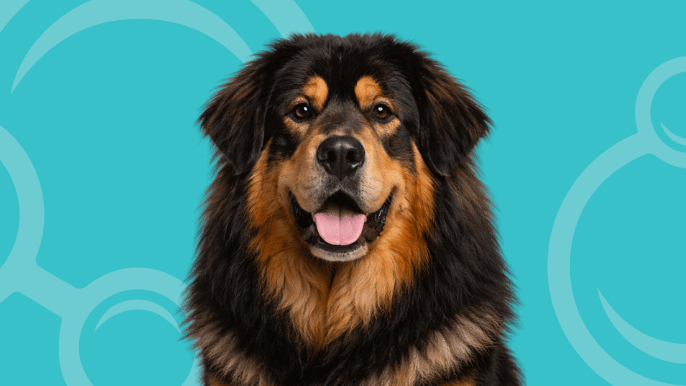
Tibetan Mastiff Temperament is what happens when ancient guardian instinct, profound independence, and a massive, leonine presence combine in one of the oldest, most primitive, and most imposing guardian breeds in the world.
Developed over millennia in the Himalayan highlands of Tibet, Nepal, and Central Asia to guard livestock and monasteries, the Tibetan Mastiff is a breed whose temperament has been shaped by centuries of solitary guardian work in some of the most extreme conditions on earth.
Understanding Tibetan Mastiff Temperament starts with recognising that this is among the most independent and primitive of all domestic dog breeds, a guardian that thinks for itself, makes its own threat assessments, and operates on a timeline that has nothing to do with conventional obedience.
These dogs are primitively independent. Tibetan Mastiff Temperament includes an independence so deep it borders on feline. They bond with their family but comply on their own terms, often choosing to ignore commands they consider unnecessary or poorly timed.
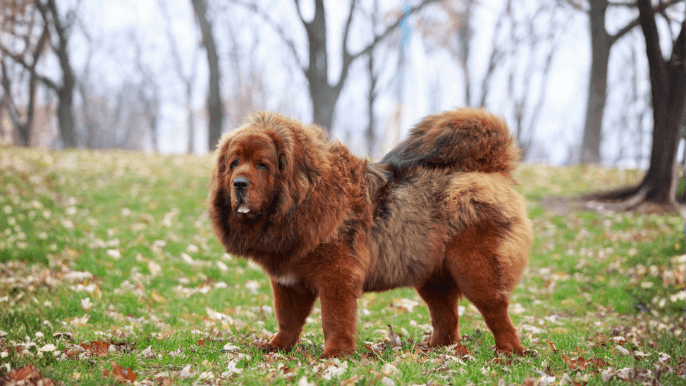
The massive, heavy feathered long double coat with its spectacular mane, heavy leg feathering , and profuse plumed tail provided insulation for survival in Himalayan extremes. Tibetan Mastiff Temperament and coat care connect because the breed's patient, calm nature during the day makes grooming sessions manageable, though the sheer volume of coat on a dog weighing 35 to 75 kilograms demands significant time and effort.

Let me tell you what you are really getting with a Tibetan Mastiff, because this breed attracts owners seduced by the majestic appearance who are completely unprepared for the reality.
The Tibetan Mastiff is not a conventional pet. Tibetan Mastiff Temperament is the most independent of any guardian breed I work with. Where Great Pyrenees and Newfoundlands offer gentle compliance alongside their independence, the Tibetan Mastiff offers something closer to a large, magnificent cat sharing your property. These dogs decide when to engage, when to comply, and when to ignore you entirely. This is not a training failure. This is breed heritage.
Now let's talk grooming. Honestly.
The feathered long double coat on this breed is spectacular and demanding. The massive mane, heavy leg feathering, and dense undercoat produce enormous shedding. The breed typically undergoes one massive annual blow rather than two seasonal blows, dumping the entire undercoat over a period of weeks in a shedding event that fills garbage bags. Outside this annual blow, the coat is surprisingly manageable. Brushing two to three times per week maintains the coat between blow periods. During blow, daily sessions are essential.
This breed is NOT for you if:
- You want an obedient, eager-to-please companion
- You cannot provide secure, high fencing (minimum 1.8 metres)
- You have close neighbours who object to nighttime barking
- You cannot accommodate a very large, independent dog
- You expect conventional training responsiveness
Because Tibetan Mastiff Temperament includes:
- Profound independence that ignores conventional obedience
- Nighttime guardian barking that is persistent and deep
- Territorial behaviour requiring secure containment and management
- A massive coat with one annual blow of extraordinary volume
- Stranger wariness that requires careful management
This breed IS for you if:
- You respect and understand primitive guardian breed temperament
- You have a large, securely fenced property
- You can manage nighttime barking with appropriate expectations
- You appreciate an ancient, majestic, independent guardian presence
- You have experience with independent guardian breeds
Tibetan Mastiff Temperament rewards experienced, patient owners who respect the breed's independence with a companion whose ancient dignity, majestic presence, and loyal protective instinct create a guardian partnership unlike any other in the dog world.
Respect the independence. Provide the space and secure fencing. Accept the nighttime guardian work.
Do that, and you will share your life with one of the most ancient, impressive, and genuinely noble guardian breeds in existence.
Breed Handling Profile
| Trait | Level | Notes |
|---|---|---|
| Emotional sensitivity | Low to Moderate | Calm, confident, and self-contained |
| Handling tolerance | Moderate to High | Patient during grooming but may resist if pushed; works on its own timeline |
| Grooming commitment | Very High | Massive coat with one dramatic annual blow and ongoing maintenance |
| Exercise needs | Moderate | Needs daily walks and patrol opportunity but not vigorous exercise |
| Alone time tolerance | High | Extremely independent; handles alone time well |
| Best fit household | Experienced guardian breed owners with large, securely fenced property and tolerance for nighttime barking |
Breed Purpose and Why It Matters for Tibetan Mastiff Temperament
The Tibetan Mastiff was developed over millennia in the Himalayan highlands to guard livestock flocks and monasteries. The breed worked at extreme altitude in harsh conditions, often alone or with minimal human oversight, protecting charges from wolves, snow leopards, bears, and human intruders. The heavy coat provided survival insulation at altitude while the massive size and deep, resonant bark deterred predators.
Tibetan Mastiff Temperament reflects this ancient guardian heritage directly. The independence, the nighttime alertness, the territorial instinct, the stranger wariness, and the calm, measured authority all trace to a breed that made its own guardian decisions for millennia on remote Himalayan mountainsides.
When your Tibetan Mastiff patrols the property at night, barks with a deep resonance that carries across distance, assesses strangers with calm suspicion, and positions itself as a physical barrier between perceived threats and its family, that is Himalayan guardian heritage expressing itself exactly as it has for thousands of years.
FurHQ Coat Type Breakdown
The Tibetan Mastiff wears a Feathered Long Double Coat as classified in the FurHQ seven-coat system. This coat type features a heavy, harsh outer coat with a spectacular mane around the neck and shoulders, heavy leg feathering, and a profuse plumed tail, supported by a thick, woolly undercoat.
The Tibetan Mastiff's coat is among the most dramatic in the feathered long double coat category. The mane is particularly impressive on males. The breed typically undergoes one massive annual blow rather than the two seasonal blows common in other double-coated breeds.
The Long-Pinned Slicker Brush penetrates the heavy coat. The Undercoat Depth Comb verifies thorough undercoat removal. The Deshedding Comb provides active undercoat extraction. The Long Coat Carding Rake targets compacted undercoat. The Rubber Curry serves as a bathing tool.
The recommended kit is the FurHQ Starter Grooming Kit: Feathered Long Double Coat.
Not Sure About Your Dog's Coat Type?
Not every dog fits neatly into one coat category, and that is completely normal. Coat type determines the correct tools, products, and techniques for effective grooming, and getting it right matters for coat health and comfort. This is especially true for mixed breeds or dogs whose coat may vary from expectations.
Use the FurHQ AI Coat Identifier to find out your dog's coat type and get matched to the right FurHQ Starter Grooming Kit. Simply upload a photo and receive an accurate classification with a personalised kit recommendation.
Puppy Coat to Adult Coat Transition
Tibetan Mastiff puppies grow very slowly, as with all giant breeds. The softer puppy coat begins developing adult characteristics between 8 and 14 months. The mane, leg feathering, and full undercoat develop progressively over 3 to 5 years. The full adult coat with mature mane is typically not established until age 3 to 5 in males.
Start gentle brushing from 8 weeks. Tibetan Mastiff Temperament in puppyhood is calmer than most breeds but still independent. Use Pawfect Finish Coat Spray before drying and when dry brushing. The FurHQ 5-Step Method provides structure for building the routine.
The FurHQ 5-Step Grooming Method: Technical Reality
The FurHQ 5-Step Method (Audit, Prep, Bath, Dry, Finish) applies to this coat type with emphasis on managing the dense undercoat while protecting the longer guard coat and feathering from damage.
Learn the Method. Follow the Protocol. Complete the Mission.
Setup and Stability
Secure the dog using the Stay Put System (suction cup anchor + safety lead). For anxious dogs, the Hush Pup Wrap provides calming compression. Feathered long double coats require the most thorough grooming sessions of all coat types, so patience and a calm environment are essential.
Tools and Technique
Audit: Begin every session by running your hands over the entire body, parting the coat to check for mats at the skin level. Focus on behind the ears, armpits, groin, chest ruff, hindquarter feathering, and any areas where friction occurs. The long coat hides mats effectively, so hands-on assessment is non-negotiable.
Prep: Mist with Pawfect Finish Coat Spray before any tool touches the coat. Use the Long-Pinned Slicker Brush to line brush section by section, working from the skin outward through both the undercoat and the longer guard coat. Verify every section with the Undercoat Depth Comb. If the comb catches, go back to the slicker. Use the Deshedding Comb for undercoat removal on alternating weeks. Use the Long Coat Carding Rake once every two weeks for dead undercoat, alternating weeks with the Deshedding Comb.
Bath: Use Rubber Curry during bathing for skin stimulation and to work shampoo through the dense coat. Full saturation to the skin is critical and takes time on a coat this dense. Rinse thoroughly, working water through the full length.
Dry: Towel dry without rubbing. Use a dryer with a brush-through, lifting and separating the coat as it dries. Apply Pawfect Finish Coat Spray pre-dry for protection. Significant undercoat blows out during this step. The coat should be dried thoroughly to the skin, and the feathering should be straightened during drying.
Finish: Final comb-through with the Undercoat Depth Comb to verify the coat is free of tangles, dry to the skin, and the feathering is smooth and draping naturally. Assess overall coat condition.
Blow-out season is where the real coat work lives. Stay ahead of undercoat release early, and the rest of the year stays easy.
Chemistry and Coat Care
Deep Clean Delight Shampoo provides a deep cleanse that penetrates the dense double coat to the skin. Coat-Quench Conditioner provides slip, moisture, and tangle prevention for the longer guard coat and feathering, supporting easier brushing and reducing breakage.
The Coat Release Method (Condensed)
Feathered long double coats carry dense undercoat that releases seasonally in significant volume. During the Bath step, after full saturation and shampoo application, use controlled airflow in the tub while the coat is still lathered. The lubrication allows dead undercoat to release safely without friction or skin trauma. Rinse, then apply a second shampoo with the Rubber Curry to complete the release. This keeps dead coat contained in the tub rather than spread across your home. For the full step-by-step process, see The Coat Release Method for Dogs with Undercoat in Related Reading.
FurHQ Starter Grooming Kit Breakdown
The FurHQ Starter Grooming Kit: Feathered Long Double Coat is recommended for the Tibetan Mastiff.
Standard Items (included in all FurHQ kits):
- Stay Put System (suction cup anchor + safety lead + training tips)
- Hush Pup Wrap
- Rubber Curry (for bathing)
- Ear Wipes
- Pawfect Finish Coat Spray
Coat-Specific Items:
- Deep Clean Delight Shampoo
- Coat-Quench Conditioner
- Long-Pinned Slicker Brush
- Undercoat Depth Comb
- Deshedding Comb
- Long Coat Carding Rake
Total: 11 items
Each kit includes step-by-step video tutorials and informational PDFs so you know exactly how to use every tool and product for the Tibetan Mastiff coat.
 Tibetan Mastiff Temperament: Superpowers and Kryptonite
Superpowers
🌟 Ancient guardian authority: Tibetan Mastiff Temperament carries the weight of millennia of guardian heritage in a presence that commands respect naturally.
🌟 Majestic presence: The massive size, spectacular mane, and dignified bearing create one of the most visually impressive breeds in existence.
🌟 Genuine protectiveness: Tibetan Mastiff Temperament provides real deterrent capability through size, bark, and willingness to confront threats.
🌟 Calm daytime presence: Despite the nighttime activity, the breed is remarkably calm and composed during daytime hours.
🌟 Independent self-sufficiency: Tibetan Mastiff Temperament handles alone time better than almost any breed, requiring less constant attention than companion breeds.
🌟 Manageable coat between blows: Outside the annual blow, the coat is surprisingly manageable with two to three brushing sessions per week.
Kryptonite
⚠️ Nighttime barking: Tibetan Mastiff Temperament includes deep, resonant nighttime barking that is breed purpose, not misbehaviour. This is the breed's most challenging trait for suburban environments.
⚠️ Profound independence: Tibetan Mastiff Temperament evaluates every command and complies selectively. Conventional obedience training produces frustration for both dog and owner.
⚠️ Territorial behaviour: The breed takes territorial guarding seriously. Secure, high fencing (minimum 1.8 metres) is essential. Stranger management requires consistent, proactive planning.
⚠️ Annual coat blow: The single massive annual blow dumps extraordinary volumes of undercoat over several weeks, requiring daily extended grooming sessions.
⚠️ Heat sensitivity: The massive double coat creates significant heat sensitivity. Shade, water, and limited activity are essential in warm weather.
⚠️ Never shave this coat: Shaving a double coated breed damages the coat structure and removes temperature regulation. Proper undercoat removal through the Coat Release Method is the correct approach.
FurHQ's Lifestyle Lens and Pro Insights
Tibetan Mastiffs are groomed rarely because the breed is uncommon, but when they do appear, Tibetan Mastiff Temperament on the floor (they are groomed on the floor given the size) is calm, patient, and cooperative at its own pace. These dogs do not rush. If a Tibetan Mastiff decides the grooming session is over, persuading it otherwise requires more patience than force.
The mane and hindquarters carry the densest coat. During the annual blow, the mane alone produces an astonishing volume of undercoat. Work in sections, always from the skin outward. The coat's harsh outer texture means it actually resists matting better than softer feathered coats outside of blow season, which is why the maintenance between blows is surprisingly reasonable.
Living with a Tibetan Mastiff means accepting a guardian that is on duty at night and off duty during the day. Tibetan Mastiff Temperament reverses the conventional dog schedule. These dogs are calm, almost lazy during daytime and become alert, active, and vocal at night. This is not a behaviour problem. This is the schedule of a livestock guardian.
Start grooming habituation early because a 70-kilogram adult that refuses to be groomed is an immovable problem. Begin from puppyhood, work at the dog's pace, and make sessions positive.
Health and Lifespan: The FurHQ Touch Test
The Tibetan Mastiff typically lives 10 to 12 years, which is reasonable for a breed of this size. Regular health monitoring through grooming supports early detection.
Regular grooming sessions serve as health assessments when you incorporate the FurHQ Touch Test. The heavy coat conceals changes.
Hip and elbow dysplasia are concerns in this heavy breed. Hypothyroidism is significant, though the breed's naturally lower thyroid levels require breed-specific reference ranges. Autoimmune conditions have been documented. Canine inherited demyelinative neuropathy (CIDN) is a breed-specific neurological condition. Eye conditions including entropion and ectropion can occur. The heavy coat can conceal weight changes, lumps, and skin conditions.
Every grooming session is a conversation with your dog's body. The FurHQ 5-Step Method builds that conversation into your routine.
Related Breed Comparisons
If you are considering a Tibetan Mastiff, these breeds share some characteristics but differ in important ways:
- Great Pyrenees Temperament: Similar guardian heritage with a profuse coat. Shares the nighttime barking and independence but with a gentler, more approachable temperament.
- Caucasian Shepherd Temperament: Comparable ancient guardian breed with similar independence. Shares the territorial instinct but with even more intensity.
- Newfoundland Temperament: Similar massive size with a profuse coat but a companion rather than guardian temperament. Shares the grooming demands but with a dramatically gentler, more compliant nature.
- Leonberger Temperament: Comparable size and coat with a friendlier, more family-oriented temperament. Shares the mane and coat volume but with more sociability.
Related Reading
Feathered Long Double Coat Grooming
Comfort and Safety
- Dog Grooming Desensitisation
Tools and Products
Related Breed Blogs
The Bottom Line
Tibetan Mastiff Temperament delivers ancient guardian authority, majestic presence, and profound independence in one of the most imposing and primitive breeds in the world. The nighttime barking challenges suburban living.
The independence frustrates conventional training. The annual coat blow demands commitment. But the return is a companion whose ancient dignity commands genuine respect, whose protective presence creates real security, and whose independent, leonine character represents thousands of years of Himalayan guardian heritage at its most impressive.
If you are ready for the commitment, the FurHQ Starter Grooming Kit: Feathered Long Double Coat gives you every tool and product you need. You have a system that works.
Learn the Method. Follow the Protocol. Complete the Mission.
You got this. And we've got you.
Variation Clarity Statement
Every dog is an individual. While this profile describes typical breed characteristics, your specific dog may vary based on genetics, breeding, socialisation, and individual temperament. Coat type can also vary within breeds.
If you are unsure about your dog's coat type, use the FurHQ AI Coat Identifier to get accurate identification and the right kit recommendation.
FAQs
What coat type does the Tibetan Mastiff have?
FurHQ classifies dog coats into seven distinct types, each with specific grooming requirements and a matched kit:
- The Tibetan Mastiff is classified as a Feathered Long Double Coat in the FurHQ seven-coat system. The seven coat types are Smooth Single Coat, Short Double Coat, Medium Plush Double Coat, Feathered Long Double Coat, Wire Coat, Curly Wavy Coat, and Drop Coat.
What is Tibetan Mastiff Temperament like?
Tibetan Mastiff Temperament is independent, dignified, and deeply protective. They are not eager-to-please dogs seeking approval. They make their own decisions based on millennia of guardian instincts. They are loyal to family but typically aloof or suspicious with strangers. They are nocturnal by nature and most alert during evening and night hours.
How often should I brush my Tibetan Mastiff?
Brush two to three times per week outside of blow season. During the annual blow, daily sessions are essential. Use the Long Coat Carding Rake every two weeks alternating with the Deshedding Comb. Tibetan Mastiff Temperament is patient during grooming at its own pace.
Does the Tibetan Mastiff really only blow coat once a year?
Most Tibetan Mastiffs undergo one dramatic annual blow rather than two seasonal blows. The entire undercoat releases over several weeks, producing extraordinary volume. Between blows, shedding is surprisingly moderate.
How long do Tibetan Mastiffs live?
Tibetan Mastiffs typically live 10 to 14 years, which is good longevity for a large breed. Regular health monitoring through the FurHQ Touch Test helps catch issues early and supports a long, healthy life.
Are Tibetan Mastiffs good family dogs?
Tibetan Mastiffs can be devoted family protectors when properly raised. Tibetan Mastiff Temperament is typically gentle with family members, including children they are raised with. However, their size requires supervision around young children, their independence requires experienced handling, and their wariness of strangers means careful management of visitors. They are best suited for experienced owners.
Are Tibetan Mastiffs easy to train?
No. Tibetan Mastiffs are intelligent but highly independent. Tibetan Mastiff Temperament means they consider requests rather than automatically obeying. They were bred to make independent decisions and retain this self-reliance. Training requires patience, consistency, and respect for their intelligence. Harsh methods are counterproductive.
How big do Tibetan Mastiffs get?
Tibetan Mastiffs typically weigh 70 to 150 pounds (32 to 68 kg) and stand 24 to 30 inches (61 to 76 cm) at the shoulder. Males are significantly larger than females. They continue developing until 4 to 5 years of age, with the mane filling in over several years.
Why do Tibetan Mastiffs bark at night?
Tibetan Mastiffs are naturally nocturnal, reflecting their heritage as nighttime guardians of Himalayan camps and monasteries. They are more alert during evening and night hours and bark at perceived threats. This is deeply ingrained guardian behaviour that can be managed but not eliminated. Consider your living situation and neighbours before choosing this breed.
Are Tibetan Mastiffs good with other dogs?
Tibetan Mastiff Temperament can include same-sex aggression. Many Tibetan Mastiffs do not tolerate dogs of the same sex, particularly in their own territory. Opposite-sex pairings are generally more successful. Proper socialisation from puppyhood helps but may not eliminate this tendency. Individual temperament varies.
What colours do Tibetan Mastiffs come in?
Tibetan Mastiffs come in black, brown, blue-grey, and gold (ranging from pale gold to deep red gold). Many have tan markings above the eyes, on the muzzle, chest, and legs. White markings on the chest and feet are acceptable. Black and brown are most common.
Should I shave my Tibetan Mastiff in summer?
No. Never shave a Tibetan Mastiff's double coat. The coat provides insulation against both cold and heat, and shaving can cause permanent damage to coat texture and skin protection. Instead, keep your Tibetan Mastiff cool with access to shade, water, air conditioning, and by avoiding activity during hot periods.
Are Tibetan Mastiffs good for first-time owners?
No. Tibetan Mastiffs require experienced handling and understanding of guardian breed temperament. Tibetan Mastiff Temperament includes independence, territorial instincts, and guardian behaviours that can be challenging for inexperienced owners. They are best suited for those with previous giant breed or guardian breed experience.
How often should I bathe my Tibetan Mastiff?
Bathe every 6 to 10 weeks using Deep Clean Delight Shampoo followed by Coat-Quench Conditioner. Budget for substantially more product. Multiple lathering is necessary.
What tools and products are in the FurHQ Starter Grooming Kit: Feathered Long Double Coat?
The FurHQ Starter Grooming Kit: Feathered Long Double Coat contains 11 items. Coat-specific items: Deep Clean Delight Shampoo, Coat-Quench Conditioner, Long-Pinned Slicker Brush, Undercoat Depth Comb, Deshedding Comb, and Long Coat Carding Rake. Standard items: Stay Put System, Hush Pup Wrap, Rubber Curry, Ear Wipes, and Pawfect Finish Coat Spray.
How does the FurHQ 5-Step Method work for the Tibetan Mastiff?
The FurHQ 5-Step Method (Audit, Prep, Bath, Dry, Finish) demands thorough attention given the massive coat. Audit checks beneath the heavy coat for mats, particularly in the mane and hindquarters. Prep uses all four tools working in sections. Bath requires extra product and multiple lathering. Finish applies Pawfect Finish Coat Spray before drying and during brush sessions.
What FurHQ Starter Grooming Kits are available?
FurHQ offers seven coat-specific kits: FurHQ Starter Grooming Kit: Smooth Single Coat, FurHQ Starter Grooming Kit: Short Double Coat, FurHQ Starter Grooming Kit: Medium Plush Double Coat, FurHQ Starter Grooming Kit: Feathered Long Double Coat, FurHQ Starter Grooming Kit: Wire Coat, FurHQ Starter Grooming Kit: Curly Wavy Coat, and FurHQ Starter Grooming Kit: Drop Coat. Use the FurHQ AI Coat Identifier for accurate classification or visit the FurHQ Store.