
Matted Dog Hair - Why Bathing Can Make It Worse
Table of Contents
- Introduction
- Why Water Makes Mats Worse
- What Happens Step by Step During a Bath
- The Logic Trap
- How Water Affects Each Coat Type Differently
- Situations That Make Bathing Especially Risky
- The FurHQ 5-Step Grooming Method: Technical Reality
- What to Do If Tangles Will Not Release
- Prevention Through Regular Maintenance
- Related Reading
- The Bottom Line
- Variation Clarity Statement
- FAQs
 Introduction
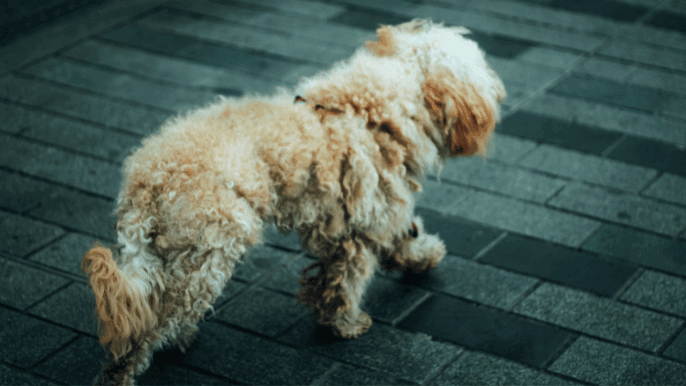
Matted dog hair often starts with a few innocent tangles. Nothing dramatic. You figure a bath will loosen things up, the way conditioner works on human hair. So you wet the coat, lather, rinse, and towel dry.
Then you try to brush. The tangles are tighter. Thicker. What started as minor knots are now dense masses pressed against the skin.
This is one of the most common and most heartbreaking grooming mistakes well-intentioned owners make. They turn manageable tangles into painful, compacted mats by adding water, and the logic that led them there made perfect sense at the time.
Here is what most people never hear: bathing matted dog hair does not loosen it. Water tightens it. Every time. And once you understand the mechanics behind this, the mistake becomes easy to avoid.
Why Water Makes Mats Worse
The relationship between water and matted dog hair is the opposite of what most owners expect. Three mechanical processes work together to make every mat worse when it gets wet.
Hair Swells When Wet
Dog hair absorbs water and expands. Each individual strand becomes slightly thicker. In a smooth, tangle-free coat, this swelling is harmless. In a tangled area, the swelling forces strands to press tighter together. Imagine a loose knot in rope that gets soaked. The knot becomes harder to undo because the fibres expand against each other. The same thing happens to every tangle in matted dog hair.
Felting Occurs
Mats are not simple tangles. They are clusters of dead hair wrapped around live hair, often mixed with dirt, skin oils, and debris. When you add water, movement from scrubbing, and friction from lathering, you create the conditions for felting. Felting is the same industrial process used to turn loose wool into solid felt fabric.
Once felting begins, matted dog hair becomes dense, compact, and structurally bonded in ways that cannot be reversed with a brush. The only option is cutting.
Moisture Gets Trapped
Mats act like sponges. Water soaks into the centre and gets trapped. That trapped moisture pulls the mat tighter against the skin and takes far longer to dry than the surrounding coat. While the rest of the dog may feel dry to the touch, the matted areas can stay damp for hours or even days, creating the conditions for skin irritation, bacterial growth, and hot spots underneath.
What Happens Step by Step During a Bath
Understanding the sequence helps explain why bathing matted dog hair produces the opposite of the intended result.
Wetting the coat causes immediate swelling in every tangled area. The tangles tighten before you even reach for the shampoo.
Shampooing adds movement and friction that twists loose hairs deeper into the existing tangles. Each scrubbing motion pushes neighbouring hair into the mat's structure.
Rinsing compresses everything further as water pressure pushes the swollen, felting mass closer together.
By the end of the wash, what looked like a small tangle has become a larger, tighter, denser mass sitting closer to the skin than it was before the bath started.
Drying makes it worse. Towel rubbing adds friction that pushes more hair into the mat. Air drying allows the mat to shrink as moisture evaporates, tightening the structure further. Even a high-velocity dryer can set the felted structure if the mat is not addressed before drying.
The original tangles are now matted dog hair that is painful, heavy, and pulling on the skin with every movement the dog makes.
The Logic Trap
Most owners bathe tangled coats because the reasoning seems sound. Water loosens dirt. Conditioner adds slip. Baths improve human hair. It should help dog hair too.
The problem is that human hair tangles are usually surface-level knots in individual strands. Matted dog hair is structural. Multiple strands are wrapped around each other in three dimensions, often with dead coat bonded into the mass. Water does not loosen this structure. It locks it together.
Conditioner can help prevent tangles when the coat is already smooth and tangle-free. It adds slip that reduces friction between strands during regular maintenance. But conditioner cannot undo mats that are already compacted because the strands are physically bound together, not just sliding against each other. Applying conditioner to matted dog hair adds moisture without adding any mechanical separation.
How Water Affects Each Coat Type Differently
Every coat type is vulnerable to water-tightened matting , but some are affected more severely than others.
Curly Wavy Coat: Most Vulnerable
The curl pattern already traps dead hair at the skin level, and any existing tangles sit deep inside the curl structure where they are invisible from the surface. When water reaches these hidden tangles, the curls swell, compress, and felt together rapidly.
A Curly Wavy Coat that looked slightly tangled when dry can emerge from a bath with matted dog hair from the skin outward. Poodles, Goldendoodles, Labradoodles, Bernedoodles, and Bichons are the breeds most commonly affected because their curl pattern creates the ideal conditions for felting.
Drop Coat: Highly Vulnerable
Drop Coats absorb water readily because the fine, silky texture has no water-resistant topcoat . The weight of the absorbed water pulls existing tangles tighter and forces the hair to compress against itself. Matted dog hair in a Drop Coat becomes heavy, stringy, and pressed flat against the skin.
The fine texture means the felting process bonds strands at a smaller scale, creating mats that are particularly difficult to separate without cutting. Maltese, Yorkshire Terriers, Shih Tzus, and Havanese are commonly affected.
Feathered Long Double Coat: Two-Zone Risk
Feathered Long Double Coats hide matting in two different zones. The feathered areas on ears, chest, legs, and tail tangle at friction points, and water tightens these tangles while also compressing the body undercoat beneath the topcoat.
The undercoat absorbs moisture and holds it against the skin long after the outer coat feels dry. Golden Retrievers and Australian Shepherds commonly develop matted dog hair in the feathered areas after bathing because these zones were not fully brushed before the bath.
Medium Plush Double Coat: Hidden Compression
Medium Plush Double Coats have the densest undercoat of any coat type, and that density traps enormous amounts of water. The wet undercoat compresses against the skin and felts together as it dries, especially if the coat is not dried thoroughly with a high-velocity dryer.
The topcoat may feel dry while the undercoat remains damp underneath, creating invisible matting that only becomes apparent days later. Huskies, Samoyeds, and Chow Chows are particularly susceptible.
Short Double Coat: Undercoat Compaction
Short Double Coats are less vulnerable to visible matting but still affected. The dense undercoat absorbs and holds water, and any areas where dead undercoat has packed against the skin compress further when wet. The result is increased undercoat compaction that causes hot spots and skin irritation rather than the dramatic mat formations seen in longer coats.
Wire Coat: Furnishing Vulnerability
Wire Coats are moderately vulnerable. The coarse outer coat has some natural water resistance, but the softer furnishing hair on the legs, beard, and eyebrows tangles readily when wet. Matted dog hair in Wire Coat furnishings is common after bathing if these areas are not dried and brushed immediately.
Smooth Single Coat: Lowest Risk
Smooth Single Coats are the only coat type where bathing with minor tangles is relatively low risk. The single layer of short hair has no undercoat to compress and minimal tangling capacity. However, these coats rarely develop matted dog hair in the first place.
Situations That Make Bathing Especially Risky
Swimming with existing tangles is one of the most common triggers. Lakes, pools, and oceans soak the coat thoroughly, and the physical movement of swimming pushes loose hair into existing tangles. Sand and debris from natural water sources add friction material that accelerates felting.
Rain and wet grass create the same effect on a smaller scale. A dog that runs through wet grass repeatedly without being dried and brushed accumulates moisture, and any existing tangles tighten incrementally with each exposure.
The grooming day surprise is the most frustrating scenario. A dog looks mildly tangled when dry. The owner bathes first because the dog is dirty. The full extent of the matted dog hair only becomes apparent after the bath, when it is too late to brush safely and the only option is clipping or shaving.
The FurHQ 5-Step Grooming Method: Technical Reality
The FurHQ 5-Step Grooming Method (Audit, Prep, Bath, Dry, Finish) exists specifically to prevent bath-induced matting. When you follow the steps in order, water never touches matted dog hair.
"Learn the Method. Follow the Protocol. Complete the Mission."
Audit
Start every grooming session with a full health check. Run your hands over the entire dog. Check for lumps, bumps, and any changes in skin condition. Check the ears for signs of infection, smell, or buildup. Look at the nails for overgrowth or splitting. Check teeth and gums for tartar or inflammation.
Then assess the coat. Run your hands through it. Part it to the skin. Feel for tangles, packed undercoat, and mats. Identify every problem area before any tools or water are involved. The Audit tells you what needs to happen before bathing.
Prep
Address every tangle found during the Audit. Smooth Single Coat: skip Prep, straight to Bath. Short Double Coat: optional quick pass with Medium-Pinned Slicker Brush. Medium Plush Double Coat and Feathered Long Double Coat: quick line brush, mist Pawfect Finish Coat Spray first, no comb check. Curly Wavy Coat and Drop Coat: full line brush to remove mats and tangles before bath, mist Pawfect Finish Coat Spray before every brush session, can use comb on easy mats. Wire Coat: same as Medium Plush but focus on furnishings (legs, beard, eyebrows), mist spray on furnishings only.
Verify tangle-free status with the appropriate comb: FurHQ Detail Comb for Curly Wavy, Drop, and Wire coats. Undercoat Depth Comb for Short Double, Medium Plush Double, and Feathered Long Double coats. If the comb glides smoothly from root to tip in every section, the coat is ready for water. If it catches anywhere, tangles remain and must be addressed first.
Bath
Only now does water touch the coat. Use the correct shampoo for the coat type: Texture-Tastic Shampoo for Wire and Curly Wavy, Shimmer and Shine Shampoo for Drop, Deep Clean Delight Shampoo for all others. Use the Rubber Curryfor bathing and skin stimulation to work product to the skin. Rinse thoroughly. Apply Coat-Quench Conditioner (Wire coat: furnishings, friction areas, and undercoat only, never jacket , saddle , or backline).
Dry
Remove all moisture thoroughly. HV drying is ideal for double coats and essential for Curly Wavy Coats to prevent curl compression. Never air dry Curly Wavy Coats, Drop Coats, or any double coat. Brush during drying to keep hair separated. Wait until 90 percent dry before brushing with the dryer and brush combination on Curly Wavy and Drop coats.
Finish
Final brush and comb check on the fully dry coat. Catch any tangles that formed during bathing and drying before they have a chance to tighten. The comb should glide through every section.
The sequence is non-negotiable. Prep before Bath. Always.
You got this.
What to Do If Tangles Will Not Release
If tangles do not release with brushing during Prep, stop. Forcing a brush through resistant matted dog hair causes pain and skin damage. Tangles that resist proper tools and spray need professional assessment.
The groomer may spot-clip the matted areas and bathe the rest, or recommend a full shave depending on severity. There is no shame in this. Severe matted dog hair happens, and the humane response is removing it rather than causing pain by forcing a brush through it.
For guidance on determining when mats are too severe for home management, see Removing Mats From Dog Fur: When to DIY and When to Call a Professional.
Prevention Through Regular Maintenance
The best way to prevent bath-induced matting is to ensure the coat never has tangles when bath time arrives.
Regular brushing between baths keeps the coat tangle-free so that water never has tangles to tighten. The frequency depends on the coat type. Curly Wavy Coats and Drop Coats at full length need daily brushing. Double coats need two to three sessions weekly, increasing to daily during shedding seasons. Smooth Single Coats need weekly brushing with the Boar Bristle Brush.
Pawfect Finish Coat Spray used during regular brushing sessions reduces the friction that causes tangles to form. On Curly Wavy Coats and Drop Coats, spray before every brushing session for slip that keeps hair separated and prevents the small tangles that water would turn into mats. On double coats, spray pre-dry after bathing helps the comb move through dense undercoat. On Wire Coats, spray on furnishings only before every brush session.
The comb check after every brushing session verifies the coat is tangle-free. If the comb catches, that section needs additional work before the session ends. Maintaining a fully comb-clear coat between baths means water never encounters tangles, and the felting, swelling, and compacting cycle never begins.
Use the FurHQ AI Coat Identifier to confirm your dog's coat type, which tells you exactly how the coat responds to water and what tools you need.
If you are not sure whether the coat is tangle-free, it is not. Run the comb through every section before water touches the dog. Every section. The one you skip is the one that felts.
Related Reading
Matting and Coat Care
Bathing and Drying
Grooming Techniques
- Line Brushing Technique
- Dog Grooming Brushes: A Complete Guide by Coat Type
- The FurHQ Touch Test
Coat Type Education
- Dog Coat Types Explained
- Curly Wavy Coat Dogs: Complete Care Guide
- Drop Coat Dogs: Complete Grooming Guide
- Dog Coat Types and Temperature Regulation Explained
The Bottom Line
Bathing matted dog hair does not help. It tightens, compresses, and felts mats into structures that cannot be reversed with brushing. The correct sequence is always the same: remove tangles first, verify with a comb check, then bathe.
Understanding how water interacts with your dog's specific coat type prevents this mistake entirely. Curly Wavy Coatsand Drop Coats are the most vulnerable. Double coats trap moisture in the undercoat. Even Wire Coat furnishings felt when bathed with tangles.
The FurHQ 5-Step Grooming Method (Audit, Prep, Bath, Dry, Finish) builds this correct sequence into every grooming session automatically. Follow the steps in order and matted dog hair caused by bathing becomes a thing of the past.
You got this. And we've got you. 🐾
Variation Clarity Statement
Every dog is an individual. While this guide describes how water interacts with typical coat structures, your specific dog may vary based on genetics, coat density, and individual characteristics. Coat type can also vary within breeds. When in doubt, consult a Certified Professional Groomer. If you are unsure about your dog's coat type, use the FurHQ AI Coat Identifier to get accurate identification and the right kit recommendation.
FAQs
What coat type does my dog have and why does it matter for matting?
FurHQ classifies all dog coats into seven coat types: Curly Wavy Coat, Drop Coat, Wire Coat, Smooth Single Coat, Short Double Coat, Medium Plush Double Coat, and Feathered Long Double Coat. Each coat type responds to water differently. Curly wavy coats are the most vulnerable to bath-induced matting because the curl pattern traps and compresses hair when wet. Smooth single coats are the least vulnerable because they have no undercoat to compress. Knowing your coat type tells you how aggressively to check for tangles before every bath.
Why does bathing make matting worse instead of better?
When tangled hair gets wet, each strand swells and tightens against surrounding hair. The movement and friction during bathing cause those tangles to compress, turning them into tighter mats instead of loosening them.
Should I ever bathe a dog that has matted dog hair?
No. If mats are present, bathing should be avoided until the mats are removed. Adding water makes the mats tighter, heavier, and more painful, often making safe removal much harder afterward.
What happens if I accidentally bathe my dog before noticing mats?
Stop scrubbing the matted areas immediately. Rinse gently, avoid rubbing with towels, and dry with minimal manipulation. Once dry, contact a professional groomer as soon as possible to prevent further tightening.
Does conditioner help loosen mats during a bath?
Conditioner can help prevent tangles on a smooth coat, but it does not undo existing mats. On matted dog hair, conditioner mainly adds moisture, which can actually make mats denser rather than easier to remove.
Are some coat types more affected by bathing with mats?
Yes. Curly, wavy, double, and long drop coats are especially vulnerable. These coat types felt, compress, or hide mats at the skin level, making bathing particularly risky when tangles are present.
What should I do if my dog is dirty and matted at the same time?
Address the matting first. This often requires professional grooming. Once mats are safely removed, the dog can be bathed without worsening the situation or causing discomfort.
Is swimming just as bad as bathing when mats are present?
Yes. Swimming introduces water, debris, and repeated wet-dry cycles that tighten existing tangles. Dogs with mats should be brushed and fully dried immediately after swimming to prevent worsening matting.
What is the correct order for grooming a dog with tangles?
Brush and detangle first while the coat is dry using a conditioning coat spray like FurHQ Coat Quench. Bathe only once the coat is completely mat-free. Brush during drying, then do a final comb check after the coat is fully dry.
How can I prevent matting problems during baths in the future?
Brush thoroughly before every bath, dry the coat completely to the skin, and maintain regular brushing between grooming appointments. Prevention keeps bathing simple and stress-free. Also, follow the FurHQ grooming education for best results.
When should I involve a professional groomer?
If mats do not release easily with gentle brushing, or if you discover matted dog hair after bathing, a professional groomer should step in. Trying to fix it at home often causes pain and skin damage.
Can a conditioning spray help prevent matting?
Yes, when used correctly. A lightweight conditioning coat spray like FurHQ Coat Quench Conditioner can reduce friction during brushing on a dry coat. This helps hair slide instead of snag, which supports regular maintenance and prevents tangles from turning into mats. It should not be used to fix existing mats or as a shortcut during bathing.
Can I use a detangling spray to fix matted dog hair before bathing?
Pawfect Finish Coat Spray adds slip that helps separate light tangles during brushing. Apply spray to the tangled area, let it sit briefly, then work through with the appropriate slicker brush. However, spray cannot fix severe matted dog hair where strands are structurally felted. If the tangle does not release with spray and gentle brushing, it needs professional attention rather than a bath.
How long after bathing does matted dog hair become a problem?
The tightening begins immediately when water contacts tangled hair. Swelling occurs within minutes. Felting progresses during shampooing and rinsing. By the time the bath is over, tangles that were manageable before bathing have become significantly tighter. The drying phase makes it worse as moisture evaporates and the mat contracts. Within 24 to 48 hours, what was a small tangle before bathing can become a solid, skin-level mat.
What tools do I need to prevent matted dog hair?
The tools depend on your coat type. Every FurHQ Starter Grooming Kit includes the correct slicker brush, comb, and standard items for maintaining a tangle-free coat. Standard items in every kit include Stay Put System, Hush Pup Wrap, Rubber Curry, Ear Wipes, and Pawfect Finish Coat Spray. Coat-specific tools vary: curly wavy and drop coats use Long-Pinned Slicker Brush and FurHQ Detail Comb. Double coats use Medium-Pinned Slicker Brush or Long-Pinned Slicker Brush and Undercoat Depth Comb. The right tools for your coat type make prevention straightforward.
What is the FurHQ 5-Step Method and how does it prevent matted dog hair?
The FurHQ 5-Step Method is Audit, Prep, Bath, Dry, Finish. It prevents bath-induced matting by ensuring tangles are always addressed before water touches the coat. The Audit identifies problem areas. Prep removes all tangles and verifies with a comb check. Bath only happens on a verified tangle-free coat. Dry removes all moisture thoroughly. Finish catches any tangles that formed during bathing and drying. Following this sequence means water never contacts matted dog hair.
Are certain areas of the coat more vulnerable to bath-induced matting?
Yes. High-friction areas are the most vulnerable because they are where tangles form first and where water tightens them most aggressively. The most common problem zones are behind the ears, under the collar, in the armpits, where the legs meet the body, on the chest, and around the groin. Feathered areas on long double coated dogs (ears, legs, tail) are particularly susceptible because the fine, long hair tangles quickly and water compresses those tangles against the skin.
Where can I get the right tools for my dog's coat type?
FurHQ builds coat-specific kits for all seven coat types: FurHQ Starter Grooming Kit: Smooth Single Coat, FurHQ Starter Grooming Kit: Short Double Coat, FurHQ Starter Grooming Kit: Medium Plush Double Coat, FurHQ Starter Grooming Kit: Feathered Long Double Coat, FurHQ Starter Grooming Kit: Wire Coat, FurHQ Starter Grooming Kit: Curly Wavy Coat, and FurHQ Starter Grooming Kit: Drop Coat. Not sure which coat type your dog has? Use the FurHQ AI Coat Identifier to find out. Browse everything at the FurHQ Store.