
English Cocker Spaniel Temperament and Grooming
Table of Contents
- Introduction: The Merry Cocker with the Sporting Heart
- Breed Handling Profile
- Breed Purpose and Why It Matters for English Cocker Spaniel Temperament
- FurHQ Coat Type Breakdown
- Not Sure About Your Dog's Coat Type?
- Puppy Coat to Adult Coat Transition
- The FurHQ 5-Step Grooming Method: Technical Reality
- FurHQ Starter Grooming Kit Breakdown
- English Cocker Spaniel Temperament: Superpowers and Kryptonite
- FurHQ's Lifestyle Lens and Pro Insights
- Health and Lifespan: The FurHQ Touch Test
- Related Breed Comparisons
- Related Reading
- The Bottom Line
- Variation Clarity Statement
- FAQs

English Cocker Spaniel Temperament is what happens when tireless sporting drive, irresistible cheerfulness, and a deeply affectionate nature combine in a compact, beautifully feathered dog that has been flushing game birds and stealing hearts across the English countryside for centuries.
The original Cocker Spaniel before the American variety diverged, the English Cocker retains a stronger connection to its field heritage and a slightly more athletic, workmanlike build.
Understanding English Cocker Spaniel Temperament starts with recognising that this is a true sporting dog at heart, a breed whose enthusiasm for life, work, and human partnership defines every interaction.
These dogs are genuinely merry. English Cocker Spaniel Temperament includes a buoyant, tail-wagging cheerfulness that earned the breed its famous descriptor. They approach walks, meals, playtime, and even grooming with an enthusiasm that is infectious and genuine.
The perpetually wagging tail is not just a physical trait but a reflection of a temperament that finds joy in nearly everything.
The feathered long double coat is the breed's most beautiful feature and its primary grooming commitment. The silky to flat outer coat features moderate feathering on the ears, chest, legs, and belly, supported by a protective undercoat developed for fieldwork in dense cover.
English Cocker Spaniel Temperament and coat care connect positively because the breed's eager, cooperative nature makes grooming sessions pleasant, even when the coat demands thorough, regular attention.

Let me tell you what you are really getting with an English Cocker Spaniel, because this is the sporting spaniel that balances drive and companionship as well as any breed alive.
This is not a lap dog that looks like a spaniel. English Cocker Spaniel Temperament was forged in English hedgerows and woodlands, flushing woodcock and pheasant from dense cover with a drive and determination that the breed retains today.
These dogs have genuine field instinct, real athletic ability, and an energy level that requires daily exercise and engagement. But they combine all of that with a warmth, a cheerfulness, and a desire for human partnership that makes them outstanding household companions when their needs are met.
Now let's talk grooming. Honestly.
The feathered long double coat on this breed requires consistent attention but is somewhat more manageable than the American Cocker Spaniel's more profuse coat. The feathering on the ears, chest, legs, and belly is moderate in length, the coat texture ranges from flat to slightly wavy, and the undercoat provides field-appropriate density without the extreme volume of show-bred American lines.
Brushing two to three times per week keeps the coat healthy and tangle-free, with daily attention to the ear feathering where tangles develop fastest. English Cocker Spaniel Temperament makes grooming cooperative because these dogs enjoy the attention and physical contact.
This breed is NOT for you if:
- You want a low-maintenance, wash-and-go coat
- You cannot provide daily exercise and mental stimulation
- You want a calm, sedentary household companion
- You are unprepared for moderate shedding and feathering care
- You cannot commit to regular ear health maintenance
Because English Cocker Spaniel Temperament includes:
- Feathered long double coat requiring consistent brushing and care
- High energy demanding daily exercise and outdoor activity
- Strong sporting drive that needs an outlet
- Ear structure highly susceptible to infection
- Social needs that do not tolerate extended isolation
This breed IS for you if:
- You want a cheerful, active, devoted sporting companion
- You enjoy outdoor activities and can provide daily exercise
- You appreciate grooming as quality time with your dog
- You want a versatile breed that excels in field, sport, and family life
- You value a dog whose enthusiasm for life is genuinely contagious
English Cocker Spaniel Temperament rewards active, attentive owners with a companion that is endlessly cheerful, deeply loyal, and brings sporting energy and genuine warmth to every aspect of daily life.
Celebrate the merry spirit. Maintain the feathered coat with consistency. Handle with the warmth this breed gives back tenfold.
Do that, and you will share your life with one of the most genuinely cheerful, beautifully athletic, and wholeheartedly devoted sporting breeds in existence, a dog that was born to work, bred to please, and lives to love.
Breed Handling Profile
| Trait | Level | Notes |
|---|---|---|
| Emotional sensitivity | Moderate to High | Responsive to tone and handler mood; thrives with positive, encouraging handling |
| Handling tolerance | High | Cooperative and willing during grooming; enjoys physical contact |
| Grooming commitment | Moderate to High | Feathered long double coat requires consistent brushing and ear maintenance |
| Exercise needs | High | Active sporting breed; needs daily vigorous exercise and mental engagement |
| Alone time tolerance | Low to Moderate | Bonds closely; prefers companionship but handles reasonable alone time |
| Best fit household | Active individuals or families who enjoy outdoor activity and can provide daily exercise and consistent coat care |
Breed Purpose and Why It Matters for English Cocker Spaniel Temperament
The English Cocker Spaniel was developed in England as a specialist flushing dog for woodcock and other upland game birds. Before the formal split between Cocker and Springer Spaniels in the early 20th century, the smaller dogs in spaniel litters were designated "Cockers" for their woodcock work, while the larger dogs became "Springers."
The English Cocker was bred to work dense cover, quartering methodically to locate birds, flushing them into flight, and retrieving the downed game.
English Cocker Spaniel Temperament reflects this sporting heritage directly. The enthusiasm for outdoor activity, the natural quartering instinct, the responsiveness to handler direction, and the tireless stamina all trace to centuries of selection for the qualities that make an effective, willing flushing dog.
When your English Cocker Spaniel plunges into bushes with nose down and tail wagging frantically, working systematically through the undergrowth, that is generations of field breeding expressing itself.
The breed's strong handler bond also connects to its working context. The English Cocker worked close to its handler, maintaining visual and auditory contact while quartering, and responding to directional cues to search specific areas.
English Cocker Spaniel Temperament includes this deep partnership instinct, which manifests in daily life as a dog that checks in frequently, responds readily to guidance, and derives genuine satisfaction from cooperative activity with its person.
FurHQ Coat Type Breakdown
The English Cocker Spaniel wears a Feathered Long Double Coat as classified in the FurHQ seven-coat system. This coat type features a flat to slightly wavy outer coat of moderate length with feathering on the ears, chest, legs, belly, and tail, supported by a protective undercoat.
The English Cocker Spaniel's coat is moderate in profusion compared to the more heavily coated American Cocker Spaniel. The body coat is flat or slightly wavy, the feathering is present but practical rather than exaggerated, and the overall coat profile reflects the breed's working heritage.
Working-bred English Cockers may carry a slightly lighter coat than show-bred dogs, but both varieties share the same coat classification.
The Long-Pinned Slicker Brush penetrates the coat to reach and lift dead undercoat without damaging the feathering. The Undercoat Depth Comb verifies thorough undercoat removal. The Deshedding Comb provides active undercoat extraction in denser areas. The Long Coat Carding Rake targets compacted undercoat in the heaviest zones. The Rubber Curryserves as a bathing tool.
The recommended kit is the FurHQ Starter Grooming Kit: Feathered Long Double Coat.
Not Sure About Your Dog's Coat Type?
Not every dog fits neatly into one coat category, and that is completely normal. Coat type determines the correct tools, products, and techniques for effective grooming, and getting it right matters for coat health and comfort. This is especially true for mixed breeds or dogs whose coat may vary from expectations.
Use the FurHQ AI Coat Identifier to find out your dog's coat type and get matched to the right FurHQ Starter Grooming Kit. Simply upload a photo and receive an accurate classification with a personalised kit recommendation.
Puppy Coat to Adult Coat Transition
English Cocker Spaniel puppies are born with a shorter, softer coat that begins developing its adult characteristics between 4 and 8 months. The feathering on the ears, chest, legs, and belly fills in progressively over 12 to 18 months, and the undercoat density increases as the dog matures. The full adult coat is typically established by 18 to 24 months.
During the transition, the lengthening feathering becomes increasingly prone to tangling, particularly behind the ears, in the armpits, and where the leg feathering develops. The incoming undercoat can trap shedding puppy fur, creating compaction in areas where density increases. This period is when the grooming routine needs to scale up to match the coat's growing demands.
English Cocker Spaniel Temperament in puppyhood is enthusiastic and receptive, making this an excellent window for grooming habituation. Start gentle brushing from 8 weeks. The breed's eager-to-please nature means most English Cocker puppies accept grooming readily. Use Pawfect Finish Coat Spray before drying and when dry brushing during the transition. The FurHQ 5-Step Method provides structure for building the routine.
The FurHQ 5-Step Grooming Method: Technical Reality
The FurHQ 5-Step Method (Audit, Prep, Bath, Dry, Finish) applies to this coat type with emphasis on managing the dense undercoat while protecting the longer guard coat and feathering from damage.
Learn the Method. Follow the Protocol. Complete the Mission.
Setup and Stability
Secure the dog using the Stay Put System (suction cup anchor + safety lead). For anxious dogs, the Hush Pup Wrap provides calming compression. Feathered long double coats require the most thorough grooming sessions of all coat types, so patience and a calm environment are essential.
Tools and Technique
Audit: Begin every session by running your hands over the entire body, parting the coat to check for mats at the skin level. Focus on behind the ears, armpits, groin, chest ruff, hindquarter feathering, and any areas where friction occurs. The long coat hides mats effectively, so hands-on assessment is non-negotiable.
Prep: Mist with Pawfect Finish Coat Spray before any tool touches the coat. Use the Long-Pinned Slicker Brush to line brush section by section, working from the skin outward through both the undercoat and the longer guard coat.
Verify every section with the Undercoat Depth Comb. If the comb catches, go back to the slicker. Use the Deshedding Comb for undercoat removal on alternating weeks. Use the Long Coat Carding Rake once every two weeks for dead undercoat, alternating weeks with the Deshedding Comb.
Bath: Use Rubber Curry during bathing for skin stimulation and to work shampoo through the dense coat. Full saturation to the skin is critical and takes time on a coat this dense. Rinse thoroughly, working water through the full length.
Dry: Towel dry without rubbing. Use a dryer with a brush-through, lifting and separating the coat as it dries. Apply Pawfect Finish Coat Spray pre-dry for protection. Significant undercoat blows out during this step. The coat should be dried thoroughly to the skin, and the feathering should be straightened during drying.
Finish: Final comb-through with the Undercoat Depth Comb to verify the coat is free of tangles, dry to the skin, and the feathering is smooth and draping naturally. Assess overall coat condition.
Blow-out season is where the real coat work lives. Stay ahead of undercoat release early, and the rest of the year stays easy.
Chemistry and Coat Care
Deep Clean Delight Shampoo provides a deep cleanse that penetrates the dense double coat to the skin. Coat-Quench Conditioner provides slip, moisture, and tangle prevention for the longer guard coat and feathering, supporting easier brushing and reducing breakage.
The Coat Release Method (Condensed)
Feathered long double coats carry dense undercoat that releases seasonally in significant volume. During the Bath step, after full saturation and shampoo application, use controlled airflow in the tub while the coat is still lathered. The lubrication allows dead undercoat to release safely without friction or skin trauma.
Rinse, then apply a second shampoo with the Rubber Curry to complete the release. This keeps dead coat contained in the tub rather than spread across your home. For the full step-by-step process, see The Coat Release Method for Dogs with Undercoat in Related Reading.
FurHQ Starter Grooming Kit Breakdown
The FurHQ Starter Grooming Kit: Feathered Long Double Coat is recommended for the English Cocker Spaniel.
Standard Items (included in all FurHQ kits):
- Stay Put System (suction cup anchor + safety lead + training tips)
- Hush Pup Wrap
- Rubber Curry (for bathing)
- Ear Wipes
- Pawfect Finish Coat Spray
Coat-Specific Items:
- Deep Clean Delight Shampoo
- Coat-Quench Conditioner
- Long-Pinned Slicker Brush
- Undercoat Depth Comb
- Deshedding Comb
- Long Coat Carding Rake
Total: 11 items
Each kit includes step-by-step video tutorials and informational PDFs so you know exactly how to use every tool and product for the English Cocker Spaniel coat.
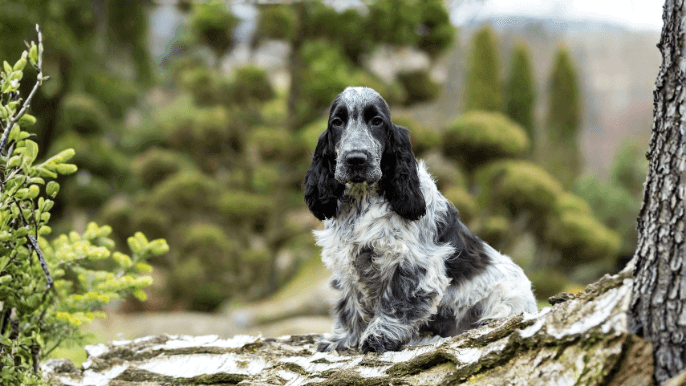 English Cocker Spaniel Temperament: Superpowers and Kryptonite
Superpowers
🌟 Merry disposition: English Cocker Spaniel Temperament is defined by a buoyant cheerfulness that earned the breed its famous reputation. These dogs find joy in everything and share it generously, creating a household atmosphere that is brighter for their presence.
🌟 Genuine sporting ability: Unlike many companion-oriented spaniels, the English Cocker retains real field instinct and working capability. English Cocker Spaniel Temperament includes the drive, stamina, and nose that made this breed a legendary bird dog.
🌟 Handler partnership: The breed's responsiveness to guidance and desire for cooperative activity create a partnership dynamic that is deeply rewarding. English Cocker Spaniel Temperament thrives on teamwork, whether in the field, in training, or in daily life.
🌟 Trainable enthusiasm: The combination of intelligence, eagerness to please, and genuine enthusiasm makes English Cocker Spaniel Temperament one of the most trainable in the sporting group. These dogs learn quickly and perform with visible enjoyment.
🌟 Social warmth: English Cocker Spaniels are genuinely friendly with people, children, and other dogs. English Cocker Spaniel Temperament includes a welcoming nature that makes the breed an excellent family and social companion.
🌟 Grooming cooperation: The breed's eager-to-please nature and enjoyment of physical contact make grooming sessions cooperative and pleasant, even when the coat demands thorough attention.
Kryptonite
⚠️ Feathering maintenance: The feathered long double coat requires consistent brushing to prevent matting , particularly in the ears, chest, and leg areas. Neglecting the coat leads rapidly to tangles that are painful to remove.
⚠️ Ear infection vulnerability: The pendulous, heavily feathered ears restrict airflow and trap moisture, creating ideal conditions for bacterial and yeast infections. Regular ear cleaning with Ear Wipes during every grooming session is non-negotiable.
⚠️ High energy demands: English Cocker Spaniel Temperament requires daily vigorous exercise. These dogs are athletes, and without adequate physical and mental stimulation, the sporting drive manifests as restlessness, barking, and destructive behaviour.
⚠️ Separation sensitivity: English Cocker Spaniel Temperament bonds closely and does not handle extended isolation well. These dogs need regular companionship and can develop anxiety-related behaviours when left alone too frequently.
⚠️ Field debris magnet: The feathered coat collects every burr, seed, twig, and piece of debris encountered during outdoor activity. Post-walk coat checks and brushing become part of the daily routine for active English Cockers.
⚠️ Never shave this coat: Shaving a double coated breed damages the coat structure, removes temperature regulation, and the coat may never grow back properly. Proper undercoat removal through brushing and the Coat Release Method is the correct approach.
FurHQ's Lifestyle Lens and Pro Insights
English Cocker Spaniels are groomed regularly, and the contrast between working-bred and show-bred dogs is noticeable on the table. Working-bred English Cockers typically carry a lighter, more practical coat that is easier to maintain. Show-bred dogs carry more feathering and a denser coat that demands more attention. Regardless of breeding type, the grooming fundamentals are the same, and English Cocker Spaniel Temperament makes both types cooperative during sessions.
The ears remain the top priority. English Cocker Spaniel Temperament does not change the fact that those long, pendulous, feathered ears are infection waiting to happen if ear care is neglected. Check the ears at every grooming session. Clean with Ear Wipes. Brush the ear feathering to prevent matting that compounds the moisture problem. If the dog frequently swims or works in wet conditions, ear care becomes even more critical.
Living with an English Cocker Spaniel means living with a dog that needs to move, explore, and participate. English Cocker Spaniel Temperament does not include a low-energy mode. These dogs need daily walks, outdoor exploration, and ideally some form of structured activity that engages their sporting instincts. Scent work, retrieving, agility, or actual field work all satisfy the drive. A well-exercised English Cocker is the cooperative, cheerful companion the breed is famous for. An under-exercised one is a frustrated, barking, destructive reminder that sporting breeds have sporting needs.
Carry a small slicker brush on walks. The English Cocker's feathering picks up every burr, seed head, and piece of undergrowth during outdoor activity, and removing debris immediately takes seconds while leaving it to dry takes much longer and risks tangling.
Health and Lifespan: The FurHQ Touch Test
The English Cocker Spaniel typically lives 12 to 15 years. This excellent lifespan means grooming and health monitoring span many active, rewarding years.
Regular grooming sessions serve as health assessments when you incorporate the FurHQ Touch Test into your routine. The feathered coat can conceal skin conditions and changes, making hands-on evaluation during grooming an important detection tool.
Ear infections are the most common health concern, and every grooming session must include a thorough ear check for odour, discharge, redness, and sensitivity using Ear Wipes. Eye conditions including progressive retinal atrophy (PRA) and cataracts are breed concerns, and gentle face handling during grooming allows observation of eye clarity and comfort. English Cocker Spaniel Temperament may mask early discomfort, so changes in how the dog reacts to handling are significant. Hip dysplasia occurs in the breed, and monitoring gait and comfort during grooming provides early indicators. Familial nephropathy (a kidney condition) affects some lines, and general awareness of changes in energy, coat quality, or body condition during grooming supports veterinary monitoring. Skin conditions can develop beneath the feathered coat, and the Audit step provides structured opportunity to check the skin directly.
Every grooming session is a conversation with your dog's body. The FurHQ 5-Step Method builds that conversation into your routine.
Related Breed Comparisons
If you are considering an English Cocker Spaniel, these breeds share some characteristics but differ in important ways:
- Cocker Spaniel (American) Temperament: Close relative with a more profuse coat and slightly softer temperament. Shares the cheerful nature but with less field drive and more grooming demand.
- English Springer Spaniel Temperament: Larger sibling breed with similar feathered coat and sporting drive. Shares the enthusiasm and field ability but with a bigger, more powerful build and higher exercise demands.
- Field Spaniel Temperament: Similar sporting heritage with a calmer, more docile temperament. Shares the feathered coat but with a more relaxed energy level and less intense drive.
- Welsh Springer Spaniel Temperament: Comparable sporting spaniel with similar coat and drive. Shares the cheerful, active nature but with a slightly more reserved approach to strangers.
Related Reading
Feathered Long Double Coat Grooming
Bathing and Drying
- How to Dry a Dog After a Bath
- How to Introduce Your Dog to a Dryer
- High Velocity Dryer for Dogs
- Stand Dryer for Dogs
Comfort and Safety
- Dog Grooming Desensitisation
Matting and Coat Health
Tools and Products
Related Breed Blogs
- Cocker Spaniel Temperament
- English Springer Spaniel Temperament
- Field Spaniel Temperament
- Welsh Springer Spaniel Temperament
The Bottom Line
English Cocker Spaniel Temperament delivers merry enthusiasm, genuine sporting ability, and warm devotion in a beautifully feathered, athletically built package that has earned its place as one of the world's most beloved sporting breeds. This breed rewards active, attentive owners with a companion that is tirelessly cheerful, deeply loyal, and brings a sporting spirit and genuine warmth to every moment of life together. The coat demands consistent care. The ears demand vigilance. The energy demands daily outlet. But the return is a dog that approaches every day as the best day of its life and makes you believe it might be right.
If you are ready for the commitment, the FurHQ Starter Grooming Kit: Feathered Long Double Coat gives you every tool and product you need. You have a system that works.
Learn the Method. Follow the Protocol. Complete the Mission.
You got this. And we've got you.
Variation Clarity Statement
Every dog is an individual. While this profile describes typical breed characteristics, your specific dog may vary based on genetics, breeding, socialisation, and individual temperament. Coat type can also vary within breeds.
If you are unsure about your dog's coat type, use the FurHQ AI Coat Identifier to get accurate identification and the right kit recommendation.
FAQs
What is the English Cocker Spaniel's coat type according to FurHQ?
The English Cocker Spaniel has a Feathered Long Double Coat as classified in the FurHQ seven-coat system. The coat features a flat to slightly wavy outer coat of moderate length with feathering on the ears, chest, legs, belly, and tail, supported by a protective undercoat developed for fieldwork in dense cover. The English Cocker's coat is more practical and moderate in profusion than the American Cocker Spaniel — the feathering is present but workmanlike rather than exaggerated, reflecting the breed's stronger connection to its field heritage. Working-bred English Cockers may carry a lighter coat than show-bred dogs, but both share the same Feathered Long Double Coat classification.
The correct FurHQ kit for an English Cocker in full coat is the FurHQ Starter Grooming Kit: Feathered Long Double Coat.
For English Cockers in a short pet trim, the FurHQ Starter Grooming Kit: Medium Plush Double Coat is the correctly scaled option.
Why does my English Cocker Spaniel need a different kit for a puppy cut?
The kit recommendation is based on the coat length actually being managed, not the breed's genetic coat type. An English Cocker Spaniel is always a Feathered Long Double Coat by genetics and structure. The undercoat is still present, the double coat structure is still there, and it still sheds and still needs regular maintenance regardless of how short the trim is. But the tools in the Feathered Long Double Coat kit are designed for coat lengths that a short-trimmed English Cocker no longer has. The Long Coat Carding Rake is built for long coat that extends well past the skin. The Deshedding Comb is designed to work through significant feathering length.
On a dog in a short pet trim, those tools are working on coat too short to need them. The shorter carding rake in the Medium Plush Double Coat kit is correctly scaled for the length being maintained, making the job easier and more effective. The brushing routine, the frequency, and the ear care commitment do not change. What changes is the tool selection. Once the coat grows back to full length, you return to the Feathered Long Double Coat kit.
What tools and products do I need for an English Cocker Spaniel?
The FurHQ Starter Grooming Kit: Feathered Long Double Coat contains 11 items for an English Cocker in full coat. The standard items included in every FurHQ kit are the Stay Put System (suction cup anchor and safety lead), the Zen Wrap, Rubber Curry for bathing and skin stimulation, Ear Wipes, and Pawfect Finish Coat Spray. The coat-specific items are Deep Clean Delight Shampoo, Coat-Quench Conditioner, Long-Pinned Slicker Brush, Undercoat Depth Comb, Deshedding Comb, and Long Coat Carding Rake.
The Ear Wipes deserve particular emphasis on this breed. The English Cocker's long, pendulous, feathered ears restrict airflow to the ear canal, creating the warm, moist environment that bacteria and yeast thrive in. Ear infections are the most common health issue in this breed, and an ear check at every single grooming session is non-negotiable. English Cockers that swim or work in wet conditions need ear checks after every water exposure as well, not just at grooming sessions. The Ear Wipes make that check quick, consistent, and part of the routine.
For an English Cocker in a short pet trim, the FurHQ Starter Grooming Kit: Medium Plush Double Coat contains 10 items with the shorter carding rake and medium-pinned slicker correctly scaled to the coat length being managed. Every kit includes step-by-step video tutorials and informational PDFs so you know exactly how to use each tool on your English Cocker's coat.
Is the English Cocker Spaniel good with children?
English Cocker Spaniel Temperament is excellent with children, making them outstanding family dogs. Their cheerful energy, sturdy build, and patient nature combine to create a natural playmate for children of all ages. Their moderate size means they are robust enough for active play without being overwhelming. As with any breed, supervision is recommended with very young children, and teaching mutual respect between dog and child is essential.
How much exercise does an English Cocker Spaniel need daily?
The English Cocker Spaniel requires at least 45 to 75 minutes of daily exercise, including walks, play, and opportunities for off-lead running or swimming in safe areas. English Cocker Spaniel Temperament includes more drive than many owners expect, and the breed benefits from nose work, retrieving games, and agility alongside physical exercise. Mental stimulation is equally important for this intelligent breed.
How often should I bathe my English Cocker Spaniel?
Every 4 to 6 weeks is the standard bathing frequency, timed to align with professional grooming appointments. Between baths the focus is brushing — two to three full sessions per week with daily attention to the ear feathering where tangles develop fastest. Bathing too frequently strips the natural oils that keep the outer coat healthy and the feathering supple, making tangling worse over time rather than better.
During seasonal coat blow when the undercoat is releasing heavily, a targeted bath using the Coat Release Method helps contain the shed coat in the tub rather than distributing it across your home.
Always ensure the coat is fully brushed and as tangle-free as possible before bathing because water sets mats and makes them significantly harder to remove. English Cockers that work in the field or swim regularly may need more frequent bathing, in which case ear care after every water exposure becomes especially important given the breed's infection vulnerability.
How is the English Cocker Spaniel different from the American Cocker Spaniel?
English Cocker Spaniel Temperament is generally busier, more driven, and closer to the original working spaniel than the American Cocker. The English is slightly larger, leaner, and more athletic with a less exaggerated coat. English Cockers retain stronger hunting instinct and typically need more exercise. Both breeds have similar grooming requirements with the dual-kit approach, and both are excellent family dogs, but the English Cocker is the more active and driven version.
How do I prevent ear infections in my English Cocker Spaniel?
Weekly ear cleaning is the minimum, with checks after every swim, bath, and wet outdoor activity. Keep the ear feathering clean and tangle-free with regular brushing and combing. Use Ear Wipes for routine cleaning. Watch for signs of infection including redness, discharge, odour, head shaking, or ear scratching. The long, heavy ears restrict airflow and trap moisture, making prevention through consistent care far more effective than treating infections after they develop.
What health issues are common in the English Cocker Spaniel?
The most commonly reported health concerns include ear infections, hip dysplasia, progressive retinal atrophy, cataracts, glaucoma, allergies, hypothyroidism, and familial nephropathy in certain lines. Reputable breeders screen for hip dysplasia, eye conditions, and kidney function. Regular veterinary examinations, consistent ear care, and the FurHQ Touch Test between visits support proactive health management.
Are English Cocker Spaniels easy to train?
English Cocker Spaniel Temperament makes them among the most trainable sporting breeds. They are intelligent, eager to please, and responsive to positive reinforcement methods. Short, engaging training sessions with food rewards produce excellent results. The breed excels in obedience, agility, nose work, and field work. Harsh correction is counterproductive with this sensitive breed and damages the trust that effective training requires.
Should I keep my English Cocker in a full coat or a puppy cut?
This depends on your lifestyle and grooming commitment. The full feathered coat is beautiful but requires 3 to 4 brushing sessions per week and professional grooming every 6 to 8 weeks. The puppy cut or sporting clip is more practical, requiring 2 to 3 brushing sessions per week and professional trimming every 4 to 6 weeks. English Cocker Spaniel Temperament is equally cooperative in either style. Choose based on your honest assessment of the time you can commit to grooming.
How do I prevent matting in the feathered areas?
Matting in feathered areas is prevented by three habits applied consistently.
Pawfect Finish Coat Spray before every brush session. Never brush feathered coat dry. The spray provides the slip that stops friction turning a loose tangle into a mat. Mist each section before you work it.
Check the high-risk spots daily. Behind the ears, armpits, chest ruff, collar line, and where leg feathering meets the body are where mats start first. A quick pass with the FurHQ Detail Comb through those spots every day catches tangles before they set. Two minutes daily prevents a significant problem later.
Ear feathering needs daily attention specifically. The pendulous ears mean the feathering folds constantly and moisture compounds the problem. Brush ear feathering daily, working from the tips toward the skin. Never drag through a tangle from the top down.
During full sessions, always work from the skin outward. Surface brushing on feathered areas is the most common mistake. The coat looks tidy while a mat builds underneath. The Undercoat Depth Comb after every slicker section confirms the work has reached the skin. If the comb catches, the section is not done.
After every walk, check the feathering before debris dries. Burrs and grass seeds removed immediately take seconds. Left to dry and work into the coat, they seed tangles within 24 hours.
After any wetting, brush through fully once the coat is dry. Water accelerates existing tangles. A loose tangle tightens significantly as the coat dries.
Can the English Cocker Spaniel live in an apartment?
Yes, the English Cocker's moderate size makes apartment living viable when exercise needs are met consistently. English Cocker Spaniel Temperament adapts well to various living situations as long as the dog receives sufficient daily physical and mental activity outside the apartment. Their grooming needs remain unchanged regardless of living space.
How do I introduce my English Cocker puppy to grooming?
Start early with short, positive sessions. English Cocker Spaniel Temperament during puppyhood is naturally cooperative and eager for attention, making grooming introduction straightforward. Begin with brief handling exercises and gentle brushing for just a few minutes, paired with treats and praise. Gradually increase session length. The Stay Put Systemprovides secure positioning, and the Hush Pup Wrap helps settle excited puppies. The breed's desire to please makes grooming conditioning one of the easiest aspects of English Cocker ownership.
Does the English Cocker Spaniel shed?
Yes, the undercoat produces moderate shedding year-round with increased volume during seasonal transitions. During seasonal coat blow, this is where the real coat work happens. The Coat Release Method for Dogs with Undercoat provides the most efficient approach.
How does the FurHQ 5-Step Method work for the English Cocker Spaniel?
The FurHQ 5-Step Method (Audit, Prep, Bath, Dry, Finish) gives every grooming session a clear structure and ensures the ear check and thorough undercoat work this breed specifically depends on never get skipped. Exercise your dog before the session — English Cocker Spaniel Temperament does not include a low-energy mode, and a dog that has had a good run settles far more readily on the grooming table.
Audit is your full body check before any tool touches the coat. Run your hands over the entire body, parting the coat to feel for mats at the skin level. Focus on behind the ears, armpits, groin, chest ruff, and hindquarter feathering. The long coat hides mats effectively and what looks fine on the surface can be a developing tangle at the skin. The ear check happens here — use Ear Wipes to check for odour, discharge, redness, and sensitivity at every single session without exception. Check nails, teeth, and eyes while you are there.
Prep is where the brushing work happens. Mist the entire coat with Pawfect Finish Coat Spray before any tool touches the coat. Use the Long-Pinned Slicker Brush to line brush section by section, working from the skin outward through both the undercoat and the longer guard coat and feathering. Verify every section with the Undercoat Depth Comb — if it catches, go back to the slicker. Use the Deshedding Comb for undercoat removal on alternating weeks and the Long Coat Carding Rake once every two weeks, alternating with the Deshedding Comb. Any mats must be fully resolved during Prep before the bath because water sets mats and makes them significantly harder to remove.
Bath uses Deep Clean Delight Shampoo and Coat-Quench Conditioner. Use the Rubber Curry during bathing to work shampoo through the dense coat to the skin. Full saturation takes time — work it through thoroughly. During seasonal blow, follow the Coat Release Method during this step to contain shed coat in the tub rather than across your home.
Dry requires patience. Towel dry without rubbing first, then use a dryer working through the coat, lifting and separating as it dries. Apply Pawfect Finish Coat Spray pre-dry for protection. Significant undercoat releases during this step. Straighten the feathering as it dries so it sits correctly once finished. The coat must be dried completely to the skin. After water exposure or swimming, this step is especially important for preventing the moisture that leads to ear infections under those pendulous ears.
Finish is the final verification pass. Comb through the entire coat with the Undercoat Depth Comb to confirm everything is tangle-free, dry to the skin, and the feathering is smooth and draping naturally. Assess overall coat condition. A full English Cocker session on a well-maintained coat typically runs 30 to 45 minutes. The English Cocker's moderate coat profusion compared to the American Cocker means sessions stay manageable when the routine is consistent.
What FurHQ Starter Grooming Kits are available?
FurHQ offers seven coat-specific kits: FurHQ Starter Grooming Kit: Smooth Single Coat, FurHQ Starter Grooming Kit: Short Double Coat, FurHQ Starter Grooming Kit: Medium Plush Double Coat, FurHQ Starter Grooming Kit: Feathered Long Double Coat, FurHQ Starter Grooming Kit: Wire Coat, FurHQ Starter Grooming Kit: Curly Wavy Coat, and FurHQ Starter Grooming Kit: Drop Coat. Use the FurHQ AI Coat Identifier for accurate classification or visit the FurHQ Store.