
Scottish Terrier Temperament and Grooming Considerations
Table of Contents
- Introduction: The Dignified Independent Terrier
- Breed Handling Profile
- Breed Purpose and Why It Matters for Scottish Terrier Temperament
- FurHQ Coat Type Breakdown
- Not Sure About Your Dog's Coat Type?
- Puppy Coat to Adult Coat Transition
- The FurHQ 5-Step Grooming Method: Technical Reality
- FurHQ Starter Grooming Kit Breakdown
- Scottish Terrier Temperament: Superpowers and Kryptonite
- FurHQ's Lifestyle Lens and Pro Insights
- Health and Lifespan: The FurHQ Touch Test
- Related Breed Comparisons
- Related Reading
- The Bottom Line
- Variation Clarity Statement
- FAQs
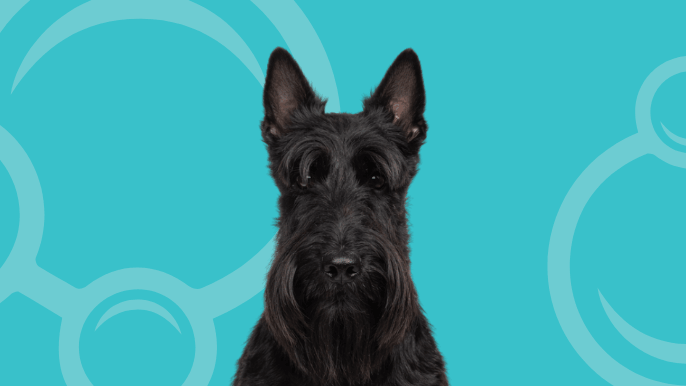
Scottish Terrier Temperament is what happens when centuries of Highland earth dog work produce a breed of unshakeable dignity, fierce independence, and a territorial confidence that earned it the nickname "the Diehard."
The Scottish Terrier was developed in the Scottish Highlands to hunt and bolt vermin, fox, and badger from underground dens. Understanding Scottish Terrier Temperament starts with the breed's fundamental character: this is the most dignified, most territorial, and most independent of the commonly kept terrier breeds.
These dogs are dignifiedly fierce. Scottish Terrier Temperament includes a quiet intensity, a territorial confidence, and an independent self-possession that is often described as aloof. They do not seek approval. They do not perform for attention. They carry themselves with a regal self-assurance that either captivates or frustrates owners depending on expectations. The Scottish Terrier decides who earns its affection, and that affection, once given, is loyal and steadfast.
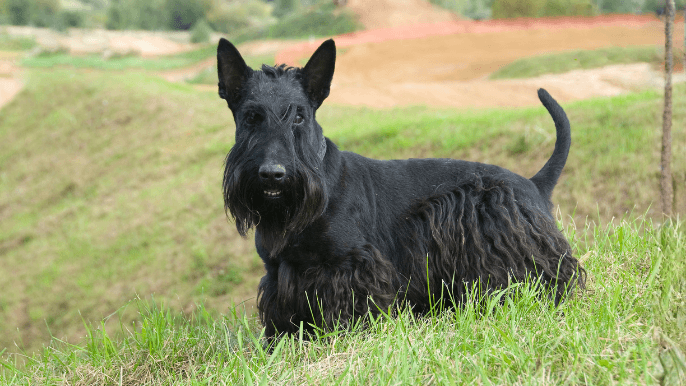
The wire coat on the Scottish Terrier is a harsh, weather-resistant working coat with a distinctive silhouette. Scottish Terrier Temperament and coat care connect because the iconic Scottie profile (long beard, bushy eyebrows, trimmed body with full skirt) requires specific wire coat technique, and the breed's independent nature means grooming cooperation is earned through respect rather than demanded through authority.

Let me tell you what you are really getting with a Scottish Terrier, because this breed is the most independent terrier and that independence defines every interaction.
The Scottish Terrier is the Diehard. Scottish Terrier Temperament is fiercely independent, quietly territorial, and dignified to its core. This is not a people-pleasing breed. This is a breed that evaluates every request, decides whether compliance serves its purposes, and proceeds accordingly. The Highland hunting heritage produced a dog that worked alone underground, making its own decisions in darkness. That self-reliance persists completely.
Now let me talk grooming. Honestly.
The wire coat requires specific technique to maintain the iconic Scottie silhouette. Pawfect Finish Coat Spray lightly on furnishings (beard, eyebrows, skirt, leg feathering ) at every session. The Medium-Pinned Slicker Brush maintains the body coat. The FurHQ Detail Comb verifies the furnishings. The Short-Medium Coat Carding Rake removes dead undercoat once a week maximum. Coat-Quench Conditioner selectively on furnishings and undercoat only, never on the harsh jacket .
This breed is NOT for you if:
- You want an eager-to-please, obedient companion
- You expect affection on demand
- You want a social, friendly breed that loves everyone
- You have small children who want a playful, tolerant dog
- You cannot respect absolute terrier independence
Because Scottish Terrier Temperament includes:
- Fierce independence that resists authority-based training
- Territorial behaviour toward unfamiliar dogs, particularly same-sex aggression
- Aloofness with strangers that some interpret as unfriendliness
- Wire coat requiring specific technique including carding and selective conditioning
- Potential for Scottish Terrier cramp (a unique neurological condition)
- Digging and prey drive from earth dog heritage
This breed IS for you if:
- You respect dignified, independent character over eager obedience
- You appreciate a breed that offers loyalty on its own terms
- You want a small, confident, territorial terrier with genuine personality
- You enjoy the iconic wire coat silhouette and grooming tradition
- You understand that terrier independence is character, not defiance
Scottish Terrier Temperament rewards patient, confident owners who appreciate independence with a companion whose loyalty is earned, whose dignity is unwavering, and whose fierce character makes every interaction a genuine exchange between equals.
Respect the dignity. Maintain the wire coat. Earn the loyalty.
Do that, and you will share your life with the most dignified, most independent, and most characterful terrier breed in the world.
Breed Handling Profile
| Trait | Level | Notes |
|---|---|---|
| Emotional sensitivity | Low | Stoic and self-contained; not easily affected by handler emotion |
| Handling tolerance | Moderate | Cooperative when respected; resists forceful handling |
| Grooming commitment | Moderate to High | Wire coat with iconic silhouette; furnishings need regular attention |
| Exercise needs | Moderate | Needs 30 to 45 minutes daily; steady rather than vigorous |
| Alone time tolerance | High | Independent and content alone; not a clingy breed |
| Best fit household | Experienced terrier owners who respect independence and appreciate dignified character |
Breed Purpose and Why It Matters for Scottish Terrier Temperament
The Scottish Terrier was developed in the Scottish Highlands as an earth dog, hunting vermin, fox, and badger in rough terrain and underground dens. The breed worked independently in dark, confined spaces, making life-or-death decisions without human guidance. The harsh Highland weather required a weather-resistant wire coat, and the dangerous quarry required absolute fearlessness in a compact body.
Scottish Terrier Temperament reflects this Highland working heritage completely. The fierce independence, the territorial vigilance, the stoic self-reliance, and the calm confidence all trace to a breed that survived and thrived through individual courage and decision-making. When your Scottish Terrier ignores a command it considers unnecessary, stands its ground with unwavering confidence, and offers loyalty selectively rather than indiscriminately, that is centuries of Highland earth dog heritage expressing itself. The breed's nickname "the Diehard" reflects this tenacious character, and historical accounts describe Scottish Terriers pursuing quarry with a determination that bordered on reckless courage, refusing to back down regardless of the size or ferocity of the opponent.
FurHQ Coat Type Breakdown
The Scottish Terrier wears a Wire Coat as classified in the FurHQ seven-coat system. The coat features a harsh, dense topcoat with a soft, dense undercoat and the iconic furnishing profile.
The Scottie's wire coat creates its distinctive silhouette: trimmed body, full beard, bushy eyebrows, and flowing skirt. Maintaining this profile requires regular grooming. Black, brindle, and wheaten are the standard colours. The harsh topcoat should be maintained through carding .
The Medium-Pinned Slicker Brush maintains the body coat. The FurHQ Detail Comb verifies the heavy furnishings. The Short-Medium Coat Carding Rake removes dead undercoat.
The recommended kit is the FurHQ Starter Grooming Kit: Wire Coat.
Not Sure About Your Dog's Coat Type?
Not every dog fits neatly into one coat category, and that is completely normal.
Use the FurHQ AI Coat Identifier to find out your dog's coat type and get matched to the right FurHQ Starter Grooming Kit.
Puppy Coat to Adult Coat Transition
Scottish Terrier puppies develop their adult wire texture gradually. The puppy coat is softer and the harsh adult texture and the iconic silhouette develop over the first year. Regular brushing during this period establishes the routine.
Scottish Terrier Temperament during this period is independent even as a puppy. Start grooming from 8 weeks. The independent nature means early positive associations with grooming are essential. Use Pawfect Finish Coat Spray lightly on furnishings. The FurHQ 5-Step Method provides structure.
The FurHQ 5-Step Grooming Method: Technical Reality
The FurHQ 5-Step Method (Audit, Prep, Bath, Dry, Finish) applies to this coat type with emphasis on preserving the wire jacket texture while maintaining the softer furnishings and undercoat separately.
Learn the Method. Follow the Protocol. Complete the Mission.
Setup and Stability
Secure the dog using the Stay Put System (suction cup anchor + safety lead). For anxious dogs, the Hush Pup Wrap provides calming compression. Wire coats require patience during grooming, particularly around the face, beard, and leg furnishings where sensitivity is higher.
Tools and Technique
Audit: Begin every session by running your hands over the entire body. Check the jacket for blown (soft) coat, feel for undercoat density, and examine the furnishings for tangles. Check behind the ears, the beard, armpits, and leg furnishings where mats develop.
Prep: Use the Medium-Pinned Slicker Brush on furnishings and the Rubber Curry on the body coat. Use Pawfect Finish Coat Spray on furnishings before brushing. Verify furnishings with the FurHQ Detail Comb. Use the Short to Medium Coat Carding Rake on the body coat to remove dead undercoat and blown jacket, maximum once per week.
Bath: Use Rubber Curry during bathing for skin stimulation and to work shampoo through the dense coat. Rinse thoroughly, ensuring shampoo reaches the skin beneath the wire jacket.
Dry: Towel dry thoroughly. Use a dryer working with the coat's natural direction. The wire jacket should air up and maintain its texture as it dries.
Finish: Final comb-through of furnishings with the FurHQ Detail Comb. Assess the jacket texture and overall outline. Apply Pawfect Finish Coat Spray to furnishings only.
Chemistry and Coat Care
Texture-Tastic Shampoo cleanses while supporting the wire texture. Coat-Quench Conditioner and Pawfect Finish Coat Spray are applied selectively to the furnishings and undercoat only, never to the jacket or saddle . Over-conditioning the wire jacket softens the texture and compromises the coat's natural harsh structure. This selective conditioning approach is essential for maintaining proper wire coat integrity.
The Coat Release Method (Condensed)
Wire coats carry undercoat beneath the jacket that releases seasonally. During the Bath step, after full saturation and shampoo application, use controlled airflow in the tub while the coat is still lathered. The lubrication allows dead undercoat to release safely without friction or skin trauma. Rinse, then apply a second shampoo with the Rubber Curry to complete the release. This keeps dead coat contained in the tub rather than spread across your home. For the full step-by-step process, see The Coat Release Method for Dogs with Undercoat in Related Reading.
FurHQ Starter Grooming Kit Breakdown
The FurHQ Starter Grooming Kit: Wire Coat is recommended for the Scottish Terrier.
Standard Items (included in all FurHQ kits):
- Stay Put System (suction cup anchor + safety lead + training tips)
- Hush Pup Wrap
- Rubber Curry (for bathing)
- Ear Wipes
- Pawfect Finish Coat Spray
Coat-Specific Items:
- Texture-Tastic Shampoo
- Coat-Quench Conditioner (selective application)
- Medium-Pinned Slicker Brush
- FurHQ Detail Comb
- Short-Medium Coat Carding Rake
Total: 10 items
Each kit includes step-by-step video tutorials and informational PDFs.
Scottish Terrier Temperament: Superpowers and Kryptonite
Superpowers
🌟 Unwavering dignity: Scottish Terrier Temperament delivers regal self-possession and composed confidence that commands respect.
🌟 Fierce loyalty: Once earned, Scottish Terrier loyalty is absolute and steadfast.
🌟 Independent self-reliance: Content alone, confident without reassurance, and secure in every situation.
🌟 Iconic appearance: The distinctive silhouette is one of the most recognisable in the dog world.
🌟 Compact confidence: Scottish Terrier Temperament packs enormous character into a 8.5 to 10 kilogram body.
🌟 Low-shedding wire coat: Properly maintained wire coat sheds minimally.
Kryptonite
⚠️ Fierce independence: Scottish Terrier Temperament resists authority-based training. Commands are evaluated, not automatically obeyed.
⚠️ Same-sex dog aggression: Territorial behaviour creates potential for serious conflict with unfamiliar dogs, particularly same-sex encounters.
⚠️ Aloofness with strangers: The breed does not warm to everyone. Some people experience this as unfriendliness.
⚠️ Scottie cramp: A unique neurological condition causing movement difficulty during stress or excitement.
⚠️ Bladder cancer predisposition: The breed has higher-than-average rates of transitional cell carcinoma.
⚠️ Furnishing maintenance: The iconic beard, eyebrows, and skirt require regular combing and cleaning.
FurHQ's Lifestyle Lens and Pro Insights
Scottish Terriers are the most dignified dogs to encounter on the grooming table. Scottish Terrier Temperament during grooming is composed and self-possessed. The breed does not fuss, does not seek reassurance, and does not struggle. It simply assesses, accepts, and endures with quiet dignity. Forceful handling creates resistance. Respectful, steady technique is rewarded with cooperation.
The same-sex aggression conversation is important. Scottish Terrier Temperament includes genuine territorial aggression toward unfamiliar dogs, particularly dogs of the same sex. This is not playful posturing. This is serious territorial behaviour that can escalate quickly. Off-lead encounters require extreme caution. Multi-dog households should consider opposite-sex pairings.
The Scottie cramp conversation is unique to this breed. Scottish Terrier cramp is a neurological condition where the dog's muscles stiffen during periods of stress, excitement, or vigorous exercise, causing a distinctive stiff, cramped gait. Episodes are not painful but are distressing to watch. The condition is inherited and incurable but manageable through stress reduction and avoiding triggers.
The beard collects food and water. Comb it with the FurHQ Detail Comb daily. The skirt tangles from movement. Card once a week maximum with the Short-Medium Coat Carding Rake. Selective conditioner on furnishings and undercoat only. Scottish Terrier Temperament cooperates when handled as an equal, not a subordinate.
Health and Lifespan: The FurHQ Touch Test
The Scottish Terrier typically lives 12 to 15 years.
Regular grooming sessions serve as health assessments. Scottish Terrier Temperament is cooperative during examinations with trusted handlers.
Transitional cell carcinoma (bladder cancer) occurs at higher rates in this breed than any other, making urinary monitoring important. Scottie cramp is a breed-specific neurological condition causing muscle stiffness during stress or excitement. Von Willebrand's disease (a bleeding disorder) is inherited in some lines. Craniomandibular osteopathy affects jaw development in puppies. Allergies can affect skin and coat. Patellar luxation is a concern. Hypothyroidism may develop. Liver shunts occasionally affect puppies.
Every grooming session is a conversation with your dog's body. The FurHQ 5-Step Method builds that conversation into your routine.
Related Breed Comparisons
If you are considering a Scottish Terrier, these breeds share some characteristics but differ in important ways:
- Sealyham Terrier Temperament: Similar independent wire-coated terrier. Calmer and more composed with a white coat and critically rare status.
- West Highland White Terrier Temperament: Similar Scottish heritage. More extroverted, more sociable, and less territorial than the Scottish Terrier.
- Miniature Schnauzer Temperament: Similar wire-coated, bearded terrier profile. More alert and vocal with less territorial intensity.
- Cairn Terrier Temperament: Another Scottish earth terrier. Friendlier, more adaptable, and less aloof than the Scottish Terrier.
Related Reading
Wire Coat Grooming
- Dog Coat Types Explained
- Coat Release Method
- How to Line Brush Your Dog
- How to Do a Comb Check on Your Dog
Comfort and Safety
- Dog Grooming Desensitisation
Tools and Products
Related Breed Blogs
The Bottom Line
Scottish Terrier Temperament delivers unwavering dignity, fierce independence, and genuine terrier character in the most self-possessed small breed. The independence challenges conventional training. The territorial behaviour requires management. The wire coat needs specific technique. But the return is a companion whose loyalty is earned and therefore meaningful, whose dignity commands genuine respect, and whose fierce, independent character creates a relationship between equals.
If you are ready for the commitment, the FurHQ Starter Grooming Kit: Wire Coat gives you every tool and product you need. You have a system that works.
Learn the Method. Follow the Protocol. Complete the Mission.
You got this. And we've got you.
Variation Clarity Statement
The Scottish Terrier is a purebred breed with an established standard. Weight is 8.5 to 10 kilograms. Colours are black, brindle, and wheaten. The wire texture is consistent across the breed. Individual variation in furnishing density and territorial intensity exists. Always assess the coat in front of you.
Use the FurHQ AI Coat Identifier to get accurate identification and the right kit recommendation.
FAQs
What coat type does the Scottish Terrier have?
The Scottish Terrier has a Wire Coat in the FurHQ seven-coat system. The seven coat types are Smooth Single Coat, Short Double Coat, Medium Plush Double Coat, Feathered Long Double Coat, Wire Coat, Curly Wavy Coat, and Drop Coat.
How often should I brush my Scottish Terrier?
Brush 2 to 3 times weekly with the Medium-Pinned Slicker Brush. Comb furnishings with the FurHQ Detail Comb. Card once a week maximum. Mist furnishings with Pawfect Finish Coat Spray. Clean the beard daily.
Are Scottish Terriers aggressive?
Scottish Terrier Temperament is territorial, not aggressive. However, same-sex dog aggression is a genuine concern. Early socialisation and careful management around unfamiliar dogs are essential.
What is Scottie cramp?
Scottie cramp is a breed-specific neurological condition causing muscle stiffness during stress or excitement. Scottish Terrier Temperament owners should learn to recognise triggers and manage accordingly.
Why is conditioner applied selectively?
Coat-Quench Conditioner softens coat texture. The harsh jacket must remain harsh. Apply only to furnishings (beard, eyebrows, skirt, leg feathering), friction areas, and undercoat.
How often should I bathe my Scottish Terrier?
Bathe every 6 to 8 weeks using Texture-Tastic Shampoo. Apply Coat-Quench Conditioner selectively. Never bathe a matted coat.
How much exercise does a Scottish Terrier need?
Scottish Terrier Temperament requires 30 to 45 minutes of daily exercise. Steady walks suit the dignified temperament. Avoid overexertion in hot weather.
Is the Scottish Terrier good with children?
Scottish Terrier Temperament is independent and does not tolerate rough handling. The breed suits families with respectful older children rather than boisterous toddlers.
What tools and products are in the FurHQ Starter Grooming Kit: Wire Coat?
The FurHQ Starter Grooming Kit: Wire Coat contains 10 items. Coat-specific: Texture-Tastic Shampoo, Coat-Quench Conditioner (selective), Medium-Pinned Slicker Brush, FurHQ Detail Comb, Short-Medium Coat Carding Rake. Standard: Stay Put System, Hush Pup Wrap, Rubber Curry, Ear Wipes, Pawfect Finish Coat Spray.
Why is bladder cancer a concern?
The Scottish Terrier has the highest breed predisposition for transitional cell carcinoma (bladder cancer). Regular veterinary monitoring and awareness of urinary changes are recommended.
How does the FurHQ 5-Step Method work for the Scottish Terrier?
The FurHQ 5-Step Method (Audit, Prep, Bath, Dry, Finish) emphasises respectful handling. Audit checks furnishings, coat, skin, and joints. Prep uses the Medium-Pinned Slicker Brush on body and FurHQ Detail Comb on furnishings. The Coat Release Method supports coat turnover through carding. Bath uses Texture-Tastic Shampoo with selective Coat-Quench Conditioner. Dry thoroughly. Finish applies Pawfect Finish Coat Spray to furnishings.
What FurHQ Starter Grooming Kits are available?
FurHQ offers seven coat-specific kits: FurHQ Starter Grooming Kit: Smooth Single Coat, FurHQ Starter Grooming Kit: Short Double Coat, FurHQ Starter Grooming Kit: Medium Plush Double Coat, FurHQ Starter Grooming Kit: Feathered Long Double Coat, FurHQ Starter Grooming Kit: Wire Coat, FurHQ Starter Grooming Kit: Curly Wavy Coat, and FurHQ Starter Grooming Kit: Drop Coat. Use the FurHQ AI Coat Identifier for accurate classification or visit the FurHQ Store.