
Rounded Foot Grooming for Curly Wavy-Coated Breeds
Table of Contents
- Introduction
- Why Curly-Coated Breeds Need Rounded Foot Grooming
- The FurHQ 5-Step Grooming Method: Technical Reality
- Understanding the Two Methods
- Tools Needed for Rounded Foot Grooming
- Preparing Curly-Coated Feet
- Method 1: Hand-Shaping (Boxing and Rounding)
- Method 2: Clipper Method (Simultaneous Technique)
- Tips for Perfect Results
- Common Mistakes
- How Often to Perform Rounded Foot Grooming
- Seasonal Considerations
- Training Your Dog to Accept Paw Handling
- Maintaining Between Sessions
- Professional Grooming vs Home Care
- Not Sure About Your Dog's Coat Type?
- Related Reading
- The Bottom Line
- FAQs
 Introduction
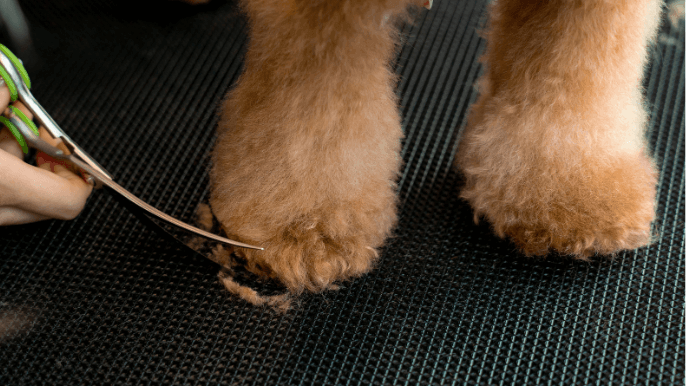
Rounded foot grooming creates full, neat, rounded feet with cylindrical leg styling on curly-coated breeds like Bichon Frises, Doodles, Kerry Blue Terriers, Soft Coated Wheaten Terriers, and Lhasa Apsos (pet trim).
This specialised style uses two professional methods: hand-shaping that boxes the foot with straight lines then rounds the corners with curved shears, or the faster clipper method that simultaneously trims pads and shapes the foot outline while the dog stands naturally.
This guide teaches both complete rounded foot grooming techniques, adapted for safe home use with the FurHQ Paw Perfect Foot Grooming Kit.
Why Curly-Coated Breeds Need Rounded Foot Grooming
Curly Wavy Coat dogs have continuously growing hair that forms dense texture requiring regular shaping. The curly coat creates specific challenges that rounded foot grooming addresses.
Curly hair mats extremely easily when wet, dirty, or allowed to grow too long between pads. The dense texture traps moisture against skin more effectively than straight coats, creating conditions for bacterial and yeast infections. Hair extending beyond pads eliminates traction, causing dangerous slipping.
Why This Style Suits Curly Coats
Rounded foot grooming creates the full, sculpted appearance that complements curly coats and cylindrical leg styling. This style maintains a deliberate rounded shape rather than natural or clipped appearance.
Bichon Frises traditionally sport rounded feet with full cylindrical legs as part of breed standard grooming. Doodles of all types look best with rounded feet complementing their teddy bear appearance. Kerry Blue Terriers require rounded feet for show presentation. Lhasa Apsos in pet trim (when trimmed short, under 10 cm / 4 in, Drop Coat dogs use Curly Wavy methods) benefit from rounded feet for easier maintenance.
The FurHQ 5-Step Grooming Method: Technical Reality
Rounded foot grooming integrates into the FurHQ 5-Step Grooming Method (Audit, Prep, Bath, Dry, Finish).
"Learn the Method. Follow the Protocol. Complete the Mission."
Audit
Start every grooming session with a full health check. Run your hands over the entire dog. Check for lumps, bumps, and any changes in skin condition. Check the ears for signs of infection, smell, or buildup. Look at the nails for overgrowth or splitting. Check teeth and gums for tartar or inflammation.
For feet specifically, check paw pad hair length and foot shape. If hair extends beyond pads or the rounded shape has grown out into a pointed appearance, rounded foot grooming is needed.
The Audit on curly-coated feet must include feeling between toes. Curly texture hides mats that are not visible from the surface. The FurHQ Touch Test helps you catch developing issues.
Prep
Rounded foot grooming typically happens during Prep. The coat must be exceptionally clean and fluff-dried as straight as possible before shaping. Back-brush and eliminate all tangles. Clip between pads. Shape using your chosen method.
For the rest of the coat, Curly Wavy Coat Prep requires full line brushing to remove mats and tangles before bath. Mist Pawfect Finish Coat Spray before every brush session. Verify with FurHQ Detail Comb.
Bath
Clean between toes and paw pads thoroughly. Use Texture-Tastic Shampoo for curly coats, worked to the skin with the Rubber Curry for bathing and skin stimulation. Apply Coat-Quench Conditioner.
Dry
Blow-dry feet completely. This is critical for curly coats. Never let curly-coated feet air-dry because they will mat. Fluff the coat while drying to restore volume needed for shaping.
See How to Dry a Dog After a Bath for complete drying guidance.
Finish
Final touch-up shaping. Check that the rounded shape is consistent on all four feet. Confirm pads are clean, dry, and properly trimmed.
You got this.
Understanding the Two Methods
Professional groomers use two distinct methods for rounded foot grooming.
Method 1: Hand-Shaping (Boxing Then Rounding)
This longer, more precise method shapes the foot entirely by hand. Use straight shears to create a square box foundation, then curved shears to round the corners.
This method allows maximum precision and control, corrects conformational flaws with ease, and works for all foot sizes and coat densities. Suitable for beginners following simple rules.
Method 2: Clipper Method (Simultaneous Pad and Outline)
This faster method sets the basic round shape with clippers while simultaneously clipping the pads. It saves significant time once mastered, trimming pads and shaping outline in one motion.
This method requires more skill and experience. It works best for small to moderate feet and should not be used on exceptionally large feet, heavy coats, or poorly built dogs.
Choosing Your Method
Beginners should start with Method 1. Once comfortable, learn the clipper method for faster results on appropriate candidates.
Tools Needed for Rounded Foot Grooming
The FurHQ Paw Perfect Foot Grooming Kit includes everything needed for both methods.
| Tool | Purpose |
|---|---|
| Heavy slicker brush | Brushing coat down over foot, eliminating tangles before shaping |
| FurHQ Detail Comb | Ensures coat is completely tangle-free and fluffed straight |
| 5-in-1 clipper with guards | Clipping pads in Method 1; simultaneous technique in Method 2 |
| Straight shears (long) | Creating the initial square box in Method 1 |
| Curved shears | Rounding corners and creating final shape in both methods |
| Thinning shears | Softening lines for more natural finish |
The heavy slicker brush is essential because it pulls curly coat down over the foot so each hair shaft aligns with its neighbours, similar to a hairdresser combing hair in one direction before cutting. Without this preparation, curly texture prevents accurate shaping.
The FurHQ Paw Perfect Foot Grooming Kit is available in the FurHQ Store.
Preparing Curly-Coated Feet
Exceptional preparation is critical for success on curly coats.
Clean and fluff dry the coat. The coat must be exceptionally clean and fluff-dried as straight as possible. Trimming dirty curly coat is nearly impossible and dulls blades quickly.
Eliminate all tangles. Use the heavy slicker brush and FurHQ Detail Comb to work through every tangle and mat. When the brush glides easily through the hair, the coat is ready.
Fluff the coat. After removing all tangles, fluff the coat so it stands away from the foot with maximum volume.
Ensure dog stands squarely. Your dog must stand squarely on the table in natural position for accurate shaping. The Stay Put System provides secure positioning.
Method 1: Hand-Shaping (Boxing and Rounding)
This is the traditional professional method for creating perfectly rounded feet.
Step 1: Clean the Pad
Before shaping the foot outline, clean between the pads using the 5-in-1 clipper.
Lift your dog's foot and spread toes gently. Set clipper to #40 for closest trim or #15 for more safety margin. Position clipper flat against pad surface. Move in direction of hair growth using short strokes. Work carefully between all pads. Remove all hair extending beyond the pad surface.
Step 2: Create the Square Box Foundation
The foot is "boxed in" with straight lines to create a square foundation that will be rounded in the next step.
Brush the foot thoroughly with the heavy slicker brush. Fluff the coat so it stands away from the foot. Make sure the dog is standing squarely.
The four cuts: first cut goes straight across the front two digits. Second and third cuts go along the outside edges on both sides. Fourth cut goes along the rear of the foot, completing the box.
The bottom blade of your straight shear glides along the tabletop next to your dog's foot as the pet stands naturally. Bevel the shear up and away from the pad to prevent accidentally cutting pads.
Step 3: Round the Corners
Once the foot is boxed in with straight lines, go back with curved shears and take off the corners.
Cut diagonal lines across each corner of the box. Work systematically around all four corners. Blend the cuts to create smooth, continuous rounded shape. The harsh square box transforms into a neat, rounded foot.
Step 4: Pick Up and Final Shaping
Pick the foot up (either under the elbow or above the hock) and brush the coat down over the foot for final shaping.
Check and reshape if there is not a smooth, soft "U" shape visible. View the foot from top and only cut at the edges, never under the foot from top view.
Re-brush the foot and turn it over to check for long strays next to the pad. With small detail shears (under 15 cm / 6 in), trim anything falling outside established guidelines.
Shake the foot once more and place on the table. The shape should be full, round, and neat from every angle.
Method 2: Clipper Method (Simultaneous Technique)
This faster method sets the basic round shape with clippers while simultaneously clipping pads.
Step 1: Brush Thoroughly
Use the heavy slicker brush to eliminate all tangles. When the brush glides easily through hair, the coat is ready. Brush all fur down over the foot so hair lies smooth and aligned.
Step 2: Pick Up Foot and Start Clipping
Slide your hand down the dog's leg with thumb toward the table. Pick up the foot firmly but gently.
First, gently clip out the pad using your hand and fingers as a brace. Use #40 blade for pads. Clip off excess hair hanging beyond the outside edge of the foot. Keep the blade level with the foot pad. Do not cut up into the side coat of the foot.
This clips pads and roughly shapes the outline simultaneously.
Step 3: Finish Shaping with Shears
Finish with shears while the dog stands naturally on the table. Use curved shears to refine the rounded shape. Soften the line with thinning shears if desired.
Important Limitations
Do not use the clipper method on dogs with exceptionally large feet, extremely heavy or dense coats, poor conformation, or extremely poor fronts. For these cases, always use Method 1.
Tips for Perfect Results
The coat must be exceptionally clean and fluff-dried as straight as possible before attempting rounded foot grooming.
Use the heavy slicker brush properly. Pull coat down over the foot so each hair shaft aligns with its neighbours.
Box it in first when hand-shaping. This eliminates the pointed toe look, the most common error.
Open curved shear blades when rounding. Glide them through fur with the bottom blade along the tabletop.
Bevel shears outward. Keep shears close to the foot but angled away to eliminate cutting risk.
When the foot is picked up, only use detail shears under 15 cm (6 in) to minimise cutting risk.
Check for a smooth "U" shape. When the foot is picked up and brushed, the shape should be soft and rounded from top view.
Double and triple-check your work from all angles before the pet leaves the table.
Common Mistakes
| Mistake | Why It Is a Problem | Solution |
|---|---|---|
| Shaping dirty or tangled coat | Accurate shaping impossible | Wash, fluff-dry, brush completely first |
| Skipping the boxing step (Method 1) | Creates pointed toes | Always create square foundation first |
| Using clipper method on large feet | Method 2 not suited | Switch to Method 1 |
| Not brushing coat down before shaping | Hair misaligned, inaccurate cutting | Brush until all shafts aligned |
| Cutting under foot from top view | Removes too much hair | Only cut at edges from top view |
| Using long shears on picked-up foot | Increases cutting risk | Detail shears under 15 cm (6 in) only |
| Not checking from all angles | Inconsistencies hidden | Rotate and examine every angle |
How Often to Perform Rounded Foot Grooming
Most curly-coated breeds need rounded foot grooming every 3 to 6 weeks. Faster-growing coats like many Doodles may need attention every 3 to 4 weeks. Slower-growing breeds may go 5 to 6 weeks.
Weekly Checks
Examine feet weekly during your Audit. If hair extends beyond pads, feet look pointed, or you notice slipping on smooth floors, groom immediately.
Seasonal Considerations
Winter Management
Curly hair between pads creates severe ice ball problems. Snow packs into the dense curly texture and freezes into painful masses.
Trim pads very short using #40 blade before winter begins. Consider shortening overall foot hair for maximum prevention. Check and groom every 2 to 3 weeks throughout snowy months. Apply paw balm before outdoor activities. Rinse and thoroughly dry feet after winter walks. Blow-dry completely because damp curly hair mats instantly.
Summer Management
Matted curly hair traps heat and moisture, creating infection risk in warm weather.
Maintain consistent grooming schedule. Check feet after swimming (curly coats mat easily when wet). Blow-dry thoroughly after water activities. Monitor for odour indicating infection.
Training Your Dog to Accept Paw Handling
Week 1: Basic Touch
Touch paws briefly with no tools. Hold each paw for increasing durations. Gently spread toes and touch between all pads. Reward generously. Introduce standing squarely on the table.
Week 2: Increased Handling
Continue paw holding and toe spreading. Hold paws in both clipping position (picked up) and shaping position (standing). Introduce gentle brushing motion with the slicker brush. Brush coat down over feet while dog stands.
Week 3: Tool Introduction
Let your dog see and sniff all tools. Touch tools to paws without using them. Turn on the clipper near your dog without touching so they hear the sound. Gradually move closer while pairing with treats.
Week 4: Actual Grooming Begins
Start with just brushing one foot while the dog stands on the table. Reward immediately. Next session, add clipping between pads on one foot. Gradually increase over multiple sessions.
Never force or punish resistance. Curly-coated breeds often have extended grooming sessions, so building strong tolerance is essential.
Maintaining Between Sessions
Weekly Quick Checks
Examine foot shape during weekly nail checks. Use the FurHQ Detail Comb to check for mats between pads. Brush feet after muddy or wet outdoor activities.
After Wet Conditions (Critical for Curly Coats)
Thoroughly blow-dry feet after rain, snow, swimming, or baths. Use the slicker brush to fluff coat and separate clumping. Check between all pads for moisture or developing mats.
Never let curly-coated feet air-dry. They will mat.
Spot Maintenance
Keep tools accessible for quick touch-ups when feet lose their rounded shape or hair extends beyond pads. A five-minute touch-up with curved shears restores the appearance between full sessions.
Professional Grooming vs Home Care
Home care gives you complete control over timing and frequency, with professional-quality tools from the FurHQ Paw Perfect Foot Grooming Kit.
Seek professional help if your dog shows aggression despite patient training, has severe matting you cannot safely remove, or if you are uncomfortable with the precision required.
Many owners perform rounded foot grooming at home every 3 to 4 weeks while scheduling professional full-body grooming every 6 to 8 weeks.
Not Sure About Your Dog's Coat Type?
Use the FurHQ AI Coat Identifier to upload a photo and get accurate coat type identification. FurHQ organises all dogs into seven coat types: Curly Wavy, Drop, Wire, Short Double, Medium Plush Double, Feathered Long Double, and Smooth Single.
Rounded foot grooming is specifically for Curly Wavy Coat dogs and Drop Coat dogs in pet trims (under 10 cm / 4 in). For double-coated breeds, see Natural Foot Grooming for Double-Coated Dogs.
Box it in first. That is the whole secret. Beginners try to round the foot freehand and end up with pointed toes every single time. Straight lines first, four cuts, square box. Then grab the curved shears and take the corners off. Box it, round it, done. Once you see the difference, you will never skip the box again.
Related Reading
Foot and Paw Care
- Natural Foot Grooming for Double-Coated Dogs
- Dog Paw Pad Hair: Why Trimming Prevents Injury
- Dog Nail Trimming for Nervous Dogs
Coat Type Guides
- Curly Wavy Coat Dogs: Complete Grooming Guide
- Drop Coat Dogs: Complete Grooming Guide
- Dog Coat Types Explained
Grooming Techniques
- The FurHQ Touch Test
- Line Brushing Technique
- Dog Grooming Brushes: A Complete Guide by Coat Type
- How to Dry a Dog After a Bath
The Bottom Line
Rounded foot grooming creates full, neat, sculpted feet on curly-coated breeds using two professional methods: hand-shaping (boxing then rounding) for maximum precision, or the clipper method for faster results on appropriate candidates.
Within the FurHQ 5-Step Grooming Method (Audit, Prep, Bath, Dry, Finish), the Audit checks paw pad hair length and foot shape. The Prep phase handles the shaping work on clean, fluff-dried, tangle-free coat. The Bath cleans between toes with Texture-Tastic Shampoo and Coat-Quench Conditioner. The Dry phase blow-dries completely (never air-dry curly coats). The Finish confirms consistent rounded shape on all four feet.
The hand-shaping technique creates a square box foundation with straight shears then rounds the corners with curved shears. The clipper method simultaneously trims pads and shapes outline for dogs with small to moderate feet. Beginners should start with hand-shaping.
Most curly-coated breeds need rounded foot grooming every 3 to 6 weeks, with winter requiring extra vigilance against ice balls. The FurHQ Paw Perfect Foot Grooming Kit provides all necessary tools.
You got this. And we've got you. 🐾
FAQs
What is rounded foot grooming and which breeds need it?
Rounded foot grooming is a professional technique that creates full, neat, rounded feet with cylindrical leg styling on curly-coated breeds. Breeds that need rounded foot grooming include:
- Bichon Frises
- Goldendoodles
- Labradoodles
- Bernedoodles
- Aussiedoodles (all Doodle varieties)
- Kerry Blue Terriers
- Soft Coated Wheaten Terriers
- Lhasa Apsos (pet trim)
This style maintains the full, sculpted appearance appropriate for curly coats rather than natural or clipped looks, creating feet that complement the cylindrical leg styling characteristic of these breeds.
What are the two methods for rounded foot grooming?
The two professional methods for rounded foot grooming are:
Method #1 - Hand-Shaping (Boxing and Rounding):
- Creates square box foundation with straight shears
- Rounds corners with curved shears
- Allows maximum precision and control
- Works for all foot sizes and coat densities
- Takes longer but ensures quality results
- Best for beginners learning the technique
Method #2 - Clipper Method (Simultaneous):
- Sets basic round shape with clippers while clipping pads
- Saves significant time once mastered
- Trims pads and shapes outline in one motion
- Works best for small to moderate feet only
- Should NOT be used on large feet, heavy coats, or poorly built dogs
- Requires more skill and experience
Beginners should start with Method #1 to learn proper technique, then graduate to Method #2 for appropriate candidates.
How do I create the box foundation in hand-shaping method?
The boxing technique creates a square foundation that eliminates the pointed toe look:
Boxing Steps:
- Brush/comb foot thoroughly to eliminate all tangles
- Fluff coat so it stands away from foot
- Ensure dog stands squarely on table
- First cut: Straight across front two digits with straight shears
- Second and third cuts: Along outside edges on both sides
- Fourth cut: Along rear of foot, completing the box
Shear Position:
- Bottom blade glides along tabletop next to dog's foot
- Shear beveled up and away from pad to prevent cutting
- Dog stands naturally throughout boxing process
Then Round:
- Use curved shears to cut diagonal lines across each corner
- Transform square box into smooth, rounded shape
Why must curly coats be exceptionally clean before rounded foot grooming?
Curly coats require exceptional preparation because:
- Dirty curly hair is impossible to shape accurately: Makes precise rounded foot grooming nearly impossible
- Dulls blades like cutting sandpaper: Professional manuals emphasize clean feet maximize blade sharpness
- Tangles prevent accurate shaping: Each hair shaft must align with neighbors for precision cutting
- Wet or damp curly coat mats instantly: Must be thoroughly blow-dried before grooming
- Fluff-dried straight is essential: Coat must be dried as straight as possible for best results
Preparation Requirements:
- Wash feet thoroughly
- Blow-dry completely (never air-dry curly coats)
- Brush with heavy slicker until brush glides easily
- Eliminate every tangle and mat
- Fluff coat to maximum volume
- Brush coat down over foot aligning all hair shafts
Without this preparation, rounded foot grooming results will be poor regardless of technique skill.
How often should I perform rounded foot grooming on my Doodle?
Rounded foot grooming frequency for Doodles and other curly-coated breeds:
Regular Schedule:
- Every 3 to 6 weeks for most curly-coated breeds
- Every 3 to 4 weeks for faster-growing coats like many Doodles
- Every 5 to 6 weeks for slower-growing individuals
Factors Affecting Frequency:
- Growth rate (varies significantly between individual dogs)
- Activity level (outdoor dogs may wear hair down naturally)
- Climate (humid environments cause faster matting)
- Season (spring shedding requires more frequent attention)
- Owner preference (maintaining precise rounded shape needs more frequent grooming)
Weekly Checks:
- Examine feet during nail trimming
- Check if rounded appearance maintained or becoming pointed
- If hair extends beyond pads or feet look uneven, groom immediately
When should I NOT use the clipper method for rounded foot grooming?
Do NOT use Method #2 (clipper method) on dogs with:
- Exceptionally large feet: Method doesn't work well; creates uneven results
- Extremely heavy or dense coats: Too much coat to shape accurately with clipper alone
- Poor conformation when standing square: Cannot achieve proper rounded shape
- Extremely poor fronts: Clipper method cannot correct conformational flaws
Use Method #1 (Hand-Shaping) Instead For:
- All large feet regardless of breed
- Very heavy-coated individuals
- Dogs with structural issues
- When maximum precision is needed
- All beginners learning rounded foot grooming
- Any situation where clipper method produces poor results
The hand-shaping method works for ALL foot types and situations, while clipper method only works for small to moderate, well-proportioned feet.
How do I prevent ice balls in winter on curly-coated feet?
Winter ice ball prevention requires vigilant attention on curly coats:
Before Winter:
- Trim pads very short using #40 blade
- Consider shortening overall foot hair for maximum prevention
- Perform rounded foot grooming before first snowfall
Throughout Winter:
- Groom every 2 to 3 weeks during snowy months
- Apply paw balm before outdoor activities
- Rinse feet immediately after winter walks
- Blow-dry feet completely (critical for curly coats)
- Check between all pads for ice accumulation during walks
Why Curly Coats Are Worse:
- Dense curly texture traps snow more effectively
- Snow packs into curls and freezes into painful masses
- Damp curly hair mats instantly if not dried
- Ice balls form faster and larger in curly coats
Never let curly-coated feet air-dry in winter; they will mat and create bigger problems.
What are the most common mistakes in rounded foot grooming?
Common mistakes that compromise rounded foot grooming results:
- Attempting on dirty or tangled curly coat: Makes accurate shaping impossible
- Skipping the boxing step: Creates pointed toe look instead of rounded
- Using clipper method on large feet or heavy coats: Produces poor, uneven results
- Not brushing coat down thoroughly: Prevents accurate assessment of where to cut
- Cutting under foot from top view: Should only cut at edges when foot is picked up
- Using long shears on picked-up foot: Increases cutting risk; use only shears less than 6 inches
- Not checking all angles: Feet may look good from one view but uneven from another
- Inconsistency between four feet: All feet should match in size and rounded shape
- Forcing dog to stand still: Creates fear instead of cooperation through patient training
- Letting curly feet air-dry: Always blow-dry curly coats completely to prevent matting
Can I combine home rounded foot grooming with professional grooming?
Yes, many owners successfully combine both approaches:
Home Rounded Foot Grooming:
- Perform every 3 to 4 weeks for regular shape maintenance
- Immediate attention when shape becomes pointed
- Winter ice ball prevention with frequent pad trimming
- Complete control over timing and rounded shape precision
- Cost savings compared to professional every 3-6 weeks
Professional Full-Body Grooming:
- Schedule every 6 to 8 weeks for complete coat care
- Handles bathing, blow-drying, and body shaping
- Professional expertise for cylindrical leg styling
- Groomers appreciate receiving dogs with maintained feet
Partnership Benefits:
- Feet maintain proper rounded shape between appointments
- Well-maintained curly-coated dogs easier for groomers
- You understand what groomers do and can maintain style at home
- Optimal care through home touch-ups and professional expertise
The FurHQ system provides everything needed for safe, effective rounded foot grooming at home between professional visits for complete grooming.
What is the difference between Method 1 and Method 2 for rounded foot grooming?
Method 1 (hand-shaping) creates a square box foundation with straight shears then rounds the corners with curved shears. It allows maximum precision, works for all foot sizes and coat densities, and is best for beginners. Method 2 (clipper method) simultaneously trims pads and shapes the outline in one motion. It is faster but requires more skill and should not be used on large feet, heavy coats, or dogs with poor conformation.
Why do my dog's feet look pointed instead of rounded?
You likely skipped the boxing step in Method 1. Always create the square foundation with straight shears first, then round the corners with curved shears. The box eliminates the pointed toe look, which is the most common error in rounded foot grooming.
Where does rounded foot grooming fit in the FurHQ 5-Step?
The Audit checks paw pad hair length and foot shape. The Prep phase handles rounded foot grooming with clean, fluff-dried, tangle-free coat. The Bath phase cleans between toes. The Dry phase blow-dries feet completely (never air-dry curly coats). The Finish phase confirms the rounded shape is consistent on all four feet.
Can I use the clipper method on any dog?
No. The clipper method (Method 2) is best for dogs with small to moderate feet. Do not use it on dogs with exceptionally large feet, extremely heavy or dense coats, poor conformation, or extremely poor fronts. For these dogs, always use Method 1 (hand-shaping), which works for all foot types.
Why must the coat be so clean before rounded foot grooming?
Curly coat that is dirty or tangled prevents accurate shaping. The hair shafts need to align so you can cut a consistent shape. Dirty coat also dulls blades rapidly. Wash, fluff-dry as straight as possible, and brush until the brush glides easily through the hair before attempting to shape.
My curly-coated dog's feet mat constantly. What should I do?
Increase grooming frequency to every 3 weeks. Brush feet thoroughly after any wet conditions. Blow-dry feet completely after baths, rain, or swimming. Never let curly-coated feet air-dry. Use Pawfect Finish Coat Spray on feet after outdoor activities to reduce friction and prevent tangling.
What does the FurHQ Paw Perfect Foot Grooming Kit include?
The kit includes a heavy slicker brush, FurHQ Detail Comb, 5-in-1 clipper with guards, straight shears, curved shears, thinning shears, and comprehensive video and written education for all four professional foot styles. Available in the FurHQ Store at furhq.ca/store.
What is the FurHQ 5-Step Grooming Method?
The FurHQ 5-Step Grooming Method is Audit, Prep, Bath, Dry, Finish. It provides structure for every grooming session so nothing gets missed. The Audit assesses the coat before you start. The Prep phase removes loose coat and addresses tangles. The Bath phase handles cleansing. The Dry phase removes moisture. The Finish phase completes the groom with a final assessment and comb check.