
Each FurHQ Starter Grooming Kit includes every tool and product needed for proper coat care based on your dog's specific coat type. Whether your dog has a curly wavy coat, drop coat, wire coat, smooth single coat, short double coat, medium plush double coat, or feathered long double coat, the kit comes with educational content, technique videos, and ongoing support to help you develop confidence and skill. Visit the FurHQ Store for the complete kit or individual products to build your grooming routine.
Professional Dog Grooming - How Often by Coat Type
By Mondo Fluffarino | FurHQ Blog Author & Chief Education Officer
Table of Contents
- Introduction
- Why Grooming Matters Beyond Looking Cute
- The Schedule Starts With Coat Type
- Smooth Single Coats: Every 8 to 12 Weeks
- Short Double Coats: Every 8 to 12 Weeks
- Medium Plush Double Coats: Every 6 to 8 Weeks
- Feathered Long Double Coats: Every 6 to 8 Weeks
- Curly Wavy Coats: Every 4 to 6 Weeks
- Drop Coats: Every 4 to 6 Weeks
- Wire Coats: Every 6 to 8 Weeks
- Quick Reference Schedule
- The FurHQ 5-Step Method: The Foundation Your Groomer Builds On
- Factors That Can Change the Schedule
- Signs It Is Time to Book Now
- Questions to Ask Your Groomer
- Making Grooming Sustainable
- The Bottom Line
- Related Reading
- Variation Clarity Statement
- FAQs
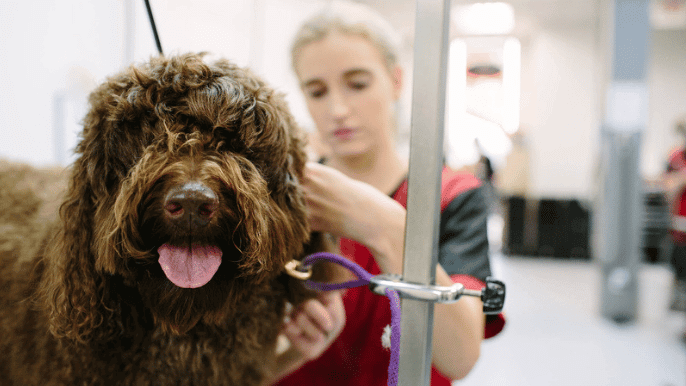 Introduction
Professional dog grooming is one of those responsibilities every dog owner knows matters, yet many are left guessing how often it should actually happen. Between work, family, and the daily pace of life, it is easy for grooming to slide from "important" to "we will book soon." The problem is that a dog's coat never pauses. It keeps growing, shedding, tangling, trapping moisture, and collecting debris whether you have time for it or not.
The good news is that you do not have to do it all yourself. Groomers exist for a reason, and once you understand how coat type drives grooming frequency, scheduling becomes far simpler. You stop guessing. You stop panic-booking. You stop showing up hoping for a tidy trim and leaving with a much shorter dog than you expected.
This guide walks you through professional dog grooming frequency by coat type, plus the real-world factors that can shift your schedule. If you have ever wondered why your neighbour's dog goes every eight weeks and yours needs every four, you are about to get your answer.
Why Grooming Matters Beyond Looking Cute
Professional dog grooming is not just about a clean smell and a polished look. It is a key part of comfort care and early detection. Groomers handle the coat in a way most owners cannot replicate at home, especially when a dog is wiggly, sensitive, or simply not thrilled about the process.
A solid grooming routine supports skin health by removing buildup and reducing moisture trapping. It supports comfort by preventing pulling, pinching, and tight tangles. It supports mobility by keeping nails and paw pads maintained. It supports hygiene by managing areas that easily collect mess. And it supports early awareness by spotting changes sooner rather than later.
In many households, the dog sees a groomer more often than they see a veterinarian. That frequent hands-on time matters, because someone is regularly checking the ears, skin, coat, paws, and nails with a trained eye.
The Schedule Starts With Coat Type
Here is the truth most owners are never told: coat type is the biggest driver of grooming frequency, not breed popularity, not size, and not what your dog looks like on the couch today. The coat decides how quickly tangles form, how moisture behaves against the skin, how shedding releases, and how fast a dog becomes uncomfortable.
Not sure what coat type your dog has? The FurHQ AI Coat Identifier can tell you in seconds. Upload a photo and get your answer so you can match your schedule to the right coat type from the start.
Below are coat-type schedules you can actually use, plus what typically happens during an appointment and what tends to go wrong when schedules slip.
Smooth Single Coats: Every 8 to 12 Weeks
Smooth single coats are often called "low maintenance," but they are not "no maintenance." These dogs still shed, sometimes heavily, and skin health still needs attention. Professional dog grooming appointments usually focus on bathing, nail trimming, ear cleaning with Ear Wipes, and a thorough brush-out with a Rubber Curry to lift dead hair and distribute natural oils.
Smooth single coated dogs often benefit from more frequent visits if they have sensitive skin, odour that returns quickly, or an active outdoor lifestyle that leads to frequent grime buildup.
The FurHQ Starter Grooming Kit: Smooth Single Coat provides the right tools for home maintenance between appointments. See Smooth Single Coat Grooming Guide for complete care guidance.
Short Double Coats: Every 8 to 12 Weeks
Short double coats shed more than most owners expect. These dogs carry a dense undercoat beneath a short, protective topcoat , and during spring and autumn shedding cycles, that undercoat releases in volume. Professional dog grooming appointments typically include a deep cleansing bath with Deep Clean Delight Shampoo, high-velocity drying to release loose undercoat, thorough brush-out with Medium-Pinned Slicker Brush, nail trimming, ear cleaning, and paw pad tidying.
More frequent visits during seasonal coat blows help manage the volume of dead undercoat. If your home has ever looked like it is being slowly taken over by floating fur tumbleweeds, that is a sign your schedule and home brushing routine need a tune-up.
The FurHQ Starter Grooming Kit: Short Double Coat provides the right tools for home maintenance. See Short Double Coat Grooming Guide for complete care guidance.
Medium Plush Double Coats: Every 6 to 8 Weeks
Medium plush double coats have thick, dense undercoats that regulate temperature and should not be shaved for convenience. The goal of professional dog grooming is undercoat removal, not coat removal.
During shedding seasons, dead undercoat can pack down against the skin, trap moisture, and cause irritation. Appointments usually include a deep cleansing bath, thorough high-velocity drying, deshedding with Short-Medium Coat Carding Rake, brush-out with Medium-Pinned Slicker Brush, nail trimming, ear cleaning, and paw pad maintenance.
These coats often look fine on the surface while hiding packed undercoat underneath. A comb check with the Undercoat Depth Comb is the only way to know the true condition of the coat between appointments.
The FurHQ Starter Grooming Kit: Medium Plush Double Coat provides the right tools for home maintenance. See Medium Plush Double Coat Grooming Guide for complete care guidance.
Feathered Long Double Coats: Every 6 to 8 Weeks
Feathered long double coats often have longer hair on the legs, tail, chest, and ears, and those areas are prime tangle zones. These coats also tend to hold onto shed hair in a way that creates thick buildup if brushing is inconsistent. Professional dog grooming appointments commonly include bathing, conditioning with Coat-Quench Conditioner, brush-out or deshedding with Long Coat Carding Rake, feathering tidying, paw pad care, nail trimming, and ear cleaning.
Home maintenance matters here. A feathered long double coat can look fine until it suddenly does not, especially when coat changes happen in spring and autumn. If brushing slips, tangles tighten, and the time needed at the salon increases quickly.
The FurHQ Starter Grooming Kit: Feathered Long Double Coat provides the right tools including the Long-Pinned Slicker Brush, Deshedding Comb, and Long Coat Carding Rake. See Feathered Long Double Coat Grooming Guide for complete care guidance.
Curly Wavy Coats: Every 4 to 6 Weeks
Curly wavy coats are famous for matting because shed hair gets trapped instead of falling out. Moisture can also sit in the coat, which leads to odour and irritation if drying is incomplete. These coats require structured bathing with Texture-Tastic Shampoo, controlled drying, and consistent trimming to stay comfortable.
Professional dog grooming every four to six weeks is the standard, and some dogs need appointments every three to four weeks. If you have a doodle-style coat, you already know the "looks fine" phase can be misleading.
These coats can mat close to the skin even when the top layer looks fluffy. That is why daily brushing with Long-Pinned Slicker Brush and Pawfect Finish Coat Spray and a reliable salon schedule are so important. When appointments are spaced too far apart, these coats often arrive with tight mats that cannot be humanely brushed out. That is when owners are surprised by a shorter trim than expected, because comfort has to come first.
The FurHQ Starter Grooming Kit: Curly Wavy Coat provides the right tools. See Curly Wavy Coat Grooming Guide for complete care guidance.
Drop Coats: Every 4 to 6 Weeks
Drop coats grow continuously and tangle easily in friction areas like behind the ears, under collars, at the armpits, and where legs rub. The long, silky texture means even small tangles can quickly progress to serious mats if left unattended.
Professional dog grooming appointments typically include bathing with Shimmer and Shine Shampoo and Coat-Quench Conditioner, controlled drying with careful air direction, thorough brush-out, trimming, nail care, and ear cleaning.
Many owners choose practical trims to reduce the daily maintenance load. There is no shame in picking a style that keeps your dog comfortable and your routine realistic.
The FurHQ Starter Grooming Kit: Drop Coat provides the right tools. See Drop Coat Grooming Guide for complete care guidance.
Wire Coats: Every 6 to 8 Weeks
Wire coats can be maintained by hand-stripping or clipping. Hand-stripping keeps traditional texture, while clipping is faster and more common for pet households. Either way, these coats still require regular brushing and maintenance, especially in high-friction areas that tangle easily. Professional dog grooming appointments for wire coats typically include bathing with Texture-Tastic Shampoo, brush-out with Medium-Pinned Slicker Brush, hand-stripping or clipping as appropriate, nail care, and ear cleaning.
If you are unsure which method is best for your dog, your groomer can explain the trade-offs based on lifestyle, comfort, and coat goals.
The FurHQ Starter Grooming Kit: Wire Coat provides the right tools. See Wire Coat Grooming Guide for complete care guidance.
Quick Reference Schedule
Use this as a simple starting point for professional dog grooming frequency:
Smooth single coats: every 8 to 12 weeks. Short double coats: every 8 to 12 weeks, more often during heavy shedding. Medium plush double coats: every 6 to 8 weeks, more often during heavy shedding. Feathered long double coats: every 6 to 8 weeks. Curly wavy coats: every 4 to 6 weeks, sometimes more often. Drop coats: every 4 to 6 weeks. Wire coats: every 6 to 8 weeks.
These are guidelines, not commandments. Your dog's individual coat density, behaviour during grooming, and home routine will all affect what works best.
The FurHQ 5-Step Method: The Foundation Your Groomer Builds On
The FurHQ 5-Step Method (Audit, Prep, Bath, Dry, Finish) is the same framework professional groomers follow, and understanding it helps you appreciate what happens during each appointment and how to maintain results between visits.
Step 1: Audit. The groomer assesses the entire coat before beginning. They check for mats, undercoat density, skin condition, and any areas of concern. This is why groomers sometimes call you during an appointment with unexpected findings.
Step 2: Prep. Loose hair, tangles, and debris are removed before bathing. This step prevents mats from tightening when wet and ensures the bath can actually reach the skin.
Step 3: Bath. Proper cleansing with the right shampoo for the coat type. Your groomer uses coat-specific products just as your FurHQ kit does at home.
Step 4: Dry. High-velocity drying removes moisture and blows out enormous amounts of loose undercoat in double coated breeds. This is one of the most important steps and a major reason professional dog grooming achieves results that home bathing cannot match.
Step 5: Finish. Final brush, comb check, trimming, nail care, ear cleaning, and paw pad tidying. The comb must glide through every section from root to tip before the dog goes home.
When you maintain the same 5-Step structure at home between appointments, you extend the value of each professional visit significantly.
Factors That Can Change the Schedule
Grooming schedules can shift depending on your dog's lifestyle, health, and your household routine.
Common reasons a dog may need more frequent appointments include frequent outdoor play that leads to dirt and debris buildup, swimming that leaves the coat damp or affected by water conditions, skin sensitivity that benefits from more regular bathing with appropriate products, mobility challenges where nails do not wear down naturally, and faster coat growth or higher coat density than expected for the coat type.
On the flip side, some dogs can stretch slightly longer between appointments if home maintenance is consistent and the coat type allows it.
Signs It Is Time to Book Now
Professional dog grooming should be booked promptly if you notice tangles you cannot brush out comfortably, odour that returns quickly after bathing, nails clicking on hard floors, paw pads packed with hair or debris, ears that smell or look dirty, excessive scratching or visible irritation, or your dog becoming reactive to brushing due to discomfort.
When these signs appear, waiting rarely improves things. It usually makes the appointment longer, harder, and more stressful for everyone involved.
Questions to Ask Your Groomer
If you want a schedule that actually holds, get clear on expectations early. Useful questions include asking how often your dog should come in based on their coat and lifestyle, what home brushing routine your groomer recommends between visits, what areas on your dog mat first and how to prevent that, what to do if you find tangles before the next appointment, and whether a shorter style would improve comfort and manageability.
Good communication reduces surprises, improves coat health, and helps your groomer deliver consistent results.
Making Grooming Sustainable
Professional dog grooming works best when it supports a steady routine rather than rescuing a coat that has fallen behind. The easiest way to make grooming sustainable is to book the next appointment before you leave the salon, then maintain simple home care in between. Think of it like dental care: the daily habit prevents the big problems.
If you want grooming to feel easier, not heavier, align your schedule with your coat type, choose a practical style when needed, and treat maintenance as part of comfort care rather than a cosmetic extra.
The Bottom Line
Professional dog grooming frequency depends entirely on coat type, and understanding that connection transforms grooming from a guessing game into a manageable plan.
Curly wavy and drop coats need the most frequent visits (every four to six weeks) because their hair traps shed coat and mats quickly. Medium plush double, feathered long double, and wire coats fall in the middle (every six to eight weeks). Smooth single and short double coats need the least frequent appointments (every eight to twelve weeks) but still benefit from consistent scheduling.
The FurHQ 5-Step Method (Audit, Prep, Bath, Dry, Finish) provides the structure for both professional and home grooming sessions. When you understand what your groomer does and why, maintaining results between visits becomes straightforward.
Book your next appointment before you leave the salon. Maintain your home routine with the right tools for your coat type. Treat professional dog grooming as an investment in comfort and health, not a cosmetic luxury.
Learn the Method. Follow the Protocol. Complete the Mission.
You got this. And we've got you. 🐾
Related Reading
Coat Type Guides
- Why Dog Coat Types Matter More Than Breed
- Curly Wavy Coat Grooming Guide
- Drop Coat Grooming Guide
- Wire Coat Grooming Guide
- Smooth Single Coat Grooming Guide
- Short Double Coat Grooming Guide
- Medium Plush Double Coat Grooming Guide
- Feathered Long Double Coat Grooming Guide
Brushing and Home Maintenance
- How Often to Brush Your Dog: Complete Schedule by Coat Type
- How to Line Brush Your Dog
- Dog Grooming Brushes: A Complete Guide by Coat Type
Matting and Prevention
- Matted Dog Hair: Why Bathing Can Make It Worse
- Removing Mats From Dog Fur: When to DIY and When to Call a Professional
Bathing, Drying, and Skin Health
- How to Dry a Dog After a Bath
- Air Drying Dogs: Why It Causes Coat Problems
- Dog Shampoo Ingredients: What to Avoid and What to Look For
Safety and Comfort
- Senior Dog Grooming: Gentle Care for Aging Dogs
- The FurHQ Touch Test
Variation Clarity Statement
Every dog is an individual. While this guide provides grooming frequency guidelines by coat type, your specific dog may need more or less frequent professional care based on coat density, lifestyle, health conditions, and home maintenance consistency. Coat type can also vary within breeds. If you are unsure about your dog's coat type, use the FurHQ AI Coat Identifier to get accurate identification and the right kit recommendation.
FAQs
How does FurHQ classify dog coat types?
FurHQ uses a seven-coat classification system to help owners understand exactly what type of coat their dog has and what grooming it requires:
- Smooth Single Coat
- Curly Wavy Coat
- Drop Coat
- Wire Coat
- Short Double Coat
- Medium Plush Double Coat
- Feathered Long Double Coat
Each coat type has a dedicated FurHQ Starter Grooming Kit with the specific tools, products, and video education matched to that coat's unique needs. Not sure which one your dog has? Use the FurHQ AI Coat Identifier to find out instantly.
Why does coat type matter more than breed when deciding grooming frequency?
Two dogs of the same breed can have very different coat textures, especially in mixed breeds and doodle-style crosses. A Goldendoodle with a loose wavy coat needs a different schedule than one with tight curls. Coat type determines how quickly tangles form, how moisture behaves, and how shedding releases, which are the actual factors that drive grooming timing. Breed gives you a starting guess, but coat type gives you the real answer.
How often should curly wavy coated dogs see a professional groomer?
Every 4 to 6 weeks is the standard recommendation, though some curly wavy coated dogs with dense or fast-growing coats need professional care every 3 to 4 weeks. These coats trap shed hair instead of releasing it, which means matting can begin within 24 to 48 hours of missed brushing. Consistent home brushing between appointments is essential for keeping the coat manageable. The FurHQ Starter Grooming Kit: Curly Coat includes the tools matched to this coat type.
How often should drop coated dogs see a professional groomer?
Every 4 to 6 weeks. Drop coats grow continuously and tangle easily in friction areas. The fine, silky texture means small tangles progress to mats quickly if brushing slips. Many owners choose practical shorter trims to reduce the daily maintenance load between appointments. The FurHQ Starter Grooming Kit: Drop Coat is designed specifically for this coat type.
How often should double coated dogs see a professional groomer?
Short double coats typically need professional grooming every 8 to 12 weeks. Medium plush double coats need appointments every 6 to 8 weeks. Feathered long double coats also need visits every 6 to 8 weeks. All three double coat types benefit from more frequent visits during spring and fall shedding seasons when undercoat releases in volume. The FurHQ Starter Grooming Kit: Short Double Coat, FurHQ Starter Grooming Kit: Medium Plush Double Coat, and FurHQ Starter Grooming Kit: Feathered Long Double Coat each include coat-specific tools for home maintenance between professional appointments.
How often should wire coated dogs see a professional groomer?
Every 6 to 8 weeks. Wire coats can be maintained through hand-stripping or clipping, depending on lifestyle and coat goals. Either method requires consistent professional care to keep the coat healthy, comfortable, and properly textured. Your groomer can recommend the best approach for your dog. The FurHQ Starter Grooming Kit: Wire Coat includes the right tools for home care between visits.
How often should smooth single coated dogs see a professional groomer?
Every 8 to 12 weeks is typical. Smooth single coats are the lowest maintenance coat type, but they still benefit from regular professional bathing, nail trimming, ear cleaning, and skin checks. Dogs with sensitive skin, persistent odour, or active outdoor lifestyles may benefit from a slightly more frequent schedule. The FurHQ Starter Grooming Kit: Smooth Single Coat includes tools matched to this coat type.
What happens if I wait too long between professional grooming appointments?
The consequences depend on coat type, but the general pattern is the same. Tangles tighten into mats. Undercoat packs down against the skin. Nails grow too long and affect your dog's gait. Ear buildup increases infection risk. Skin conditions go unnoticed. For curly wavy and drop coats, waiting too long almost always results in a shorter trim than expected because the matting cannot be humanely brushed out. For double coats, delayed appointments allow dead undercoat to trap moisture and irritate the skin.
Can I extend time between professional appointments with good home care?
In some cases, yes. If you are brushing consistently with the right tools, drying your dog thoroughly after water exposure, and performing regular comb checks, you may be able to stretch appointments slightly for certain coat types. However, home brushing cannot replace the deep bathing, high-velocity drying, and thorough deshedding that professional grooming provides. Think of home care as maintenance between professional resets, not a replacement for them.
Why does my groomer sometimes have to cut my dog's hair shorter than I wanted?
When mats have formed close to the skin, the only humane option is to clip beneath them. Attempting to brush out severe mats causes pain, potential skin damage, and significant stress for your dog. Groomers prioritise comfort over cosmetics. The best way to avoid unexpected short trims is to maintain a consistent appointment schedule and keep up with home brushing between visits.
What should I be doing at home between professional grooming appointments?
Regular brushing with the correct tools for your coat type is the most important home maintenance task. For curly wavy and drop coats, daily brushing is essential. For double coats, brushing several times per week prevents undercoat buildup. For smooth single coats, weekly brushing distributes oils and removes loose hair. All coat types benefit from regular comb checks, proper drying after water exposure, and monitoring for tangles in high-friction areas.
Does my dog's age affect how often they need professional grooming?
Yes. Puppies going through coat transitions often need more frequent grooming to manage the mix of baby and adult coat textures. Senior dogs may need gentler handling, shorter sessions, or adjusted schedules to accommodate joint stiffness, skin sensitivity, or reduced tolerance for standing. Dogs recovering from illness or surgery may also need modified grooming plans. Discuss any age-related changes with your groomer so they can adapt their approach.
Does my dog's lifestyle affect grooming frequency?
Absolutely. Dogs who swim regularly, play outdoors frequently, hike through brush, or spend time in wet conditions typically need more frequent professional grooming than dogs with a primarily indoor lifestyle. Swimming in particular accelerates matting and can affect coat condition if the dog is not thoroughly dried and brushed afterward. Active dogs also wear their nails down differently, which can affect how often nail care is needed.
How do I find a good professional groomer?
Look for groomers who ask about your dog's coat type, discuss a maintenance schedule, explain what they recommend and why, and communicate clearly about what to expect. A good groomer will tell you honestly if your dog's coat needs more frequent visits or if home brushing needs to improve. They should also be willing to discuss style options that balance your preferences with your dog's comfort and your ability to maintain the coat between visits.
What is the difference between professional grooming and a bath at home?
Professional grooming includes bathing with coat-appropriate products, high-velocity drying that removes loose undercoat and separates the hair shaft, thorough brushing and comb-out, nail trimming, ear cleaning, paw pad maintenance, sanitary trimming, and a trained assessment of skin and coat condition. A bath at home addresses surface cleanliness but cannot replicate the deep coat work, controlled drying, or skilled assessment that professional grooming provides. Both have a role, but they serve different purposes.
Where can I get everything I need for home grooming between professional appointments?
How does coat type determine professional dog grooming frequency?
FurHQ classifies all dog coats into seven coat types: Curly Wavy Coat, Drop Coat, Wire Coat, Smooth Single Coat, Short Double Coat, Medium Plush Double Coat, and Feathered Long Double Coat. Coat type is the single biggest driver of grooming frequency because it determines how quickly tangles form, how shedding behaves, how moisture affects the skin, and how fast a dog becomes uncomfortable between visits.
What tools do I need for home maintenance between professional visits?
Each coat type has a specific FurHQ Starter Grooming Kit with the right tools. Every kit includes standard items: Stay Put System, Hush Pup Wrap, Rubber Curry, Ear Wipes, and Pawfect Finish Coat Spray. Coat-specific tools vary by type: curly wavy and drop coats use Long-Pinned Slicker Brush and FurHQ Detail Comb; double coats use Medium-Pinned Slicker Brush or Long-Pinned Slicker Brush with Undercoat Depth Comb.
Where can I get the right grooming kit for home maintenance?
FurHQ builds coat-specific kits for all seven coat types: FurHQ Starter Grooming Kit: Smooth Single Coat, FurHQ Starter Grooming Kit: Short Double Coat, FurHQ Starter Grooming Kit: Medium Plush Double Coat, FurHQ Starter Grooming Kit: Feathered Long Double Coat, FurHQ Starter Grooming Kit: Wire Coat, FurHQ Starter Grooming Kit: Curly Wavy Coat, and FurHQ Starter Grooming Kit: Drop Coat. Not sure which coat type your dog has? Use the FurHQ AI Coat Identifier to find out. Browse everything at the FurHQ Store.