
Dog Sheds Year Round - Why It Happens and Solutions
Table of Contents
 Introduction
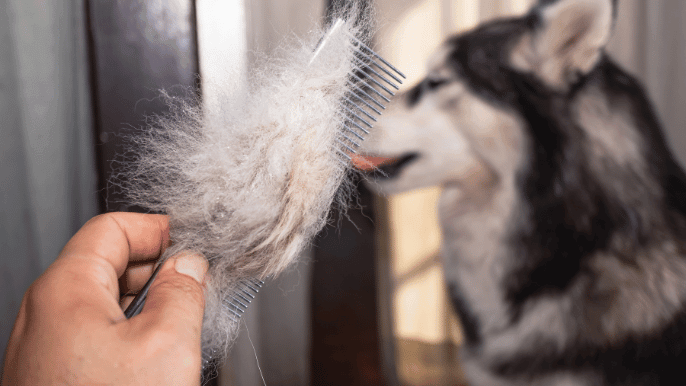
When a dog sheds year round, it catches most owners off guard. You expected the spring shed. You braced for the fall blowout. What nobody warned you about was every other day in between.
If your dog sheds year round, you know the feeling. The fur is relentless. It is on the couch, woven into your work clothes, floating through the kitchen, and somehow inside appliances you thought were sealed.
Everything you read says dogs shed seasonally, twice a year, spring and fall. So when your dog sheds year round with no discernible pause, you start wondering if something is wrong.
In most cases, the answer is beautifully boring: your dog lives indoors.
This guide explains why indoor living changes shedding patterns, how different coat types respond, when constant shedding is genuinely a health concern versus perfectly normal, and what actually reduces the fur tumbleweeds.
Why Indoor Dogs Shed Year Round
The seasonal shedding cycle in dogs is triggered primarily by changes in daylight, not temperature. As days get longer in spring, the body signals the release of the thick winter undercoat . As days shorten in fall, the summer coat releases to make way for denser winter growth.
Indoor dogs live under artificial lighting that does not change with the seasons. Your house is roughly the same temperature and brightness in January as it is in July. From the perspective of your dog's hair follicles, there is no clear seasonal signal.
The result is that the total volume of hair your dog produces annually may be similar to an outdoor dog, but instead of releasing in two dramatic events, it trickles out across all twelve months.
When your dog sheds year round, the total fur has not increased. It has been redistributed into a pattern that feels constant because it never fully stops.
Some indoor dogs still show mild seasonal variation. Natural daylight through windows can trigger partial seasonal responses. But the dramatic on-off cycle of a true outdoor coat blow is replaced by a constant, moderate baseline.
How Year-Round Shedding Differs by Coat Type
Not all coat types produce the same volume when shedding continuously. Not sure what coat type your dog has? The FurHQ AI Coat Identifier matches your dog to the correct coat type from a photo.
Short Double Coat
Labrador Retrievers, Beagles, and Pembroke Welsh Corgis carry a dense undercoat beneath a short topcoat . When these dogs shed year round indoors, the volume surprises owners because the coat looks so short and simple.
The truth is that Short Double Coats carry enormous undercoat density relative to their apparent coat length. Dead undercoat releases slowly instead of in seasonal bursts, creating relentless daily shedding.
Regular carding with the Short-Medium Coat Carding Rake removes dead undercoat before it accumulates. The Medium-Pinned Slicker Brush addresses the topcoat. An Undercoat Depth Comb verifies removal is complete.
Kit: FurHQ Starter Grooming Kit: Short Double Coat.
Medium Plush Double Coat
Samoyeds, Siberian Huskies, Chow Chows, and Pomeranians carry the densest undercoat of any coat type. These are the heaviest shedders when living indoors.
The enormous volume that would normally blow dramatically twice a year trickles out continuously under artificial lighting. When your dog sheds year round with a Medium Plush Double Coat, the daily output from a coat this dense is substantial even when spread across twelve months.
The Short-Medium Coat Carding Rake is essential for reaching the packed undercoat layer. An Undercoat Depth Combconfirms removal from skin to tip.
Kit: FurHQ Starter Grooming Kit: Medium Plush Double Coat.
Feathered Long Double Coat
Golden Retrievers, Australian Shepherds, and Border Collies shed from two distinct zones. The body coat carries undercoat that sheds year round following the same pattern as other double coats.
The feathered areas on legs, chest, ears, and tail shed differently because the longer hair tangles around dead coat and holds it in place. This creates concentrated buildup in specific areas.
A Long Coat Carding Rake handles the body undercoat. A Long-Pinned Slicker Brush with Pawfect Finish Coat Sprayhandles the feathered sections. An Undercoat Depth Comb verifies both zones.
Kit: FurHQ Starter Grooming Kit: Feathered Long Double Coat.
Smooth Single Coat
Boxers, Pugs, Dalmatians, and Dobermans shed lightly but consistently year round regardless of whether they live indoors or outdoors. These coats have no undercoat to blow seasonally.
Individual short hairs fall out and embed in furniture and clothing. The volume is generally lower than double coats. Regular brushing with a Rubber Curry lifts dead hair efficiently. When your dog sheds year round with a Smooth Single Coat, management is about frequency rather than depth.
Kit: FurHQ Starter Grooming Kit: Smooth Single Coat.
Curly Wavy Coat
Poodles, Doodles, and Bichons shed internally rather than externally. The shed hair stays trapped inside the curl pattern instead of falling to the floor.
When your dog sheds year round with a Curly Wavy Coat, you will not see fur tumbleweeds, but the trapped dead coat creates matting , skin irritation, and coat damage if not removed through daily line brushing .
A Long-Pinned Slicker Brush with Pawfect Finish Coat Spray removes dead coat from within the curls. A FurHQ Detail Comb verifies every section.
Kit: FurHQ Starter Grooming Kit: Curly Wavy Coat.
Drop Coat
Maltese, Yorkshire Terriers, and Shih Tzus shed continuously as individual hairs complete their growth cycle. The long, silky texture means dead hairs tangle with live hair rather than falling away.
When your dog sheds year round with a Drop Coat, visible shedding is minimal but internal tangling from trapped dead coat is constant. A Long-Pinned Slicker Brush with Pawfect Finish Coat Spray keeps dead hair from bonding with live coat. A FurHQ Detail Comb verifies the work.
Kit: FurHQ Starter Grooming Kit: Drop Coat.
Wire Coat
Schnauzers, Wire Fox Terriers, and Airedales shed very little when properly maintained. Hand-stripped Wire Coats shed least because stripping removes dead hair from the follicle entirely.
When your dog sheds year round with a Wire Coat, the volume is typically minimal. Regular brushing with a Medium-Pinned Slicker Brush and FurHQ Detail Comb through furnishings prevents buildup. Coat-Quench Conditioner and Pawfect Finish Coat Spray on furnishings and undercoat only, never jacket , saddle , or backline.
Kit: FurHQ Starter Grooming Kit: Wire Coat.
How the FurHQ 5-Step Manages Year-Round Shedding
The FurHQ 5-Step Grooming Method (Audit, Prep, Bath, Dry, Finish) provides structure for managing shedding consistently.
Learn the Method. Follow the Protocol. Complete the Mission.
Audit
Start every session with a full health check. Run your hands over the body and feel for lumps, bumps, or anything new. Check the ears for odour, redness, or discharge. Look at the nails. Check the teeth and gums.
Then assess the coat. Part it in several locations. When your dog sheds year round, trapped dead undercoat is often the hidden driver making shedding feel worse than it should.
If the coat feels packed, dense, or spongy when you press into it, dead coat has accumulated and needs removal. The Undercoat Depth Comb (Short Double, Medium Plush, Feathered Long Double) or FurHQ Detail Comb (Curly Wavy, Drop, Wire) reveals whether dead coat is hiding beneath the surface.
Prep
Never dry brush a dog. Mist with Pawfect Finish Coat Spray before any brush touches the coat.
Smooth Single: Skip Prep. Straight to Bath.
Short Double: Optional quick slicker pass, not crucial.
Medium Plush and Feathered Long Double: Mist and quick line brush. No comb check needed.
Curly Wavy and Drop: Full line brush to remove mats and tangles before the bath. Use the Long-Pinned Slicker Brushand FurHQ Detail Comb on easy mats.
Wire: Same as Medium Plush but focus on furnishings. Mist Pawfect Finish Coat Spray on the legs, beard, and eyebrows.
Bath
Always deshed before bathing. When your dog sheds year round and you bathe without removing dead coat first, water compresses the dead undercoat against the skin and felts it into a dense layer.
Use the correct shampoo: Texture-Tastic Shampoo for Wire and Curly Wavy. Shimmer and Shine Shampoo for Drop. Deep Clean Delight Shampoo for Smooth Single, Short Double, Medium Plush, and Feathered Long Double.
Follow with Coat-Quench Conditioner for all seven coat types. For Wire Coats, conditioner on furnishings and undercoat only, never on the jacket, saddle, or backline.
Dry
HV drying is one of the most effective shedding reduction steps available. The airflow separates the coat from the skin outward, blowing out loose dead hair that brushing missed.
When your dog sheds year round, thorough drying after every bath prevents moisture from compressing dead coat back against the skin. Never air dry Curly Wavy or Drop Coats.
Finish
The verification comb confirms dead coat removal is complete. Undercoat Depth Comb for double coats. FurHQ Detail Comb for Curly Wavy, Drop, and Wire.
If the comb catches anywhere, dead coat remains and shedding will continue at a higher level than necessary.
If your dog sheds year round and you feel like you are losing the battle, check the base of the coat, not the surface. Part it, press into it, and feel what is hiding underneath. Nine times out of ten, there is a packed layer of dead coat that brushing has never reached. Remove it, and the volume drops.
When Year-Round Shedding Is Not Normal
Most year-round shedding in indoor dogs is completely normal. However, certain patterns indicate something beyond indoor living is driving the hair loss.
Bald patches or thinning areas where skin is visible are not part of normal shedding.
Red, inflamed, or flaky skin underneath shedding areas suggests an underlying condition.
Sudden dramatic increase in volume beyond your dog's normal baseline warrants investigation.
Dull, brittle, or dry coat quality alongside heavy shedding can indicate nutritional deficiency or thyroid issues.
Excessive scratching, licking, or chewing combined with shedding suggests allergies, parasites, or skin infection.
When your dog sheds year round and any of these signs are present, consult your veterinarian. Thyroid conditions, Cushing's disease, allergies, parasites, and nutritional deficiencies all increase hair loss beyond normal patterns.
What Actually Reduces Year-Round Shedding
You cannot stop a healthy dog from shedding. What you can do is manage it so effectively that it stops dominating your household.
Match your tools to your coat type. This is the single most impactful change. The right tool reaches the dead coat that the wrong tool leaves behind.
Work from skin to tip. Surface brushing that only addresses the top layer leaves packed dead undercoat untouched. Line brushing in sections ensures the tool reaches every layer.
Maintain a consistent schedule. When your dog sheds year round, short regular sessions are more effective than long catch-up sessions. Two to three sessions weekly for double coats, daily for Curly Wavy and Drop.
Deshed before every bath. Bathing a coat packed with dead hair compresses the problem.
Dry thoroughly with an HV dryer. HV drying blows out enormous amounts of loose dead coat that no brush can access.
Support coat health through nutrition. High-quality food with adequate protein and essential fatty acids supports healthy coat turnover.
Schedule professional deshedding. Professional groomers have industrial-strength HV dryers that remove months of accumulated dead coat in a single session. When your dog sheds year round, professional deshedding every four to eight weeks provides a deep reset.
Shedding Myths
Myth: Shaving a double coated dog reduces shedding. Shaving removes the protective topcoat and often worsens the problem. The undercoat grows back thicker while guard hairs grow back thinner. Never shave a double coated dog to manage shedding.
Myth: "Hypoallergenic" dogs do not shed. Every dog with hair sheds. Curly Wavy and Wire Coats shed less visibly because dead hair stays trapped inside the coat. The dog still produces dead coat that needs removal.
Myth: If your dog sheds year round, something must be wrong. For indoor dogs, year-round shedding is the normal, expected pattern.
Myth: Bathing more often reduces shedding. Over-bathing strips natural oils and can increase shedding. Proper deshedding before and HV drying after is what makes baths effective for shedding management.
Related Reading
Coat Type Education
Home Grooming Systems
Tools and Products
- Dog Grooming Brushes: A Complete Guide by Coat Type
- How to Use Pawfect Finish Coat Spray
Grooming Myths
Home and Professional Partnership
The Bottom Line
When your dog sheds year round, the most likely explanation is the most boring one: your dog lives indoors. Artificial lighting overrides the natural photoperiod signals that create concentrated seasonal coat blows. Instead of two dramatic events, indoor dogs spread the same total volume across twelve months.
This is not a grooming failure, a health problem, or a food issue. It is simply how indoor dogs work.
What you can control is how efficiently that dead coat is removed. Within the FurHQ 5-Step, the Prep phase removes dead coat, the Bath phase cleans a properly deshedded coat, and the Dry phase blows out everything brushing missed. Maintained consistently, this approach keeps year-round shedding at its manageable minimum.
Not sure which coat type your dog has? The FurHQ AI Coat Identifier matches your dog to the correct coat type from a photo.
You got this. And we have got you. 🐾
Variation Clarity Statement
Every dog is an individual. Shedding volume varies by coat type, genetics, indoor environment, nutrition, and health status. The information in this blog represents general guidance for understanding and managing year-round shedding.
When in doubt, consult your veterinarian for health concerns or a Certified Professional Groomer for coat care. If you are unsure about your dog's coat type, use the FurHQ AI Coat Identifier to get accurate identification and the right kit recommendation.
FAQs
What are the FurHQ coat types?
FurHQ classifies dog coats into seven distinct types, each with unique shedding patterns and a matched starter kit: Smooth Single Coat, Curly Wavy Coat, Drop Coat, Wire Coat, Short Double Coat, Medium Plush Double Coat, and Feathered Long Double Coat. When your dog sheds year round, knowing the coat type is the first step toward effective management.
Why does my dog shed year round instead of just seasonally?
Indoor living is the primary reason your dog sheds year round rather than following seasonal patterns. Artificial lighting, central heating, and air conditioning disrupt your dog's natural response to daylight and temperature changes. Outdoor dogs experience dramatic seasonal coat changes in spring and fall, but indoor dogs shed moderate amounts continuously throughout the year because their environment remains relatively constant. Additionally, double-coated breeds like Labrador Retrievers and Golden Retrievers naturally shed year-round as both their undercoat and topcoat layers continuously replace themselves.
How often should I brush my dog if they shed year round?
Brushing frequency depends on coat type. Short-coated breeds need brushing two to three times weekly using natural-bristle brushes or grooming gloves. Long-coated and double-coated breeds require daily brushing with slicker brushes for the topcoat and undercoat rakes to remove loose undercoat fur. Consistent daily brushing for five to ten minutes prevents overwhelming fur accumulation and distributes natural skin oils throughout the coat. During particularly heavy shedding periods, you may need to brush twice daily to stay ahead of the loose fur volume.
Is it normal for my dog to shed constantly every day?
Yes, daily shedding is completely normal for most dogs. Hair follows a natural growth cycle where old fur dies and falls out to make room for new growth. Individual hairs reach the end of their lifespan every single day, which means shedding happens continuously. The amount varies by breed, with double-coated dogs like Huskies and German Shepherds producing more loose fur than single-coated breeds like Poodles or Maltese. As long as the shedding occurs evenly across your dog's body without bald patches, red skin, or excessive scratching, constant daily shedding is healthy and expected.
What dog breeds shed the most year round?
Labrador Retrievers are legendary year-round shedders, capable of losing enough fur annually to equal their entire body weight. Other heavy shedders include Siberian Huskies, German Shepherds, Golden Retrievers, Bernese Mountain Dogs, Alaskan Malamutes, Corgis, Chow Chows, Akitas, Newfoundlands, and Pekingese. These breeds have double coats with dense undercoats that shed continuously. Surprisingly, short-haired breeds like Beagles and Boxers also shed significant amounts year-round, though their shorter hair length makes individual strands less noticeable than long-haired breeds.
Can poor diet cause my dog to shed more year round?
Absolutely. Poor nutrition is the number one cause of excessive shedding in dogs. Diets lacking adequate protein, omega-3 fatty acids, omega-6 fatty acids, and essential vitamins weaken hair follicles and cause increased fur loss. Choose high-quality dog food meeting AAFCO nutritional standards with real meat as the first ingredient and omega-3 sources like fish oil or flaxseed. Some dogs benefit from fish oil supplements added to meals, but always consult your veterinarian before introducing supplements. Dehydration also contributes to shedding, so ensure constant access to fresh, clean water.
When should I worry about my dog's year-round shedding?
Schedule a veterinary appointment if you notice bald patches, thinning areas concentrated in specific body regions, red or inflamed skin beneath the coat, excessive scratching or licking, dull or brittle hair strands, sudden dramatic increases in shed volume, symmetrical hair loss on both sides of the body, or sores and open wounds. These signs indicate abnormal shedding potentially caused by parasites, allergies, hormonal imbalances, thyroid disorders, Cushing's disease, or other health conditions requiring medical treatment. Normal shedding occurs evenly across the entire body with healthy-looking skin underneath.
Does stress make dogs shed more year round?
Yes, stress triggers excessive shedding in dogs. Environmental changes, household conflict, routine disruptions, moves, new family members, loss of companions, or even veterinary visits can cause anxiety-related hair loss. Stressed dogs may shed more than their normal baseline even if they already shed year-round. Maintain consistent daily routines for feeding, walking, and playtime to minimize stress. Provide a quiet retreat space where your dog can escape overstimulation. Once routines stabilize after major life changes, stress-related shedding typically resolves within several weeks.
Will bathing my dog reduce year-round shedding?
Bathing helps remove loose hair and dead skin cells before they spread throughout your home. Bathe short-coated breeds every six to eight weeks and long-coated or double-coated breeds every four to six weeks using quality dog shampoo and lukewarm water. Thoroughly rinse all shampoo residue and towel dry immediately. Some groomers recommend deshedding shampoos formulated with fatty acids specifically for heavy shedders. Regular bathing combined with brushing significantly reduces visible fur in your home, though it cannot stop the natural shedding process entirely.
Can professional grooming help with constant shedding?
Professional groomers offer deshedding treatments that remove significantly more undercoat than home brushing achieves. These treatments typically include specialized deshedding shampoos, high-velocity dryers that blow out loose fur, and professional-grade undercoat rakes and deshedding tools. Many groomers recommend deshedding appointments every four to eight weeks for heavy shedders. While professional grooming cannot eliminate shedding, it dramatically reduces the volume of loose fur in your home between appointments and helps maintain healthier skin and coat condition overall.
Are there any dogs that don't shed year round?
No dog is completely non-shedding, but some breeds shed minimal amounts. Poodles, Bichon Frises, Maltese, Yorkshire Terriers, Shih Tzus, Portuguese Water Dogs, and Chinese Crested dogs have hair that grows continuously like human hair rather than following typical fur growth cycles. These breeds shed very little year-round but require regular professional grooming and trimming every six to eight weeks. The American Hairless Terrier has minimal fur and produces almost no shed hair. However, remember that no dog is truly hypoallergenic, as allergies react to dander and saliva, not just fur.
Which breeds shed the most year round indoors?
Medium Plush Double Coat breeds carry the densest undercoat and produce the most volume. Siberian Huskies, Samoyeds, Chow Chows, and Pomeranians lead the list. Short Double Coat breeds like Labrador Retrievers and Pembroke Welsh Corgis are close behind. When these breeds shed year round indoors, the daily volume is substantial.
Will shaving my double coated dog reduce year-round shedding?
No. Shaving removes the protective topcoat, can cause the undercoat to grow back thicker while guard hairs grow back thinner, and risks permanent coat damage. The proper approach is regular carding to remove dead undercoat while preserving the topcoat structure.
How does professional deshedding help when my dog sheds year round?
Professional groomers use industrial-strength HV dryers and specialised tools that remove months of accumulated dead coat in a single session. This provides a deep reset that home grooming then maintains between appointments.
What is the difference between shedding and coat blow?
Coat blow is a concentrated seasonal event where large amounts of undercoat release over a short period. Year-round shedding is the same total volume spread across twelve months. Indoor dogs experience muted coat blows and continuous baseline shedding simultaneously.
What is the FurHQ 5-Step Grooming Method?
The FurHQ 5-Step Grooming Method is Audit, Prep, Bath, Dry, Finish. It provides structure for every grooming session so nothing gets missed. The tagline is: Learn the Method. Follow the Protocol. Complete the Mission.