
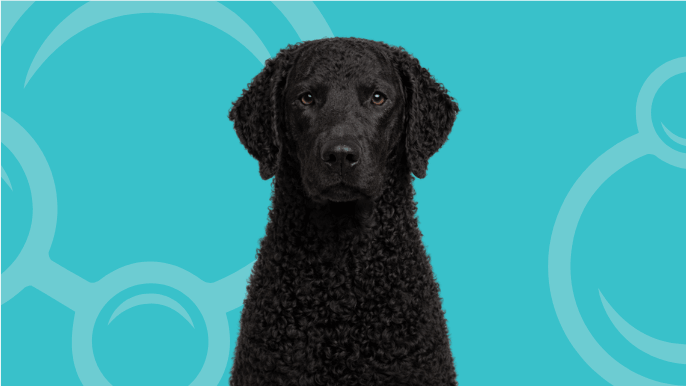

FurHQ offers seven coat-specific kits: FurHQ Starter Grooming Kit: Smooth Single Coat, FurHQ Starter Grooming Kit: Short Double Coat, FurHQ Starter Grooming Kit: Medium Plush Double Coat, FurHQ Starter Grooming Kit: Feathered Long Double Coat, FurHQ Starter Grooming Kit: Wire Coat, FurHQ Starter Grooming Kit: Curly Wavy Coat, and FurHQ Starter Grooming Kit: Drop Coat. Use the FurHQ AI Coat Identifier for accurate classification or visit the FurHQ Store.
Curly-Coated Retriever Temperament and Grooming
By Mondo Fluffarino | FurHQ Blog Author & Chief Education Officer
Table of Contents
- Introduction: The Thinking Retriever
- Breed Handling Profile
- Breed Purpose and Why It Matters for Curly-Coated Retriever Temperament
- FurHQ Coat Type Breakdown
- Puppy Coat to Adult Coat Transition
- The FurHQ 5-Step Grooming Method: Technical Reality
- FurHQ Starter Grooming Kit Breakdown
- Curly-Coated Retriever Temperament: Superpowers and Kryptonite
- FurHQ's Lifestyle Lens and Pro Insights
- Health and Lifespan: The FurHQ Touch Test
- The Bottom Line
- Related Breed Comparisons
- Related Reading
- Variation Clarity Statement
- FAQs
Curly-Coated Retriever Temperament is what happens when independent intelligence, quiet confidence, and genuine sporting versatility combine in the oldest of the retriever breeds.
Developed in England as a dual-purpose retriever for both upland game and waterfowl, the Curly-Coated Retriever stands apart from its retriever cousins with a temperament that is more reserved, more independent, and more discerning than the eager-to-please personality most people associate with retrievers.
Understanding Curly-Coated Retriever Temperament starts with recognising that this is not a Golden or Labrador in a curly coat. It is a distinctly different dog with a distinctly different approach to life, work, and relationships.
These dogs are quietly confident. Curly-Coated Retriever Temperament includes a self-assurance and composure that distinguishes this breed from the exuberant enthusiasm of more popular retriever breeds.
They are affectionate with their family, capable in the field, and socially discerning with strangers, combining sporting ability with a maturity and reserve that many retriever owners find refreshingly different.
The tight, crisp curls that cover the body are the breed's most distinctive feature and require a specific approach to coat care. The Curly-Coated Retriever wears a Medium Plush Double Coat in the FurHQ system, and the key grooming reality for this breed is that dead coat gets trapped in those tight curls rather than shedding out naturally. Regular carding is essential to lift that trapped coat before it compresses into matting . Curly-Coated Retriever Temperament and coat care connect because the breed's independent nature means grooming sessions should be efficient and purposeful rather than prolonged.
Let me tell you what you are really getting with a Curly-Coated Retriever, because nearly everyone who meets this breed for the first time expects a retriever that acts like the ones they know.
This is the retriever that thinks before it acts. Curly-Coated Retriever Temperament is built on intelligence, independence, and a reserve that surprises people accustomed to the undiscriminating friendliness of Labradors and Goldens.
These dogs bond deeply to their family and are affectionate, playful, and loyal within that circle. But they do not offer that same warmth to everyone they meet. Strangers are assessed calmly before engagement, and the breed maintains a dignity that feels more like a setter or pointer than a retriever.
Now let's talk grooming. Honestly.
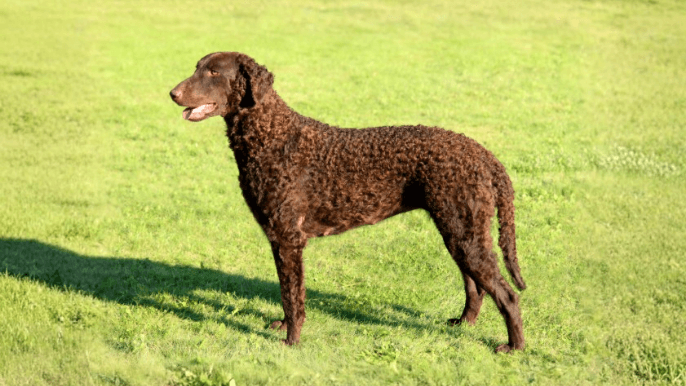
The coat on this breed is unique among retrievers and requires a different approach than most sporting breed coats. The tight, crisp curls cover the body from the occiput to the tail, with short smooth hair on the face, front of the forelegs, and feet. The coat stands off the body with volume and density, sitting firmly in the Medium Plush range. There is no feathering anywhere.
The critical grooming reality is this: dead coat does not release from those tight curls on its own. It gets trapped, compresses at the skin level, and becomes matting from the inside out. The coat can look perfectly fine on the surface while a solid sheet of mat is forming underneath. Regular carding with the Short-Medium Coat Carding Rake is the step that lifts and removes that trapped dead coat before it causes problems. Without it, no amount of bathing or conditioning will prevent matting on this breed.
This breed is NOT for you if:
- You expect the eager-to-please personality of a Golden or Labrador
- You cannot commit to regular carding sessions to manage the trapped dead coat
- You cannot provide daily vigorous exercise including swimming
- You want a dog that is instantly friendly with everyone
- You lack experience with independent, thinking breeds
Because Curly-Coated Retriever Temperament includes:
- Independent intelligence that does not default to eager compliance
- Reserve with strangers that requires thorough socialisation
- A unique curly coat with a dense double coat structure requiring regular carding
- High exercise demands including a strong need for water access
- A maturity and composure that some owners mistake for aloofness
This breed IS for you if:
- You appreciate an intelligent, independent sporting companion
- You value a dog that bonds deeply to family while maintaining composure with strangers
- You want a distinctive athletic retriever and can commit to the carding routine
- You lead an active lifestyle with access to swimming opportunities
- You enjoy a breed that thinks before it acts
Curly-Coated Retriever Temperament rewards experienced, active owners with a companion that is quietly devoted, genuinely capable, and offers a depth of character that the more popular retriever breeds rarely match. Respect the independence. Keep up with the carding. Handle with calm confidence. Do that, and you will share your life with one of the most distinctive, intelligent, and genuinely capable retriever breeds in existence, a dog that earns your respect as much as it earns your love.
Breed Handling Profile
| Trait | Level | Notes |
|---|---|---|
| Emotional sensitivity | Moderate | Confident and self-assured; responsive to fair handling but not emotionally fragile |
| Handling tolerance | Moderate to High | Cooperative during grooming; prefers efficient, purposeful sessions |
| Grooming commitment | Low to Moderate | Unique curly coat requires minimal brushing but specific care techniques |
| Exercise needs | High | Athletic retriever needing daily vigorous exercise and ideally swimming |
| Alone time tolerance | Moderate | More independent than other retrievers; handles reasonable alone time |
| Best fit household | Active, experienced owners who appreciate an independent temperament and can provide exercise including water access |
Breed Purpose and Why It Matters for Curly-Coated Retriever Temperament
The Curly-Coated Retriever is the oldest of the retriever breeds, with origins tracing to at least the late 18th century in England. The breed was developed as a dual-purpose retriever capable of working both upland game and waterfowl, likely incorporating the Old English Water Dog, Irish Water Spaniel, and later the Poodle into its breeding.
The work required a dog that could retrieve from cold water, work through rough cover, and function with a degree of independence in varied hunting scenarios.
Curly-Coated Retriever Temperament reflects this versatile working heritage directly. The independence, the quiet confidence, the willingness to work without constant handler direction, and the natural affinity for water all trace to a breed that was valued for its ability to think and adapt in the field.
When your Curly-Coated Retriever assesses a retrieve situation, calculates the most efficient route to the bird, and executes with minimal fuss, that is centuries of thinking retriever heritage expressing itself.
The breed's reserve with strangers also connects to its working context. Unlike modern retrievers bred increasingly for companion temperament, the Curly-Coated Retriever retained more of the discerning, watchful quality of its working ancestors.
Curly-Coated Retriever Temperament was not softened for the pet market to the same degree as Labradors and Goldens, preserving a more complete working temperament that includes social discernment alongside sporting ability.
FurHQ Coat Type Breakdown
The Curly-Coated Retriever wears a Medium Plush Double Coat as classified in the FurHQ seven-coat system. The coat features tight, crisp curls covering the body from the occiput to the tail tip, with smooth short hair on the face, front of forelegs, and feet. The coat stands off the body with volume and density and sits firmly in the 1 to 3 centimetre range with no feathering anywhere on the body.
This coat is unique in the sporting group. The tight curls provide insulation and water repellency that enabled the breed's cold-water retrieving work. The curl structure is dense enough that dead coat does not release naturally during shedding. Instead it gets trapped between the curls and at the skin level, where it compresses into matting if it is not physically removed by carding.
The Short-Medium Coat Carding Rake is the essential tool for this breed. It lifts and removes trapped dead coat from the skin level, which is the maintenance step that prevents the matting that builds silently inside those tight curls. The Medium-Pinned Slicker Brush follows carding to smooth the coat and check for any remaining tangles. The FurHQ Detail Comb verifies that every section has been worked through to the skin.
FurHQ Starter Grooming Kit: Medium Plush Double Coat
Not Sure About Your Dog's Coat Type?
Not every dog fits neatly into one coat category, and that is completely normal. Coat type determines the correct tools, products, and techniques for effective grooming, and getting it right matters for coat health and comfort. This is especially true for mixed breeds or dogs whose coat may vary from expectations. Use the FurHQ AI Coat Identifier to find out your dog's coat type and get matched to the right FurHQ Starter Grooming Kit. Simply upload a photo and receive an accurate classification with a personalized kit recommendation.
Puppy Coat to Adult Coat Transition
Curly-Coated Retriever puppies are born with a wavy or loosely curled coat that begins tightening into the characteristic crisp adult curls between 6 and 14 months. The transition period requires regular brushing during this phase as the incoming adult curls can trap shedding puppy coat and create mats beneath the developing curl structure. Once the adult coat starts to establish, begin introducing the carding rake gently so the dog is habituated to it before the full adult coat is in.
Once the adult curls are fully established, typically by 18 to 24 months, the maintenance routine shifts to the card, slicker, and comb sequence that defines this coat type for life. The transition can look uneven as areas develop adult curls at different rates, but this is normal and temporary.
Curly-Coated Retriever Temperament in puppyhood is more playful and receptive than the adult personality, making this an important window for grooming habituation. Start gentle handling from 8 weeks, including bathing and drying practice. The FurHQ 5-Step Method provides structure for building the routine.
The FurHQ 5-Step Grooming Method: Technical Reality
The FurHQ 5-Step Method (Audit, Prep, Bath, Dry, Finish) applies to this coat type with emphasis on regular carding to remove trapped dead coat, consistent mat prevention at friction points, and thorough comb verification after every session.
"Learn the Method. Follow the Protocol. Complete the Mission."
Setup and Stability
Secure the dog using the Stay Put System (suction cup anchor + safety lead). For anxious dogs, the Zen Wrap provides calming compression that helps them settle into a cooperative grooming state. This coat type responds well to a consistent setup routine that signals grooming is about to begin.
Tools and Technique
Audit: Begin every session by running your hands over the entire body, parting the coat to check for developing mats at the skin level. Focus on behind the ears, armpits, groin, collar area, and anywhere friction occurs. The tight curls can hide matting completely while the coat looks perfectly normal on the surface. Hands-on assessment is essential.
Prep: Mist with Pawfect Finish Coat Spray before any tool touches the coat. Use the Short-Medium Coat Carding Rake first, working across the body to lift and remove trapped dead coat from the skin level. This is the most important step in the entire routine for this breed. Follow with the Medium-Pinned Slicker Brush, working section by section from the skin outward. Finish each section with the FurHQ Detail Comb to verify the work has reached the skin. If the comb catches, go back with the slicker. Card, slicker, comb - always in that order. Any mats should be resolved during Prep before the bath, because water sets mats and makes them significantly harder to remove.
Bath: Use Rubber Curry during bathing for skin stimulation and to help work shampoo through the dense curl structure to the skin. Rinse thoroughly. The tight, dense coat requires full saturation and extended rinsing time.
Dry: Towel dry first, then use a dryer working through the coat with the Medium-Pinned Slicker Brush as it dries. The coat must be dried completely to the skin to prevent mildew and skin issues under the dense undercoat .
Finish: Final comb-through with the FurHQ Detail Comb to confirm the entire coat is tangle-free, dry to the skin, and sitting correctly. Apply a light mist of Pawfect Finish Coat Spray for moisture and protection.
Chemistry and Coat Care
Texture-Tastic Shampoo is formulated for textured coats, cleansing thoroughly while preserving the coat's natural structure. It is the correct shampoo for this coat type.
Coat-Quench Conditioner provides essential slip for working through the dense, curl-structured coat, reducing friction during brushing and preventing breakage.
Pawfect Finish Coat Spray at every session for moisture, slip, and protection.
FurHQ Starter Grooming Kit Breakdown
The FurHQ Starter Grooming Kit: Medium Plush Double Coat is recommended for the Curly-Coated Retriever.
Standard Items (included in all FurHQ kits):
- Stay Put System (suction cup anchor + safety lead)
- Zen Wrap
- Rubber Curry (for bathing and skin stimulation)
- Ear Wipes
- Pawfect Finish Coat Spray
Coat-Specific Items:
- Texture-Tastic Shampoo
- Coat-Quench Conditioner
- Medium-Pinned Slicker Brush
- Short-Medium Coat Carding Rake
- FurHQ Detail Comb
Total: 10 items
Each kit includes step-by-step video tutorials and informational PDFs so you know exactly how to use every tool and product for the Curly-Coated Retriever coat.
 Curly-Coated Retriever Temperament: Superpowers and Kryptonite
Superpowers
🌟 Independent intelligence: Curly-Coated Retriever Temperament includes a thinking, problem-solving mind that assesses situations before acting. These dogs make decisions rather than waiting for directions, creating a companion that feels like a genuine partner.
🌟 Quiet confidence: The breed carries itself with a composure and self-assurance that is rare among retrievers. Curly-Coated Retriever Temperament does not include the frantic energy or desperate-to-please quality of some sporting breeds.
🌟 Versatile sporting ability: The breed excels in both upland and waterfowl retrieving with genuine dual-purpose capability. Curly-Coated Retriever Temperament includes natural water affinity, marking ability, and field intelligence.
🌟 Distinctive coat: The tight, crisp curls covering the entire body create one of the most visually striking coats in the sporting group. The coat is water-resistant, close-fitting, and immediately recognizable.
🌟 Family devotion: Within the family circle, the Curly-Coated Retriever is affectionate, playful, and genuinely warm. Curly-Coated Retriever Temperament saves its deepest affection for its people, making the bond feel earned and significant.
🌟 Distinctive appearance: The crisp curly coat, elegant head, and athletic build create one of the most visually striking retrievers in existence.
Kryptonite
⚠️ Not the typical retriever: Curly-Coated Retriever Temperament surprises owners expecting Golden or Labrador behaviour. The independence, the stranger reserve, and the lack of eager-to-please compliance require adjustment from typical retriever expectations.
⚠️ Stranger reserve: Curly-Coated Retriever Temperament is cautious with unfamiliar people, which requires thorough socialization from puppyhood. Without it, the reserve can become shyness or suspicion.
⚠️ Curl destruction risk: Using the wrong grooming tools destroys the coat's defining feature. Traditional brushing turns crisp curls into frizz that takes weeks to recover. Owner education about proper coat care is essential.
⚠️ High exercise demands: Curly-Coated Retriever Temperament requires daily vigorous exercise including, ideally, swimming. Without adequate outlet, the breed becomes restless and bored.
⚠️ Slow maturation: The breed matures slowly, both physically and mentally. Curly-Coated Retriever Temperament retains puppy playfulness well into adulthood, and the coat takes up to two years to reach its full adult form.
⚠️ Rarity: The Curly-Coated Retriever is one of the rarest retriever breeds. Finding a reputable breeder requires patience, and breed-specific knowledge among groomers and veterinarians may be limited.
FurHQ's Lifestyle Lens and Pro Insights
The most important thing I can tell you about grooming a Curly-Coated Retriever is that those tight curls are a trap. Not a metaphor. A literal trap for dead coat. The coat looks beautiful on the surface and you run your hand over it and think everything is fine. Then you part it with a comb and you find a solid mat forming at the skin level that has been quietly building for weeks.
The carding rake is the tool that makes or breaks the maintenance of this coat. The Short-Medium Coat Carding Rake goes in first at every session, working across the body to physically lift that trapped dead coat out before it has the chance to compress and mat. No amount of brushing or bathing replaces this step. If you skip carding, you are just pushing the problem deeper.
After carding, the Medium-Pinned Slicker Brush moves through the coat section by section, followed by the FurHQ Detail Comb to verify. If the comb passes from skin to tip with no resistance in every section, the coat is clear. That comb is the truth teller on this breed.
Living with a Curly-Coated Retriever means appreciating a retriever that is not desperate for your approval but genuinely values your companionship. Curly-Coated Retriever Temperament is more self-contained than other retriever breeds. These dogs enjoy being with you but do not need to be on top of you. They are affectionate on their own terms and playful when the mood strikes. The relationship feels more balanced and mutual than the sometimes overwhelming devotion of a Golden or Labrador, and for many owners, that balance is exactly what they want.
Between full sessions, a quick check with the FurHQ Detail Comb through the highest-risk friction points, behind the ears, armpits, groin, and collar area, catches any developing tangles before they become mats. Two minutes of attention twice a week at those spots saves you a significant problem later.
Health and Lifespan: The FurHQ Touch Test
The Curly-Coated Retriever typically lives 10 to 12 years. Regular health monitoring through grooming is important because the curly coat can conceal changes beneath its dense structure.
Regular grooming sessions serve as health assessments when you incorporate the FurHQ Touch Test into your routine. The tight curl structure requires hands-on assessment rather than visual inspection, making the tactile Audit step particularly important.
- Hip and elbow dysplasia are concerns in the breed, and monitoring gait and comfort during handling provides early indicators.
- Curly-Coated Retriever Temperament is composed, so subtle changes in behaviour may represent meaningful discomfort.
- Exercise-induced collapse (EIC) has been identified in the breed, and awareness of exercise tolerance changes is valuable.
- Eye conditions including progressive retinal atrophy (PRA), cataracts, and entropion are breed concerns, and gentle face handling during grooming allows observation.
- Pattern baldness can affect the breed, typically on the ears, belly, and thighs, and noting any changes in coat coverage during the Audit step supports veterinary monitoring.
- Bloat is a risk in this deep-chested breed.
Every grooming session is a conversation with your dog's body. The FurHQ 5-Step Method builds that conversation into your routine.
The Bottom Line
Curly-Coated Retriever Temperament delivers independent intelligence, quiet confidence, and genuine sporting versatility in one of the most distinctive and visually striking retriever packages in existence.
This breed rewards experienced, active owners with a companion that thinks before it acts, bonds deeply within its circle, and maintains the kind of dignified composure that makes every interaction feel meaningful.
The coat is surprisingly easy once you understand the one critical rule: do not brush it. The temperament requires appreciation for independence rather than expectation of eager compliance. But the return is a retriever relationship built on mutual respect and genuine partnership.
If you are ready for the commitment, the FurHQ Starter Grooming Kit: Curly Wavy Coat gives you every tool and product you need. You have a system that works.
Learn the Method. Follow the Protocol. Complete the Mission.
You got this. And we've got you.
Related Breed Comparisons
If you are considering a Curly-Coated Retriever, these breeds share some characteristics but differ in important ways:
- Labrador Retriever Temperament: Similar sporting versatility with a much more sociable, eager-to-please temperament and a short double coat. Shares the retrieving ability but with less independence and dramatically different grooming needs.
- Irish Water Spaniel Temperament: Similar curly coat and water affinity with a comparable independent temperament. Shares the curl maintenance approach but with a more clownish personality and a distinctive rat tail.
- Chesapeake Bay Retriever Temperament: Comparable independence and protective nature with a different coat type. Shares the reserved temperament and water ability but with a short double coat and more pronounced guarding instinct.
- Standard Poodle Temperament: Similar curly coat with a much more sociable, eager-to-please temperament. Shares the intelligence and athletic ability but with significantly higher grooming demands and a more people-oriented personality.
Related Reading
Curly Wavy Coat Grooming
Bathing and Drying
Comfort and Safety
- Dog Grooming Desensitisation
Tools and Products
Related Breed Blogs
- Labrador Retriever Temperament
- Irish Water Spaniel Temperament
- Chesapeake Bay Retriever Temperament
- Standard Poodle Temperament
Variation Clarity Statement
Every dog is an individual. While this profile describes typical breed characteristics, your specific dog may vary based on genetics, breeding, socialisation, and individual temperament. Coat type can also vary within breeds.
If you are unsure about your dog's coat type, use the FurHQ AI Coat Identifier to get accurate identification and the right kit recommendation.
FAQs
What is the Curly-Coated Retriever's coat type according to FurHQ?
The Curly-Coated Retriever has a Medium Plush Double Coat as classified in the FurHQ seven-coat system. The coat features tight, crisp curls covering the entire body from the occiput to the tail, with smooth short hair on the face, front of the forelegs, and feet.
The coat stands off the body with volume and density and sits in the 1 to 3 centimetre range with no feathering anywhere. There is a dense undercoat beneath those tight curls, making this a true double coat with real insulating and water-repellent properties.
The correct FurHQ kit for the Curly-Coated Retriever is the FurHQ Starter Grooming Kit: Medium Plush Double Coat.
Why does the AI Coat Identifier flag my Curly-Coated Retriever as a Curly Wavy Coat?
This is one of the most common AI misidentifications in the FurHQ system, and it makes complete sense visually. The tight, crisp curls of the Curly-Coated Retriever look like a Curly Wavy coat in a photo.
The AI reads curl texture and routes accordingly. The correction is a breed-level override: once the breed is confirmed as a Curly-Coated Retriever, the classification locks to Medium Plush Double Coat regardless of what the photo suggests.
The reason the classification matters is the grooming approach. A Curly Wavy coat is maintained with a long-pinned slicker and conditioner to preserve curl definition. A Curly-Coated Retriever is maintained with a carding rake to lift trapped dead coat from the skin level.
Using Curly Wavy tools and techniques on a CCR misses the entire problem this breed actually has, which is dead coat getting trapped inside those curls and matting from the inside out.
If the AI has flagged your dog as Curly Wavy, select Medium Plush Double Coat manually and use the FurHQ Starter Grooming Kit: Medium Plush Double Coat.
What tools does the FurHQ Starter Grooming Kit: Short Double Coat include?
The kit includes standard items found in all FurHQ kits: the Stay Put System, Hush Pup Wrap, Rubber Curry, and Ear Wipes. Coat-specific products include Deep Clean Delight Shampoo and Pawfect Finish Coat Spray. Note the kit does not include conditioner, which is correct for this breed as conditioner softens the curl pattern. Coat-specific tools include the Medium-Pinned Slicker Brush (use only on smooth areas for this breed), Coat-Appropriate Metal Comb, and Short-Medium Coat Carding Rake (your primary maintenance tool).
Is the Curly-Coated Retriever good with children?
Curly-Coated Retriever Temperament can be good with children in their own family when the dog has been raised with them and properly socialised. They are sturdy and tolerant of active play with older children. However, their independent nature and reserve mean they are not the universally patient family dogs that Labradors or Goldens typically are. Supervision is essential, and teaching children to interact respectfully with this confident breed is important. The breed generally does better with older children who understand boundaries.
How much exercise does a Curly-Coated Retriever need daily?
The Curly-Coated Retriever requires at least 60 to 90 minutes of vigorous exercise daily, with swimming being the ideal activity. This is a working retriever bred for sustained physical effort in demanding conditions. Curly-Coated Retriever Temperament becomes difficult without adequate exercise, manifesting as destructive behaviour, restlessness, and increasing stubbornness. Running, swimming, retrieving games, dock diving, and hiking satisfy the breed's needs effectively.
How often should I bathe my Curly-Coated Retriever?
Bathe every 4 to 8 weeks using Texture-Tastic Shampoo followed by generous Coat-Quench Conditioner. Active swimming dogs may need more frequent bathing. Between baths, refresh curls with Pawfect Finish Coat Spray and hand scrunching.
Are Curly-Coated Retrievers easy to train?
Curly-Coated Retriever Temperament makes them highly intelligent but independently minded. They learn quickly but evaluate whether compliance serves their interests. They bore rapidly with repetitive drills and respond best to varied, purposeful training with clear rewards. Harsh methods create resistance. Inconsistent handling invites the dog to assume control. The Curly respects competent leadership and works brilliantly for handlers who provide fair, consistent direction with variety and engagement.
Why is the Curly-Coated Retriever so rare?
The breed was eclipsed by the Labrador and Golden Retriever during the 20th century, which offered more universally friendly temperaments and easier-to-understand coats. Curly-Coated Retriever Temperament, with its independence and reserve, does not have the mass appeal of more outgoing retrievers. The coat confusion also contributes, as many potential owners are intimidated by what they perceive as a complex grooming requirement. Annual registrations remain very low compared to other retriever breeds, and finding a reputable breeder requires patience.
What health issues are common in the Curly-Coated Retriever?
The most commonly reported health concerns include hip dysplasia, elbow dysplasia, progressive retinal atrophy, cataracts, entropion, bloat, exercise-induced collapse, glycogen storage disease, and susceptibility to various cancers. Reputable breeders screen for hip and elbow dysplasia, eye conditions, and glycogen storage disease. Regular veterinary examinations and the FurHQ Touch Test between visits support proactive health management.
How is the Curly-Coated Retriever different from a Labradoodle?
Despite superficial visual similarity, these are completely different dogs. The Curly-Coated Retriever is a purebred with a shedding, short double coat in a curled texture. Labradoodles are crossbreeds with variable coats that may be non-shedding, low-shedding, or shedding depending on genetics. Curly-Coated Retriever Temperament is independent and reserved, while Labradoodles tend toward the social friendliness of both parent breeds. The grooming requirements are fundamentally different. The Curly-Coated Retriever's coat requires carding and minimal brushing, while Labradoodles typically need regular brushing and trimming.
How do I find a groomer who understands this breed?
Finding a groomer experienced with Curly-Coated Retrievers can be challenging given the breed's rarity. When interviewing groomers, ask specifically whether they will hand strip or card the undercoat rather than brushing with a slicker or clipping. A groomer who immediately reaches for a slicker brush or suggests a clip does not understand this coat. Many Curly-Coated Retriever owners learn to maintain the coat themselves using the Short-Medium Coat Carding Rake and bathing, which is genuinely manageable once you understand the technique.
Does the Curly-Coated Retriever shed?
Yes. Despite the curly appearance, the Curly-Coated Retriever sheds seasonally like other double-coated breeds. They blow undercoat in spring and autumn, producing significant amounts of loose hair. Regular carding with the Short-Medium Coat Carding Rake removes dead undercoat effectively. The Coat Release Method during bathing also removes substantial amounts of trapped undercoat. Between seasonal blows, shedding is moderate.
Can I clip my Curly-Coated Retriever's coat?
Clipping is not recommended for the Curly-Coated Retriever. Clipping cuts the curls rather than allowing them to shed naturally, which over time changes the coat texture and compromises the tight, crisp curl pattern. The coat may grow back softer and less weather-resistant after repeated clipping. Maintain the coat through carding for undercoat removal and bathing for cleaning and undercoat release. The natural curl pattern should be preserved through proper technique rather than managed through cutting.
How do I introduce my Curly-Coated Retriever puppy to grooming?
Start early with short, positive sessions focused on the carding rake and comb rather than the slicker brush. Curly-Coated Retriever Temperament during puppyhood is more cooperative than in adulthood, making this the critical window. Introduce the Short-Medium Coat Carding Rake gently, pairing every session with treats and calm praise. The Stay Put System provides secure positioning. Build trust through predictable, positive experiences. Establish the correct grooming routine now, because a Curly-Coated Retriever that learns to resist grooming as an adult is a formidable challenge.
Where can I get the right grooming kit and education for my Curly-Coated Retriever?
Start with the FurHQ Starter Grooming Kit: Short Double Coat, which contains the tools your Curly-Coated Retriever needs, used with the modified technique guidance in this blog. All FurHQ kits come with access to coat-type-specific video education. For this breed, the Short Double Coat education combined with this blog's specific technique modifications provides the complete care approach. You can explore all seven coat-type kits, individual products, and educational resources at the FurHQ Store:
- FurHQ Starter Grooming Kit: Curly Wavy Coat
- FurHQ Starter Grooming Kit: Drop Coat
- FurHQ Starter Grooming Kit: Wire Coat
- FurHQ Starter Grooming Kit: Smooth Single Coat
- FurHQ Starter Grooming Kit: Short Double Coat
- FurHQ Starter Grooming Kit: Medium Plush Double Coat
- FurHQ Starter Grooming Kit: Feathered Long Double Coat
How do I maintain the curls?
The answer surprises most people: you do not maintain the curls by protecting them from tools. You maintain them by carding out the dead coat that gets trapped inside them.
The curl structure on a Curly-Coated Retriever is dense and tight enough that shed hair does not fall away naturally. It gets trapped between the curls and at the skin level, where it compresses into matting if it is not physically removed. The coat can look perfectly intact on the surface while a solid mat is forming underneath.
The routine that keeps the curls healthy is card, slicker, comb. Mist with Pawfect Finish Coat Spray first. Use the Short-Medium Coat Carding Rake across the body to lift and remove the trapped dead coat. Follow with the Medium-Pinned Slicker Brush working section by section from the skin outward.
Finish with the FurHQ Detail Comb to verify every section has been worked through to the skin. If the comb catches anywhere, go back with the slicker. Do this every one to two weeks between baths and you will have a coat that stays defined, healthy, and tangle-free. Skip the carding and the curls will eventually compress into matting regardless of how much you brush the surface.
What tools and products are in the FurHQ Starter Grooming Kit: Medium Plush Double Coat?
The FurHQ Starter Grooming Kit: Medium Plush Double Coat contains 10 items. The standard items included in every FurHQ kit are the Stay Put System (suction cup anchor and safety lead), the Zen Wrap, Rubber Curry for bathing and skin stimulation, Ear Wipes, and Pawfect Finish Coat Spray.
The coat-specific items for the Medium Plush Double Coat kit are Texture-Tastic Shampoo, Coat-Quench Conditioner, Medium-Pinned Slicker Brush, Short-Medium Coat Carding Rake, and FurHQ Detail Comb. The Short-Medium Coat Carding Rake is the item that does the work no other tool can replicate on this breed, physically lifting trapped dead coat from the skin level before it compresses into matting. Texture-Tastic Shampoo is formulated for textured coats and preserves the coat's natural structure during bathing.
Every kit includes step-by-step video tutorials and informational PDFs so you know exactly how to use each tool on your Curly-Coated Retriever coat.
How does the FurHQ 5-Step Method work for the Curly-Coated Retriever?
The FurHQ 5-Step Method (Audit, Prep, Bath, Dry, Finish) gives every session a clear structure and ensures the carding step that this breed specifically depends on never gets skipped.
Audit starts every session before any tool touches the coat. Run your hands over the entire body, parting the coat to feel for developing mats at the skin level. Focus on behind the ears, armpits, groin, collar area, and anywhere the coat experiences friction. The tight curls hide matting completely while the surface looks fine, so the hands-on check is the only reliable way to catch problems early. Check ears, nails, teeth, and overall body condition while you are there.
Prep is where the essential maintenance work happens. Mist with Pawfect Finish Coat Spray first. Then use the Short-Medium Coat Carding Rake across the body to lift and remove trapped dead coat from the skin level. This is the most important step in the entire routine for this breed. Follow with the Medium-Pinned Slicker Brush section by section from the skin outward. Finish each section with the FurHQ Detail Comb to verify. Card, slicker, comb in that order every time. Any mats should be fully resolved during Prep before the bath because water sets mats and makes them significantly harder to remove.
Bath uses Texture-Tastic Shampoo and Coat-Quench Conditioner. Use the Rubber Curry during bathing to work shampoo through the dense curl structure to the skin and provide stimulation. The tight, dense coat requires full saturation and thorough rinsing time.
Dry requires the coat to be dried completely to the skin. Towel dry first, then use a dryer working through the coat with the Medium-Pinned Slicker Brush as it dries. Incomplete drying under a dense double coat causes mildew and skin issues.
Finish is the final verification pass. Comb through the entire coat with the FurHQ Detail Comb to confirm everything is tangle-free, dry to the skin, and sitting correctly. Apply a light mist of Pawfect Finish Coat Spray for protection. A full grooming session on a well-maintained Curly-Coated Retriever coat typically runs 30 to 45 minutes once the routine is established.