
Touch Test for Dogs: The 5 Minute Health Check
Table of Contents
- Introduction
- What Is the Touch Test for Dogs?
- Why Your Eyes Will Betray You (But Your Hands Will Not)
- How the Touch Test Supports Dog Matting Prevention
- The Step by Step Guide to a Complete Touch Test
- Coat Type Specific Touch Test Tips
- Not Sure What Coat Type Your Dog Has?
- When to Worry (And When to Relax)
- Why Groomers Beg You to Do This
- Make It a Bonding Ritual, Not a Chore
- How Often Should You Do the Touch Test?
- Pairing the Touch Test with the FurHQ 5-Step Grooming Method
- What to Do When You Find a Mat During the Touch Test
- The Bottom Line
- Variation Clarity Statement
- FAQs
 Introduction
The touch test for dogs is the single most important health check most pet parents are not doing, and it is driving professional groomers absolutely bonkers. You book your dog's grooming appointment, drop them off with a cheerful wave, and then get the call: "We found three mats behind the ears, a burr lodged in the armpit, and what might be a new lump on the ribcage." The guilt arrives instantly, followed by the inevitable question: how did I miss all of that?
The answer is simple. Most dog owners rely on their eyes, not their hands. But your dog's coat is sneaky, and what you cannot see can absolutely hurt them. The touch test for dogs teaches you to use your fingertips as diagnostic tools, catching problems before they escalate into painful, expensive, or dangerous situations. This guide will show you exactly how to perform this essential dog health check at home so you can keep your dog comfortable, healthy, and mat-free using the FurHQ 5-Step Grooming Method (Audit, Prep, Bath, Dry, Finish). Once you know how to do it, you will wonder how you ever went without it.
What Is the Touch Test for Dogs?
The touch test for dogs is a systematic, hands-on inspection of your dog's entire body using deliberate touch and pressure. Think of it as a full body scan where your hands become the technology, detecting what your eyes simply cannot see beneath all that fur. This dog health check at home is one of the most powerful preventive care tools available to pet owners, and it costs nothing but five minutes of your time.
During the touch test for dogs, you are feeling for:
- Lumps and bumps, including new growths, fatty deposits, cysts, and warts that hide under fur
- Mats and tangles, especially in hidden areas like armpits, behind ears, and under the tail
- Burrs, stickers, and debris that nature leaves behind after outdoor adventures
- Hot spots or skin irritation, including redness, heat, and moisture trapped against the skin
- Sensitivity or pain that shows up as flinching, pulling away, or vocalisation
- Cuts, scrapes, or scabs that you did not know existed until your fingers found them
This is not casual petting. It is intentional investigation. Every touch test for dogs should cover every inch of your dog's body, from nose to tail, with focused attention on high risk zones where problems love to hide. When you check your dog for lumps and other abnormalities regularly, you become your dog's first line of defence against health issues that might otherwise go unnoticed for weeks or months.
Why Your Eyes Will Betray You (But Your Hands Will Not)
Dogs are fluffy little magicians. Their coats create optical illusions that make you think everything is fine when it is absolutely not. A freshly brushed topcoat can hide a disaster happening at skin level, and your eyes have no way of knowing. This is exactly why the Audit step in the FurHQ 5-Step Grooming Method exists. Every grooming session should begin with a hands-on assessment before a single tool touches the coat.
What you might miss with just your eyes:
- Mats forming at the skin level under a layer of seemingly brushed fur
- Small lumps hidden by thick double coats or curly texture
- Sticky burrs pressed flat against the belly where you never think to look
- Early stage hot spots concealed by dense undercoat before they become painful
- Ticks nestled into warm crevices where they are impossible to spot visually
- Ear infections brewing inside floppy ear canals before the smell arrives
Your hands, however, do not lie. When you conduct a proper touch test for dogs, you feel texture changes, temperature differences, and resistance that signal trouble. That is your early warning system, and it works every single time if you use it. This is why learning to check your dog for lumps through touch is infinitely more reliable than visual inspection alone.
How the Touch Test Supports Dog Matting Prevention
One of the biggest benefits of the regular touch test for dogs is catching mats before they become painful, tight disasters. Dog matting prevention starts with early detection, and your hands are the best tool for finding problem areas before they spiral out of control. By the time you can see a mat, it is often already tight to the skin.
Hidden mat zones you will catch with your hands:
- Behind the ears where fur rubs against the skull with every head turn
- Under the collar where constant friction creates tangles around the clock
- In the armpits where legs move against the body during every walk and run
- Around the sanitary area where moisture and waste accumulate daily
- Behind the front legs where harnesses sit and rub during outdoor adventures
- Under the chin where drool and water from drinking collect in fine fur
When you perform the touch test for dogs weekly, you catch surface level tangles when they are still easy to brush out with a Long-Pinned Slicker Brush and some Pawfect Finish Coat Spray. Dog matting prevention through regular touch checks means your dog stays comfortable, your grooming sessions stay pleasant, and you avoid the need for painful mat removal or shave-downs that break everyone's heart.
For guidance on handling mats when you find them, see Removing Mats From Dog Fur: When to DIY and When to Call a Professional.
The Step by Step Guide to a Complete Touch Test
Here is how to perform the touch test for dogs in about five minutes. Use flat palms, gentle but firm pressure, and work systematically from head to tail. This dog health check at home routine will quickly become second nature, and your dog will come to enjoy the attention.
For best results, use the Stay Put System to keep your dog secure and comfortable during the inspection. This prevents wiggling and ensures you can check every area thoroughly.
Start at the Head
Begin with your dog's head and work your way back. This sets the tone for a calm, thorough inspection and lets your dog settle into the process.
Check these areas:
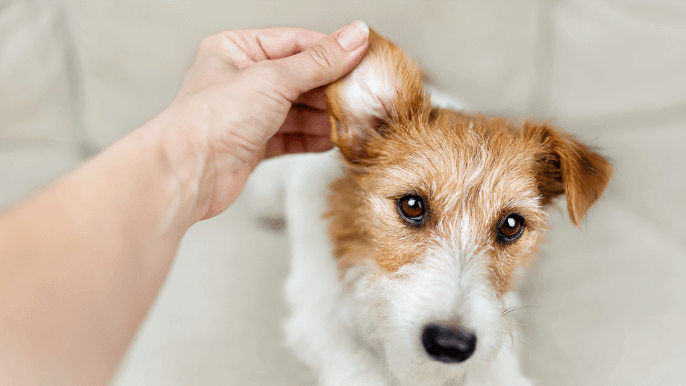
- Behind and inside the ears, which is prime mat territory for floppy eared breeds
- Under the jaw and throat where debris collects
- Around the muzzle and whisker area
- The top of the head and neck
What you are feeling for: mats behind the ears, ear discharge or unusual moisture, lumps along the jawline, or sensitivity around the muzzle that might indicate dental issues.
Move to the Neck and Shoulders
Run your hands along both sides of the neck, over the shoulders, and down the front legs. This is where you will often check for lumps that can develop along the lymph nodes, making it an important area for health monitoring.
Check these areas:
- Under the collar, because mats absolutely love this spot
- Shoulder blades and the muscles around them
- Front legs from shoulder to paw
- Between the toes and paw pads
What you are feeling for: collar-induced mats, shoulder lumps, foreign objects between toes, cracked paw pads, or burrs stuck in the leg feathering .
The Torso: Do Not Skip the Armpits
This is where things get sneaky. Most owners brush the back and sides but completely ignore the undercarriage. Your touch test for dogs must include these hidden zones for effective dog matting prevention. The armpits are the number one spot groomers find mats that owners missed.
Check these areas:
- The chest and belly, including the soft skin between the front legs
- Both armpits, and check them every single time without exception
- Along the ribcage on both sides where lumps can hide
- The lower back and hips
What you are feeling for: armpit mats (the worst offenders that can grow to the size of golf balls), lumps along the ribcage, skin tags, or abdominal sensitivity that might indicate internal issues.
The Back End and Tail
Work your way down the back, over the hips, and along the tail. This area is prone to matting in long coated breeds and sanitary issues in all dogs.
Check these areas:
- The base of the tail where mats form in fluffy breeds
- Under the tail and around the sanitary area
- Back legs from hip to paw
- Between back toes
What you are feeling for: fecal matter stuck in fur, mats around the sanitary area, lumps on the hind legs, or tail sensitivity that might indicate anal gland issues.
Coat Type Specific Touch Test Tips
Different coat types hide different problems. Here is what to pay extra attention to based on your dog's fur during your touch test for dogs. The FurHQ system organises all dogs into seven coat types, and each type has specific areas where problems are most likely to hide.
Curly Wavy Coats (Poodles, Doodles, Bichons)
Mats form close to the skin and are invisible until you touch them. Check armpits, behind ears, and under the collar obsessively. Dog matting prevention is critical for these coats because once mats form, they tighten quickly.
Recommended tools: Long-Pinned Slicker Brush and FurHQ Detail Comb for the comb test after brushing. Always use Pawfect Finish Coat Spray every brush session and post bath for detangling any tangles you find. Coat-Quench Conditioner during bath time provides the slip that prevents future tangles.
Recommended kit: FurHQ Starter Grooming Kit: Curly Wavy Coat
For complete curly coat guidance, see Curly Wavy Coat Grooming Guide.
Double Coats (Golden Retrievers, Huskies, German Shepherds)
The dense undercoat can hide lumps and hot spots beneath a seemingly healthy surface. Press firmly enough to reach the skin when you check for lumps. Surface brushing will not tell you what is happening underneath.
Recommended tools: Medium-Pinned Slicker Brush or Long-Pinned Slicker Brush depending on coat length, and Deshedding Comb to manage the undercoat. Regular deshedding prevents the trapped fur that leads to hot spots. Coat-Quench Conditioner supports coat health during bathing.
Recommended kits: FurHQ Starter Grooming Kit: Short Double Coat, FurHQ Starter Grooming Kit: Medium Plush Double Coat, or FurHQ Starter Grooming Kit: Feathered Long Double Coat
For complete double coat guidance, see How to Brush a Double Coated Dog.
Wire Coats (Terriers, Schnauzers)
Burrs and stickers stick to wire coats like Velcro. Check the belly and legs after every outdoor adventure. The rough texture grabs everything and does not let go.
Recommended tools: Medium-Pinned Slicker Brush and Short-Medium Coat Carding Rake for managing the undercoat. Pawfect Finish Coat Spray lightly on legs and furnishings helps release stubborn debris. Coat-Quench Conditioner is applied selectively to undercoat areas only during bathing. Do not apply conditioner to the jacket or saddle area, as this softens the wire texture.
Recommended kit: FurHQ Starter Grooming Kit: Wire Coat
For complete wire coat guidance, see Wire Coat Grooming Guide.
Drop Coats (Yorkies, Maltese, Shih Tzus)
Fine hair tangles easily and mats quickly in friction zones. Check anywhere the dog rubs or lies down. The softness that makes these coats beautiful also makes them vulnerable.
Recommended tools: Long-Pinned Slicker Brush and Pin Brush for daily maintenance. FurHQ Detail Comb for the verification comb test. Coat-Quench Conditioner provides the slip that prevents tangles, and Pawfect Finish Coat Sprayshould be used every brush session and post bath.
Recommended kit: FurHQ Starter Grooming Kit: Drop Coat
For complete drop coat guidance, see Drop Coat Grooming Guide.
Smooth Coats (Greyhounds, Boxers, Dobermans)
Easier to inspect visually, but do not skip the skin fold check. Moisture and bacteria love hidden creases, especially in wrinkly breeds.
Recommended tools: Rubber Curry for bathing and loose hair removal. Boar Bristle Brush for regular maintenance and distributing natural oils. Coat-Quench Conditioner supports skin health during bathing, and Pawfect Finish Coat Spraylight post bath adds a finishing touch.
Recommended kit: FurHQ Starter Grooming Kit: Smooth Single Coat
For complete smooth coat guidance, see Smooth Single Coat Grooming Guide.
Not Sure What Coat Type Your Dog Has?
Knowing your dog's coat type helps you focus on the right areas during the touch test for dogs. Different coats hide problems in different ways, and understanding your dog's specific fur genetics makes early detection easier.
FurHQ organises all dogs into seven coat types: Curly Wavy, Drop, Wire, Short Double, Medium Plush Double, Feathered Long Double, and Smooth Single. Each type has specific tools, products, and techniques designed for that coat's unique structure.
Use the FurHQ AI Coat Identifier to upload a photo of your dog and get accurate identification with the right kit recommendation. No guessing. No buying the wrong products. Just accurate identification and the right tools for your specific dog.
When to Worry (And When to Relax)
Not every lump is cancer. Not every mat is a crisis. But knowing when to act is important during your dog health check at home.
Schedule a Vet Visit If You Find
- A new lump that is growing or changing shape over days or weeks
- A firm, irregular, or painful mass that does not feel like soft fatty tissue
- Open wounds, excessive redness, or oozing that indicates infection
- Lumps near lymph nodes in the neck, armpits, or groin area
- Anything that makes your dog vocalise or pull away when touched
- Sudden sensitivity in an area that was not painful before
Handle at Home If You Find
- Small fatty lipomas that are soft, movable, and consistent in size over time
- Minor surface mats that have not tightened to the skin yet
- Burrs or stickers that can be removed gently with Pawfect Finish Coat Spray and patience
- Skin tags that are common and usually harmless
- Dry paw pads that need moisturising
When in doubt, document it. Take a photo, note the location and size, and mention it at the next vet visit. Better safe than sorry, and having documentation helps your vet track changes over time.
Why Groomers Beg You to Do This
Professional groomers see the aftermath of skipped inspections every single day. They find mats that have been there for months. They discover lumps that owners never knew existed. They remove foreign objects that have been embedded for weeks. And they have to deliver news that no owner wants to hear.
Here is what happens when you do not perform the regular touch test for dogs:
- Mats tighten and pull on the skin, causing pain and restricting movement
- Lumps grow unnoticed until they are harder to treat or have spread
- Skin infections develop under trapped moisture and bacteria
- Grooming becomes painful for your dog, creating fear and resistance
- Your groomer has to deliver bad news that could have been caught earlier
- Simple fixes become expensive emergencies
But when you do conduct a thorough touch test for dogs regularly, everything changes:
- You catch problems early when they are easy to address
- You arrive at grooming appointments with a clear picture of what is happening
- Your groomer can focus on making your dog look and feel amazing instead of damage control
- Your dog learns to trust handling, making vet visits and grooming sessions calmer
- You save money by preventing problems instead of treating them
- You become a true partner in your dog's health care
Make It a Bonding Ritual, Not a Chore
The best part about performing the touch test for dogs is that it doubles as bonding time. Your dog does not know you are conducting a health inspection. They just know you are giving them attention and gentle touch. This dog health check at home becomes a moment of connection rather than a clinical exam, and most dogs come to love it.
Tips for making it enjoyable:
- Do it during calm moments after a walk or before bed when your dog is relaxed
- Use a soothing voice and slow, deliberate movements throughout
- Reward with treats or praise when your dog stays relaxed during checking
- Make it routine so your dog expects and enjoys the attention
- Pair it with brushing for maximum efficiency and mat prevention
The more often you perform the touch test for dogs, the more familiar you will become with your dog's body. You will know what is normal for your dog, which makes spotting changes infinitely easier. You will catch early signs when you check for lumps, and your dog matting prevention efforts will keep your dog comfortable between professional grooming appointments.
How Often Should You Do the Touch Test?
The ideal frequency depends on your dog's coat type, lifestyle, and health status.
Weekly Touch Tests Are Recommended For
- Dogs with curly wavy, drop, or long coats prone to matting
- Active dogs who spend time outdoors in brush, grass, or water
- Senior dogs who are more prone to developing lumps and bumps
- Dogs with skin conditions or allergies that cause irritation
- Dogs in between professional grooming appointments
Twice Weekly Touch Tests Are Recommended For
- Dogs with very dense or fast growing coats
- Dogs who swim or get wet frequently
- Dogs recovering from skin issues or injuries
- Dogs in high tick or burr areas during active seasons
After Every Outdoor Adventure, Quick Checks Of
- Paws and between toes for debris, cuts, or stickers
- Belly and legs for burrs and stickers
- Ears for foxtails or seeds
- Armpits for anything that hitched a ride
Pairing the Touch Test with the FurHQ 5-Step Grooming Method
The touch test for dogs works best when integrated into the FurHQ 5-Step Grooming Method (Audit, Prep, Bath, Dry, Finish). The touch test IS the Audit step. Before you prep, before you brush, before any tool touches the coat, you conduct your hands-on assessment. This ensures you find any tangles, lumps, or skin changes before the grooming process begins.
The ideal routine:
- Audit: Conduct your full touch test for dogs, noting any areas of concern
- Prep: Address any mats or tangles with Pawfect Finish Coat Spray before brushing. Brush systematically with the appropriate slicker brush for your dog's coat type. Finish with the comb test using the FurHQ Detail Comb or Undercoat Depth Comb depending on coat type
- Bath: Use the correct shampoo for your dog's coat type with Coat-Quench Conditioner (included in all seven FurHQ kits)
- Dry: Towel dry first, then use a dryer appropriate for your dog's coat and comfort level
- Finish: Apply Pawfect Finish Coat Spray and perform a final comb test to confirm every section passes from root to tip
Learn the Method. Follow the Protocol. Complete the Mission.
For complete brushing guidance by coat type, see How to Brush a Double Coated Dog, How to Brush a Long Coated Dog, and How to Brush a Curly Coated Dog.
What to Do When You Find a Mat During the Touch Test
Finding a mat early is the whole point of dog matting prevention through regular touch tests. Here is what to do when your fingers discover a tangle.
For Surface Level Tangles That Have Not Tightened
- Apply Pawfect Finish Coat Spray generously to the area
- Let the spray sit for 30 seconds to a minute
- Use your fingers to gently separate the outer edges of the tangle
- Work through with a Long-Pinned Slicker Brush, brushing from the ends toward the skin
- Confirm removal with the comb test using the FurHQ Detail Comb or Undercoat Depth Comb depending on coat type
For Mats That Have Tightened Closer to the Skin
- Assess whether the mat can be safely removed at home
- If the mat is pulling on skin or causing pain, consult your groomer
- Never cut mats with scissors, as the risk of cutting skin is too high
- Consider booking a professional grooming appointment for safe removal
For more information on proper mat removal technique, see Removing Mats From Dog Fur: When to DIY and When to Call a Professional.
The Bottom Line
The touch test for dogs is not complicated, expensive, or time consuming. It is five minutes of intentional touch that can catch problems before they become painful, costly, or dangerous. Your eyes will tell you your dog looks fine. Your hands will tell you the truth. The FurHQ 5-Step Grooming Method (Audit, Prep, Bath, Dry, Finish) builds this touch test directly into the grooming process so it becomes automatic rather than an afterthought.
So the next time you are settling in with your dog on the couch, take those extra few minutes to really feel what is going on under all that fur. Check the armpits. Feel behind the ears. Run your hands over the belly. Your dog will love the attention, your vet will love the early detection, and your groomer will love you for being the kind of owner who actually checks.
And if you find issues during your touch test? FurHQ has the tools and education to help you address them. Our coat-specific kits include everything you need for proper dog matting prevention, plus video tutorials that walk you through every technique. No guessing. No overwhelm. Just clear guidance for keeping your dog healthy and comfortable.
Because at FurHQ, grooming is not just about looking good. It is about feeling good, staying healthy, and catching problems before they start. And that begins with your hands.
You got this. And we have got you. 🐾
Variation Clarity Statement
Every dog is an individual. While this guide provides general best practices for the touch test for dogs, your specific dog may vary based on genetics, breed, coat type, health history, and individual needs. Coat type can also vary within breeds. If you are unsure about your dog's coat type, use the FurHQ AI Coat Identifier to get accurate identification and the right kit recommendation.
FAQs
What is the touch test for dogs?
The touch test for dogs is a systematic, hands-on inspection of your dog's entire body using deliberate touch and pressure. It allows you to detect lumps, mats, skin irritation, and debris that your eyes can't see under your dog's coat.
This dog health check at home takes about five minutes and should be done weekly for most dogs.
How often should I perform the touch test for dogs?
Most dogs benefit from a weekly touch test. Dogs with curly, wavy, or long coats prone to matting should be checked weekly at minimum. Active outdoor dogs may need checks after every adventure. Senior dogs or those with health concerns may benefit from twice weekly inspections to catch changes early.
What am I feeling for during a dog health check at home?
During the touch test for dogs, you're feeling for lumps and bumps, mats and tangles, burrs and debris, hot spots or skin irritation, cuts and scabs, and areas of sensitivity or pain. Any changes from what's normal for your dog should be noted and monitored or discussed with your vet.
Where do mats hide on dogs?
Mats most commonly hide behind the ears, under the collar, in the armpits, around the sanitary area, behind the front legs where harnesses sit, and under the chin. These friction zones create tangles that tighten over time. Regular dog matting prevention through the touch test catches these before they become painful.
How do I check dog for lumps effectively?
To check dog for lumps, use flat palms with gentle but firm pressure and work systematically from head to tail. Press firmly enough to feel through dense coats to the skin level. Pay special attention to areas near lymph nodes including the neck, armpits, and groin. Note any new lumps and monitor for changes in size or texture.
What should I do if I find a lump on my dog?
If you find a new lump, don't panic. Note the location, size, and texture. Soft, movable lumps are often harmless fatty lipomas. Firm, irregular, or rapidly growing lumps warrant a vet visit. When in doubt, take a photo to document and mention it at your next veterinary appointment.
Can the touch test replace professional grooming?
No. The touch test for dogs is a complement to professional grooming, not a replacement. Regular touch tests help you catch problems between appointments and arrive at grooming sessions with a clear picture of your dog's condition. Professional groomers have tools and training for thorough coat care that goes beyond what most owners can do at home.
What tools do I need for dog matting prevention?
Effective dog matting prevention requires a Long Pinned Slicker Brush or Medium Pinned Slicker Brush depending on coat type, a Coat-Specific Metal Comb for the comb test, and Pawfect Finish Coat Spray for detangling. The right FurHQ kit for your dog's coat type includes all of these essentials.
How do I know what coat type my dog has?
Use the FurHQ AI Coat Identifier to determine your dog's coat type. Simply upload a photo of your dog, and our AI will analyse the coat and recommend the exact grooming kit designed for your dog's specific needs. Upload your dog's photo here →
What's the difference between a mat and a tangle?
A tangle is a loose knot of fur that can be easily brushed out with the right technique and products. A mat is a tangle that has tightened and compressed, often pulling on the skin. The touch test for dogs helps you catch tangles before they become mats, making grooming easier and more comfortable for your dog.
Should I cut mats out with scissors?
Never cut mats with scissors at home. The risk of cutting your dog's skin is extremely high because mats pull skin up into the tangled fur. Use Pawfect Finish Coat Spray and a slicker brush for minor tangles, or see a professional groomer for mats that have tightened to the skin.
Why do groomers find problems owners missed?
Groomers find problems because they use their hands, not just their eyes. Most owners rely on visual inspection and surface brushing, which misses issues at skin level. Regular touch tests make you more like a professional groomer in your detection abilities, catching problems before they require professional intervention.
Can I do the touch test on a wiggly dog?
Yes, but it helps to use the Stay Put System to keep your dog secure during the inspection. You can also do the touch test in short sessions, checking different body areas at different calm moments throughout the day until your dog learns to relax during the process.
What if my dog doesn't like being touched in certain areas?
If your dog is sensitive about certain areas, work gradually to desensitise them with positive association. Use treats and praise while gently touching sensitive areas for brief moments. If sensitivity is new or extreme, it may indicate pain or a problem that warrants veterinary attention.
How does the touch test fit into my grooming routine?
The touch test for dogs should happen before brushing. Conduct your full body inspection first, note any areas of concern, then address tangles with Pawfect Finish Coat Spray before brushing. This prevents painful pulling and ensures you catch problems before the brush encounters them.
Does FurHQ have products to help with the touch test?
Yes! FurHQ kits include all the tools you need for effective dog matting prevention and coat care. The Stay Put Systemkeeps your dog secure during inspections. Pawfect Finish Coat Spray helps you address tangles you find. And coat-specific brushes and combs ensure you can properly maintain whatever coat type your dog has.
Where can I find the right grooming tools for my dog?
FurHQ builds coat-specific kits for all seven coat types: FurHQ Starter Grooming Kit: Smooth Single Coat, FurHQ Starter Grooming Kit: Short Double Coat, FurHQ Starter Grooming Kit: Medium Plush Double Coat, FurHQ Starter Grooming Kit: Feathered Long Double Coat, FurHQ Starter Grooming Kit: Wire Coat, FurHQ Starter Grooming Kit: Curly Wavy Coat, and FurHQ Starter Grooming Kit: Drop Coat. Not sure which coat type your dog has? Use the FurHQ AI Coat Identifier to find out. Browse everything at the FurHQ Store.
How does the touch test for dogs relate to coat type?
FurHQ classifies all dog coats into seven coat types: Curly Wavy Coat, Drop Coat, Wire Coat, Smooth Single Coat, Short Double Coat, Medium Plush Double Coat, and Feathered Long Double Coat. Different coat types hide different problems. Curly wavy coats hide mats close to the skin. Double coats hide lumps and hot spots beneath dense undercoat. Wire coats trap burrs and debris. The touch test catches what each coat type conceals.