
Komondor Temperament and Grooming Considerations
Table of Contents
- Introduction
- Breed Handling Profile
- Breed Purpose and Why It Matters for Komondor Temperament
- FurHQ Coat Type Breakdown
- Not Sure About Your Dog's Coat Type?
- Puppy Coat to Adult Coat Transition
- The FurHQ 5-Step Grooming Method: Technical Reality
- Komondor Temperament: Superpowers and Kryptonite
- FurHQ's Lifestyle Lens and Pro Insights
- Health and Lifespan: The FurHQ Touch Test
- Related Breed Comparisons
- Related Reading
- The Bottom Line
- Variation Clarity Statement
- FAQs
 Introduction
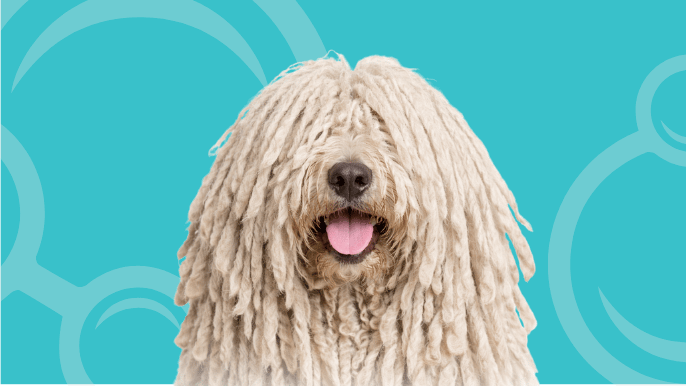
Komondor Temperament combines fearless livestock guardian power with calm, independent authority, creating one of the most imposing and most distinctive guardian breeds in the world. Komondor Temperament is protective, territorial, and deeply devoted to its charges, wrapped in the most unique coat in the entire dog world: the naturally corded coat that forms heavy, rope-like cords covering the entire body.
The Komondor was developed on the Hungarian plains as a livestock guardian, living with flocks and protecting them from wolves, bears, and human predators. That guardian heritage created a breed that makes independent decisions, acts without handler direction, and takes protection with absolute seriousness. The corded coat is not a grooming style. It is a functional armour that developed to protect the dog from predator bites and extreme weather.

Let me tell you what you are really getting with a Komondor, because this breed is the most independent, most imposing, and most uniquely coated guardian dog on earth, and nothing about ownership is casual.
Komondor Temperament is livestock guardian to the absolute core. These dogs were not bred to work with handlers. They were bred to live independently with flocks on the Hungarian plains, making their own decisions about threats, acting without direction, and protecting their charges with a willingness to confront wolves and bears.
That independent guardian heritage creates a dog that respects leadership but does not require it, protects territory with absolute commitment, and views strangers as potential threats until proven otherwise.
Now let me talk about the coat. Honestly.
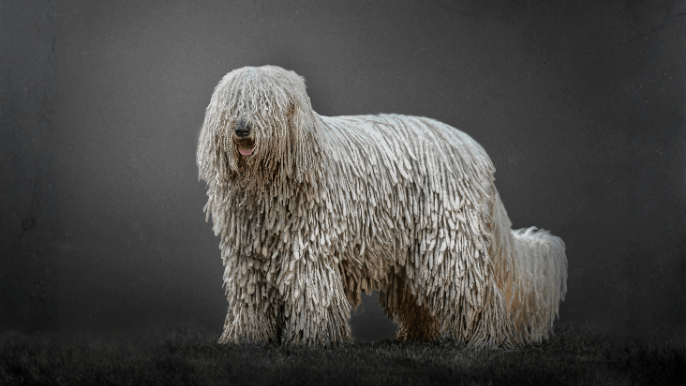
The corded coat is unlike anything else in the dog world. The coat naturally forms heavy, rope-like cords that develop as the puppy coat transitions to the adult coat, typically beginning between 8 and 12 months. The cords continue to grow throughout the dog's life, eventually reaching the ground. This coat does NOT fit into the current FurHQ seven-coat classification system. A dedicated Corded Coat classification and kit are coming soon to FurHQ. Until then, here is what you need to know.
The corded coat is NEVER brushed. NEVER combed. NEVER carded. Brushing or combing destroys the cords. Maintenance involves manually separating cords to prevent them from matting together into large, unmanageable sheets.
Each cord must be separated from its neighbours by hand. Bathing requires soaking the cords thoroughly (which takes time), applying shampoo by squeezing it through each cord, rinsing completely (which takes even more time), and drying, which can take 24 hours or more without a high-velocity dryer.
The coat is a serious, time-intensive commitment that is unlike any other grooming experience.
This breed is NOT for you if:
- You are not an experienced handler of large, independent guardian breeds
- You cannot commit to the extraordinary coat maintenance demands
- You cannot provide extensive, ongoing socialisation
- You live in a warm, humid climate (the coat creates heat and moisture issues)
- You want a dog that obeys commands reliably and immediately
- You cannot provide space and purpose for a livestock guardian breed
Because Komondor Temperament includes:
- Powerful independent guardian instincts requiring experienced management
- A corded coat demanding extraordinary maintenance commitment
- Territorial aggression toward strangers and unfamiliar animals
- Independent decision-making that does not prioritise obedience
- Potential for serious aggression when protection instincts engage
- Extreme drying time after bathing (up to 24+ hours)
This breed IS for you if:
- You have experience with large, independent livestock guardian breeds
- You can commit to the unique demands of corded coat maintenance
- You have space, ideally with livestock or property to guard
- You can provide confident, fair leadership for an independent breed
- You can commit to lifelong socialisation
- You appreciate a guardian that works independently and takes protection seriously
Komondor Temperament rewards experienced, dedicated owners with a guardian whose commitment to protection is absolute, whose courage is legendary, and whose unique corded coat is one of the most remarkable features in the entire dog world.
Respect the independence. Commit to the coat. Provide the purpose.
Do that, and you will have the most imposing, most committed, and most uniquely magnificent guardian in the livestock guardian tradition.
Breed Handling Profile
| Trait | Level | Notes |
|---|---|---|
| Emotional sensitivity | Low to Moderate | Independent and stoic; bonds with family but does not seek constant approval |
| Handling tolerance | Moderate | Cooperative with established handler; may resist unfamiliar handling |
| Grooming commitment | Extreme | Corded coat requires unique, time-intensive maintenance unlike any other coat type |
| Exercise needs | Moderate | Patrol-style activity rather than vigorous exercise; needs space and purpose |
| Alone time tolerance | High | Bred to work independently; handles solitude well |
| Best fit household | Experienced guardian breed owners with property or livestock | Rural or suburban settings with space for territorial patrol |
Breed Purpose and Why It Matters for Komondor Temperament
The Komondor was developed on the Hungarian plains (puszta) as a livestock guardian dog, living with flocks of sheep and cattle and protecting them from wolves, bears, and human thieves. The breed is believed to have arrived in Hungary with the Cumans, a Turkic nomadic people, around the 12th or 13th century.
The livestock guardian role is fundamentally different from herding. Komondor Temperament was not bred to move livestock on command. The breed was bred to live among the flock, bond with the animals, assess threats independently, and confront predators without handler direction. The massive corded coat served dual purposes: protection against predator bites and camouflage among the sheep.
Komondor Temperament reflects this heritage directly. The independent decision-making, the territorial aggression toward perceived threats, the calm confidence when no threat is present, and the absolute willingness to confront danger all trace to a breed that was the flock's sole protection on the Hungarian plains.
When your Komondor patrols the property perimeter, shows territorial response to approaching strangers, or demonstrates calm, watchful alertness, that is centuries of livestock guardian heritage expressing itself.
FurHQ Coat Type Breakdown
The Komondor carries a Corded Coat that does not currently fit within the FurHQ seven-coat classification system. A dedicated Corded Coat classification and grooming kit are coming soon to FurHQ.
The coat begins as a soft, wavy puppy coat that gradually forms cords as the adult coat develops, typically beginning between 8 and 12 months. The cords are formed by the outer coat and undercoat intertwining naturally. Mature cords are heavy, rope-like, and continue to grow throughout the dog's life.
Critical corded coat rules:
- NEVER brush or comb the corded coat. This destroys the cords.
- Cords must be separated by hand regularly to prevent matting into sheets.
- Bathing requires thorough soaking, careful shampooing through each cord, and complete rinsing.
- Drying takes 24+ hours without a high-velocity dryer due to cord density.
- The coat must be kept clean and dry between baths to prevent odour and mildew.
Until the FurHQ Corded Coat kit is available, consult with a professional groomer experienced in corded breeds for hands-on guidance. Use the FurHQ AI Coat Identifier for other breeds in your household.
Not Sure About Your Dog's Coat Type?
Not every dog fits neatly into one coat category, and that is completely normal.
Use the FurHQ AI Coat Identifier to find out your dog's coat type and get matched to the right FurHQ Starter Grooming Kit. Note that the Komondor's corded coat will have a dedicated FurHQ classification coming soon.
Puppy Coat to Adult Coat Transition
Komondor puppies are born with a soft, wavy white coat that begins the cording process between 8 and 12 months. The transition from puppy coat to corded adult coat is the most critical grooming period. During this time, the forming cords must be manually separated regularly (sometimes daily) to ensure they cord individually rather than matting into large sheets.
Komondor Temperament during puppyhood is curious, playful, and beginning to develop the guardian instincts that will intensify dramatically with maturity. Use the puppyhood period to establish handling tolerance for cord separation. Socialisation during puppyhood is critical because Komondor Temperament becomes increasingly territorial and stranger-wary as the dog matures.
The FurHQ 5-Step Grooming Method: Technical Reality
The FurHQ 5-Step Method (Audit, Prep, Bath, Dry, Finish) applies to Komondor Temperament with significant adaptation for the corded coat. Standard brushing and carding tools do not apply.
Learn the Method. Follow the Protocol. Complete the Mission.
Setup and Stability
Secure the dog using the Stay Put System (suction cup anchor + safety lead). Komondor Temperament cooperates with established grooming routines. For anxious dogs, the Hush Pup Wrap provides calming compression.
Tools and Technique
Audit: Begin every session by examining the cords throughout the body. Check for cords that have matted together and need separation. Check the skin beneath the cords for irritation, parasites, or moisture. Check ears (particularly important as cords can trap debris near the ear canal). Check the ventral area and between the legs where moisture can accumulate.
Prep: Manually separate any cords that have joined together. Work from the skin outward, gently pulling cords apart. This is the primary maintenance task for corded coats. Focus on areas where cords tend to merge: behind the ears, under the legs, around the collar area, and on the chest.
Bath: Bathing a Komondor is a significant undertaking. Soak the cords thoroughly with warm water (this alone takes considerable time). Apply shampoo by squeezing it through each cord section. Rinse thoroughly, ensuring all shampoo is removed from the centre of each cord. Incomplete rinsing causes skin irritation and odour.
Dry: Drying is the most time-intensive step. The cords hold enormous amounts of water. Without a high-velocity dryer, drying can take 24 hours or more. Incomplete drying causes mildew, odour, and skin problems. If using a dryer, work systematically through cord sections.
Finish: Final cord inspection. Ensure all cords are separated, clean, and dry to the skin.
 Komondor Temperament: Superpowers and Kryptonite
Superpowers 🦸
🌟 Fearless guardian: Komondor Temperament delivers one of the most committed, most courageous, and most effective livestock guardian personalities in the world.
🌟 Independent intelligence: The breed makes sound, independent decisions about threats without handler direction.
🌟 Unique corded coat: The most distinctive coat in the dog world, serving as functional armour and camouflage.
🌟 Calm confidence: When no threat is present, Komondor Temperament is calm, measured, and quietly watchful.
🌟 Deep family bond: Despite independence, the breed bonds deeply with family and protects with absolute commitment.
🌟 Self-sufficient nature: Less demanding of constant attention than many breeds, content to patrol and watch independently.
Kryptonite ⚠️
⚠️ Extreme coat maintenance: The corded coat requires unique, time-intensive care unlike any other breed in the dog world.
⚠️ Independent stubbornness: Komondor Temperament makes its own decisions and does not prioritise obedience over independent judgment.
⚠️ Territorial aggression: Stranger wariness and territorial aggression are genuine and require extensive, lifelong socialisation.
⚠️ Drying time: Bathing and drying a corded Komondor is a multi-hour (sometimes multi-day) undertaking.
⚠️ Not for urban living: Komondor Temperament needs space, purpose, and territory to patrol.
⚠️ Potential for serious aggression: When guardian instincts engage, the breed's physical power and commitment create genuine risk without experienced management.
FurHQ's Lifestyle Lens and Pro Insights
The Coat Is a Lifestyle Commitment
Corded coat maintenance is unlike anything else in dog ownership. The hand separation of cords, the multi-hour bathing process, the day-long drying time, and the ongoing monitoring for moisture, debris, and cord health create a grooming commitment that is more intensive than any of the seven FurHQ coat types. Be honest with yourself about whether you can sustain this commitment for the dog's lifetime before acquiring this breed.
Independence Is Not Disobedience
Komondor Temperament was bred to work independently, making life-and-death decisions about predators without handler direction. This creates a dog that evaluates commands rather than automatically complying. The breed responds to fair, consistent leadership but will always exercise independent judgment. Expect cooperation, not blind obedience.
Socialisation Is the Most Important Investment
Without extensive, ongoing socialisation, Komondor Temperament's territorial and protective instincts become indiscriminate aggression. A 50+ kilogram dog with guardian-level commitment and no social skills is genuinely dangerous. Socialise from day one. Expose to diverse people, environments, and controlled situations. Continue throughout life because guardian instincts intensify with maturity.
Purpose Matters
Komondor Temperament thrives with purpose. Whether guarding livestock, patrolling property, or serving as a family guardian with adequate space, the breed needs a territory and a purpose. A Komondor in a small urban apartment with no guardianship role becomes frustrated, bored, and problematic.
During the puppy-to-cord transition (8 to 12 months), separate forming cords daily. This is the single most important grooming investment for a Komondor. Cords that are properly separated during formation remain individual and manageable throughout the dog's life.
Health and Lifespan: The FurHQ Touch Test
The Komondor typically lives 10 to 12 years.
Regular cord inspection and health monitoring are essential. Komondor Temperament cooperates with examination from trusted handlers. Hip dysplasia is a significant concern in this large breed. Bloat (GDV) is a life-threatening risk for deep-chested breeds.
Entropion can affect the eyes. Skin conditions can develop beneath the cords if moisture is trapped. External parasites can be difficult to detect and treat in the corded coat, requiring extra vigilance. The corded coat makes visual skin assessment challenging, making hands-on examination during cord separation critically important.
Every grooming session is a conversation with your dog's body. The FurHQ 5-Step Method builds that conversation into your routine.
Related Breed Comparisons
- Puli Temperament: Fellow Hungarian corded breed in a smaller package. More active herding temperament versus guardian. Same corded coat demands at a smaller scale.
- Great Pyrenees Temperament: Similar livestock guardian heritage with a long coat rather than corded. More sociable temperament. Different grooming approach entirely.
- Kuvasz Temperament: Fellow Hungarian guardian breed with a standard long coat. Similar independent guardian temperament. Simpler grooming despite similar heritage.
- Spanish Water Dog Temperament: Another breed that can cord, though typically kept clipped. Different working heritage. Similar coat management decisions.
Related Reading
Coat Care Resources
Comfort and Safety
- Dog Grooming Desensitisation
- FurHQ Touch Test
Tools and Products
The Bottom Line
Komondor Temperament delivers fearless guardian commitment, independent intelligence, and absolute protective loyalty in the most unique and most demanding coat in the dog world. The coat maintenance is extraordinary.
The independence requires experienced handling. The territorial aggression demands lifelong socialisation. The space and purpose requirements are non-negotiable. But the return is a partnership with one of the most imposing, most committed, and most magnificently unique guardian breeds in existence.
A dedicated FurHQ Corded Coat classification and grooming kit are coming soon. Until then, the breed's temperament, care needs, and guardian heritage remain essential knowledge for anyone considering this extraordinary breed.
Learn the Method. Follow the Protocol. Complete the Mission.
You got this. And we've got you. 🐾
Variation Clarity Statement
Every dog is an individual. While this profile describes typical breed characteristics, your specific dog may vary based on genetics, breeding, socialisation, and individual temperament. Komondors are always white. Cord thickness, density, and development rate vary between individuals.
If you have other breeds in your household, use the FurHQ AI Coat Identifierfor their coat identification and kit recommendations.
FAQs
What coat type does a Komondor have?
The Komondor carries a naturally corded coat that does not currently fit within the FurHQ seven-coat classification system (Curly Wavy Coat, Drop Coat, Wire Coat, Smooth Single Coat, Short Double Coat, Medium Plush Double Coat, and Feathered Long Double Coat). A dedicated Corded Coat classification and kit are coming soon to FurHQ. Use the FurHQ AI Coat Identifier for other breeds in your household.
Can I brush a Komondor?
NEVER brush or comb a corded coat. Brushing destroys the cords. Maintenance is done entirely by hand, separating cords that have joined together. This is fundamentally different from every other coat type.
How long does it take to dry a Komondor after bathing?
Without a high-velocity dryer, drying can take 24 hours or more. The cords absorb and hold enormous amounts of water. Incomplete drying causes mildew, odour, and skin problems. Plan bathing carefully, ensuring adequate drying time and conditions.
When do the cords start forming?
Cords typically begin forming between 8 and 12 months as the puppy coat transitions to the adult coat. Daily cord separation during this period is essential to ensure proper individual cord formation.
Is Komondor Temperament dangerous?
Komondor Temperament is a powerful livestock guardian breed with genuine territorial aggression. Without experienced ownership, extensive socialisation, and responsible management, the breed's protective instincts can create dangerous situations. Responsible, experienced ownership is essential.
How much exercise does a Komondor need?
Komondor Temperament has moderate exercise needs. The breed prefers patrol-style activity: walking the property perimeter, monitoring territory, and maintaining watchful awareness. Vigorous aerobic exercise is less important than space and purpose. Daily walks plus access to territory satisfy the breed's needs.
Can a Komondor live in an apartment?
Not recommended. Komondor Temperament needs space, territory to patrol, and purpose. The coat maintenance also requires space for bathing and drying. Urban apartment living does not suit this breed's territorial guardian nature.
Is Komondor Temperament good with children?
Komondor Temperament is protective of family children and generally gentle with them. However, the breed's territorial nature means it may perceive visiting children's rough play with family children as a threat. Supervision is essential. The breed's size and protective responses require experienced management around all children.
How do I manage the territorial aggression?
Extensive, ongoing socialisation from puppyhood. Controlled introductions to visitors. Secure containment. Confident, fair leadership. Never encourage or reinforce aggressive responses. A well-socialised Komondor distinguishes between normal activity and genuine threats. An unsocialised one views everything unfamiliar as a threat.
Does the corded coat smell?
The corded coat can develop odour if not kept clean and dry. Moisture trapped in the cords causes mildew. Regular maintenance, thorough drying after bathing or rain exposure, and keeping the cords clean prevents odour problems.
What health issues should I watch for during grooming?
During cord separation, check for skin irritation beneath the cords, parasites (difficult to detect in corded coats), hot spots, moisture accumulation (particularly in the ventral area), ear infections, and hip dysplasia (stiffness during positioning). The corded coat makes visual assessment impossible, making hands-on examination essential.
What grooming kits does FurHQ offer for different coat types?
FurHQ currently offers seven coat-specific grooming kits: FurHQ Starter Grooming Kit: Curly Wavy Coat, FurHQ Starter Grooming Kit: Drop Coat, FurHQ Starter Grooming Kit: Wire Coat, FurHQ Starter Grooming Kit: Smooth Single Coat, FurHQ Starter Grooming Kit: Short Double Coat, FurHQ Starter Grooming Kit: Medium Plush Double Coat, and FurHQ Starter Grooming Kit: Feathered Long Double Coat. A dedicated Corded Coat kit for breeds like the Komondor is coming soon. Browse all current kits at the FurHQ Store.