
Puli Temperament and Grooming Considerations
Table of Contents
- Introduction
- Breed Handling Profile
- Breed Purpose and Why It Matters for Puli Temperament
- FurHQ Coat Type: Corded Coat (Coming Soon)
- Not Sure About Your Dog's Coat Type?
- Puppy Coat to Adult Coat Transition
- Puli Temperament: Superpowers and Kryptonite
- FurHQ's Lifestyle Lens and Pro Insights
- Health and Lifespan: The FurHQ Touch Test
- Related Breed Comparisons
- Related Reading
- The Bottom Line
- Variation Clarity Statement
- FAQs
 Introduction
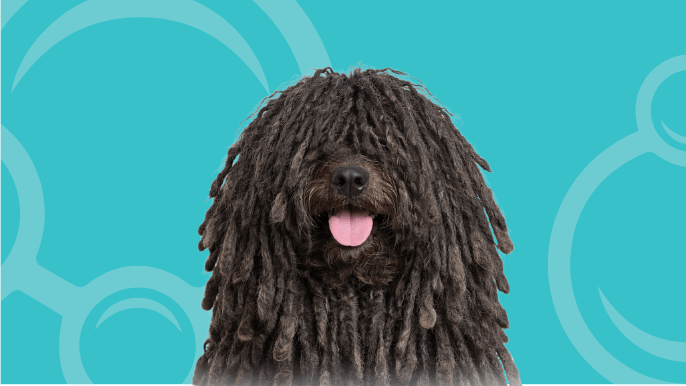
Puli Temperament combines agile herding intelligence with fierce guardian loyalty, wrapped in one of the most visually iconic and most misunderstood coats in the entire dog world. Puli
Temperament is confident, energetic, and deeply bonded to its family, housed in a compact, muscular herding body covered in the distinctive corded coat that forms natural rope-like dreadlocks and has made this Hungarian breed instantly recognisable for over a thousand years.
The Puli is an ancient Hungarian herding breed that has worked alongside the Magyar people on the Hungarian plains since at least the 9th century. The breed's corded coat is not a grooming choice. It is the breed's natural coat expression, where the curly outer coat and dense undercoat intertwine to form tight, weatherproof cords that protected the dog from predators, extreme weather, and the physical demands of herding livestock across open terrain.
Puli Temperament is as distinctive as the coat: intelligent, quick, vocal, opinionated, and utterly devoted to its family with a guardian vigilance that belies the breed's medium size.

This is Mondo, and I need you to hear something about the Puli, because this breed is one of the most unique dogs on the planet, and the combination of high-drive herding intelligence, fierce loyalty, and a coat that literally forms dreadlocks creates an ownership experience that is unlike anything else in the dog world.
Puli Temperament is ancient herding dog to the core. This breed has been working the Hungarian puszta, the vast, flat, windswept plains of Hungary, for over a thousand years. The Puli worked in partnership with the larger Komondor: the Puli herded the sheep during the day with lightning speed and agile precision, while the Komondor guarded the flock at night with its massive size and protective power.
That daytime herding role required extraordinary intelligence, explosive speed, agility that seems impossible for a corded dog, and an independent decision-making ability that allowed the Puli to manage a flock with minimal human direction. The breed had to think fast, move faster, and make split-second herding decisions across miles of open plain.
The emotional reward of living with Puli Temperament is the depth of the bond and the sheer entertainment this breed delivers. A Puli is never boring. The intelligence is astonishing. The agility is almost comical when you watch a dog covered in swinging cords leap, spin, and change direction with the speed of a much lighter, sleeker breed.
The loyalty is absolute. A Puli bonds to its family with a devotion that is fierce, protective, and constant. The breed has a sense of humour, a playfulness that persists well into adulthood, and an expressiveness that communicates clearly despite the face being largely hidden behind cords.
But the flip side is equally intense. Puli Temperament is vocal. Extremely vocal. The breed was bred to communicate across vast plains, alerting shepherds to problems, directing sheep with sharp barks, and announcing the approach of anything unfamiliar. That vocal heritage translates to a domestic dog that barks at everything: visitors, sounds, other animals, changes in routine, and anything that deviates from what the Puli considers normal.
The herding intelligence means a Puli without mental stimulation becomes bored, and a bored Puli becomes destructive and neurotic with remarkable speed. The guardian instinct creates wariness with strangers that requires extensive socialisation from puppyhood to prevent it from becoming problematic.
Which brings us to the coat.
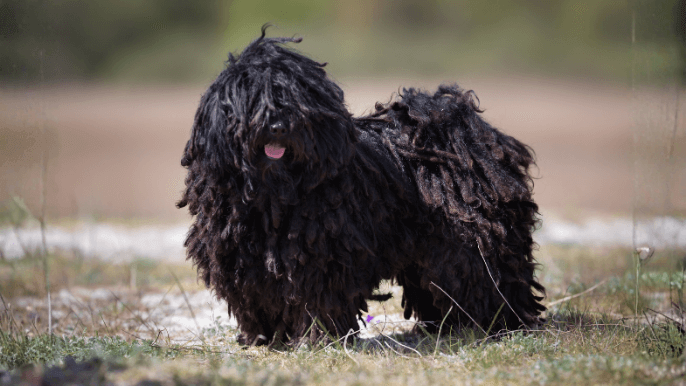
The Puli's corded coat is one of the most extraordinary coat types in the canine world and one of the most demanding to maintain properly. The coat naturally forms cords as the curly outer coat and soft undercoat intertwine.
These cords are not mats. They are structured, intentional formations that have protected this breed for over a millennium.
Maintaining a corded coat requires specialised knowledge: separating cords by hand as they form, preventing adjacent cords from merging into sheets, bathing with thorough rinsing and extensive drying time (a fully corded Puli can take 24 to 48 hours to dry completely), and monitoring skin health beneath the cords.
Some owners choose to keep the coat clipped short for easier maintenance, which is a practical choice that changes the breed's iconic appearance but dramatically simplifies daily care.
This breed is NOT for you if:
- You want a quiet dog (the Puli is one of the most vocal herding breeds)
- You cannot provide daily mental stimulation and structured activity
- You are not prepared for the specialised coat maintenance a corded coat demands (or the commitment to keep it clipped short)
- You want a dog that is immediately friendly with all strangers and visitors
- You are a first-time dog owner without experience with intelligent, independent herding breeds
- You cannot commit to extensive socialisation from puppyhood onward
Because Puli Temperament includes:
- Persistent, loud barking inherited from centuries of communicating across open plains
- High intelligence requiring daily mental engagement to prevent boredom-driven destruction
- Guardian wariness toward strangers that demands ongoing socialisation management
- Herding behaviours including circling, nipping, and controlling movement of household members
- A corded coat requiring specialised maintenance unlike any other coat type in the dog world
- Independent decision-making from the herding heritage that can translate to stubborn non-compliance
This breed IS for you if:
- You want an intelligent, agile, fiercely loyal herding companion with extraordinary character
- You appreciate the unique beauty and heritage of the corded coat and are prepared to learn its maintenance
- You can provide daily physical exercise and mental stimulation for a high-drive herding breed
- You enjoy a vocal, expressive, entertaining dog with a genuine sense of humour
- You have experience with intelligent, independent herding breeds
- You want a living piece of Hungarian pastoral history that turns heads everywhere it goes
Puli Temperament rewards dedicated, experienced owners with a companion whose intelligence is extraordinary, whose loyalty is fierce, whose agility defies the appearance of the corded coat, and whose personality delivers daily entertainment, constant devotion, and a depth of character refined across a thousand years of Hungarian herding tradition.
Stimulate the mind. Manage the bark. Respect the cords.
Do that, and you will have one of the most unique, most intelligent, and most devoted companions in the entire herding group.
Breed Handling Profile
| Trait | Level | Notes |
|---|---|---|
| Emotional sensitivity | Moderate to High | Deeply bonded to family; sensitive to handler mood; responsive to fair, consistent methods |
| Handling tolerance | Moderate | Cooperative with trusted handler; may resist unfamiliar handling; corded coat requires gentle, patient work |
| Grooming commitment | Very High (corded) / Moderate (clipped) | Corded coat demands specialised, time-intensive maintenance; clipped coat is manageable |
| Exercise needs | High | Agile herding dog requiring daily physical and mental activity; 45 to 60+ minutes daily |
| Alone time tolerance | Moderate | Handles alone time when adequately exercised; vocal and destructive when bored or understimulated |
| Best fit household | Experienced herding breed owners with active lifestyles | Owners committed to coat education and ongoing socialisation |
Breed Purpose and Why It Matters for Puli Temperament
The Puli is one of the oldest herding breeds in Europe, arriving on the Hungarian plains with the Magyar people during their migration in the 9th century. Some historians trace the breed's ancestry even further, linking it to ancient Tibetan herding dogs.
The breed was developed for daytime herding work on the Hungarian puszta, the vast, flat grasslands where sheep grazed in enormous flocks.
The Puli's role was to control the flock's movement with explosive bursts of speed, agile direction changes, and sharp vocal commands. The breed typically weighed 10 to 15 kg (22 to 33 lb) and stood 36 to 45 cm (14 to 18 in) tall, compact and muscular beneath the cords. The small to medium size allowed the Puli to run across the backs of tightly packed sheep to reach the far side of the flock.
The corded coat provided protection from weather extremes (blazing summer heat and brutal winter cold on the exposed plains), from predator bites (wolf teeth could not easily penetrate the dense cords), and from physical damage during the demanding daily work.
Puli Temperament reflects this heritage directly. The explosive speed and agility come from the need to control sheep across open terrain. The intelligence and independent decision-making come from working at a distance from the shepherd with minimal direction.
The vocal nature comes from communicating commands to the flock and alerts to the shepherd across vast distances. The guardian wariness comes from the breed's role as the first line of detection for approaching threats.
When your Puli circles your family members, barks at approaching visitors, makes lightning-quick directional changes during play, or demonstrates the remarkable intelligence that defines this breed, that is a thousand years of Hungarian herding heritage expressing itself.
FurHQ Coat Type: Corded Coat (Coming Soon)
The Puli carries a Corded Coat, one of the most unique and most specialised coat types in the canine world.
The coat consists of a curly, wavy outer coat and a soft, dense undercoat that naturally intertwine to form tight, rope-like cords as the dog matures. The cords begin forming between 6 and 18 months and continue developing throughout the dog's life, eventually reaching the ground in fully maintained adult coats. Common colours include black (most common), white, grey, and cream (called "fako" in Hungarian).
FurHQ is developing specialised resources for the Corded Coat type. This coat requires maintenance techniques that differ fundamentally from all seven current FurHQ coat classifications. No standard brushing tools apply. No slicker brush, no comb, no carding rake. The coat is maintained entirely by hand separation, specialised bathing, and extensive drying.
Until the FurHQ Corded Coat resources launch, here are the essential principles:
- Cords must be separated by hand regularly to prevent adjacent cords from merging into large, flat mats (called "plates" or "sheets")
- Bathing requires thorough saturation, gentle shampoo application to each cord, exhaustive rinsing, and 24 to 48 hours of drying time for a fully corded adult coat
- Skin health beneath the cords must be monitored by parting cords to check the skin surface
- Many owners choose to keep the coat clipped short for practical daily maintenance, which is a valid choice that simplifies care dramatically
Use the FurHQ AI Coat Identifier if you are unsure about your dog's coat classification. The Corded Coat type and the Naked/Hairless Coat type are both coming soon to the FurHQ system.
Not Sure About Your Dog's Coat Type?
Not every dog fits neatly into one coat category, and the Puli's corded coat is one of the most specialised in the dog world.
Use the FurHQ AI Coat Identifier to identify your dog's coat type. FurHQ Corded Coat and Naked/Hairless Coat resources are coming soon.
Puppy Coat to Adult Coat Transition
Puli puppies are born with a soft, wavy, fluffy coat that bears little resemblance to the adult corded coat. The cording process begins between 6 and 18 months as the puppy coat transitions. The curly outer coat and developing undercoat begin intertwining, and the owner must guide this process by hand-separating emerging cords to the desired size and preventing them from merging into sheets.
This transition period is the most labour-intensive phase of Puli coat ownership. Regular hand separation during the cording phase establishes the cord pattern for the dog's lifetime. Neglecting this period results in large, flat mat plates that are difficult to correct and may require shaving.
Puli Temperament during puppyhood is energetic, curious, bold, and already vocal. The herding instincts begin expressing early, with puppies circling, chasing, and attempting to control the movement of household members, children, and other pets. Socialisation from the earliest weeks is critical.
Expose the puppy to diverse people, environments, sounds, and experiences to build the confidence and tolerance that prevents the natural guardian wariness from developing into fearful or aggressive reactivity.
 Puli Temperament: Superpowers and Kryptonite
Superpowers 🦸
🌟 Extraordinary intelligence: Puli Temperament delivers one of the most intelligent herding breed minds, with problem-solving ability, rapid learning, and an independent decision-making capacity refined across a millennium of working heritage.
🌟 Breathtaking agility: Despite the appearance of the corded coat, the Puli is explosively fast and agile, capable of direction changes and athletic feats that seem impossible beneath all those cords.
🌟 Fierce family loyalty: The bond is deep, protective, and unwavering, creating a devoted guardian companion that is always aware of its family's safety and wellbeing.
🌟 Unique iconic appearance: The corded coat makes the Puli one of the most instantly recognisable and most visually striking breeds in the world, turning heads everywhere it goes.
🌟 Playful humour: Puli Temperament retains a playful, almost comedic quality well into adulthood, with an expressiveness and sense of humour that makes daily life entertaining.
🌟 Living heritage: Owning a Puli is owning a living piece of thousand-year Hungarian pastoral tradition, connecting you to one of the oldest and most culturally significant herding breeds in Europe.
Kryptonite ⚠️
⚠️ Extreme vocal nature: Puli Temperament barks persistently, loudly, and at everything. This is one of the most vocal herding breeds and is challenging in noise-sensitive environments.
⚠️ Coat maintenance complexity: The corded coat requires specialised knowledge, regular hand separation, time-intensive bathing and drying, and monitoring that most dog owners have never encountered.
⚠️ Stranger wariness: The guardian instinct creates wariness toward unfamiliar people that demands extensive, ongoing socialisation to manage appropriately.
⚠️ High mental stimulation needs: The herding intelligence requires daily mental engagement. Boredom creates destructive, neurotic, and excessively vocal behaviour rapidly.
⚠️ Herding behaviours: Circling, nipping at heels, and controlling movement of household members, particularly children and other pets.
⚠️ Extended drying time: A fully corded Puli can take 24 to 48 hours to dry completely after bathing, creating practical challenges for regular hygiene maintenance.
FurHQ's Lifestyle Lens and Pro Insights
The Bark Is Not a Behaviour Problem
Puli Temperament is vocal because the breed was designed to be vocal. Barking was the Puli's primary communication tool across the vast Hungarian plains, directing sheep and alerting shepherds to threats over enormous distances.
In a domestic setting, this translates to barking at visitors, sounds, environmental changes, other animals, and anything the Puli considers noteworthy. Training can reduce frequency and establish "quiet" commands, but expecting a silent Puli is expecting the breed to deny its fundamental heritage.
Manage expectations. Train consistently. Accept that some level of vocal expression is part of the package.
The Coat Decision Is Fundamental
Every Puli owner faces a fundamental choice: maintain the corded coat or clip it short. Both are valid. The corded coat is the breed's iconic expression and preserves the heritage appearance. It requires specialised maintenance, extensive drying time, regular hand separation, and a commitment that many owners underestimate.
A clipped coat simplifies daily life dramatically, making the Puli a much more practical family companion while maintaining the wonderful temperament. There is no wrong answer. The right choice depends on your available time, your willingness to learn corded coat maintenance, and your personal preference.
Mental Stimulation Is as Important as Physical Exercise
Puli Temperament needs both physical exercise and mental engagement. Forty-five to sixty minutes of physical activity daily is the baseline.
But the herding intelligence also demands puzzle toys, nose work, training sessions, agility, herding trials, or any activity that challenges the mind. A physically tired but mentally bored Puli will still find ways to express its frustration through barking, destructive creativity, and escape problem-solving.
Socialisation Is Lifelong
The guardian wariness in Puli Temperament is natural and appropriate when properly managed. It becomes problematic when socialisation is neglected. Start socialisation from the earliest puppyhood weeks and continue it throughout the dog's life.
Expose the Puli to diverse people, environments, and situations regularly. Reward calm, confident responses to new stimuli. A well-socialised Puli is appropriately alert but composed. An unsocialised Puli is reactive, fear-aggressive, and genuinely difficult to manage in public settings.
Whether you cord or clip, monitor the skin. The Puli's coat, whether maintained in full cords or trimmed short, sits close to a body that works hard and plays harder. Part the cords or lift the clipped coat regularly and check the skin surface for irritation, hot spots, parasites, and moisture retention.
Health and Lifespan: The FurHQ Touch Test
The Puli typically lives 12 to 16 years, making it one of the longer-lived medium-sized breeds.
Regular grooming sessions serve as essential health monitoring opportunities. Puli Temperament cooperates during examination from trusted handlers. Hip dysplasia can occur but is less common than in larger herding breeds. Progressive retinal atrophy and cataracts require monitoring. Patellar luxation occurs in some lines.
Skin conditions beneath the corded coat can develop undetected without regular monitoring. Ear infections require attention as the corded ears reduce airflow. Dental health needs regular assessment. The breed is generally robust and healthy with relatively few breed-specific conditions compared to many purebred herding dogs.
Every grooming session is a conversation with your dog's body. Regular health monitoring catches developing issues before they become serious problems.
Related Breed Comparisons
- Komondor Temperament: Hungarian flock guardian partner with a similar corded coat but much larger size and calmer, guardian-focused temperament. The Puli's herding counterpart.
- Pumi Temperament: Hungarian herding cousin with curly coat instead of cords. Similar energy and intelligence. Different coat maintenance entirely.
- Bergamasco Temperament: Italian herding breed with a different corded coat structure (flat mats rather than round cords). Calmer temperament.
- Standard Poodle Temperament: Similar intelligence and curly coat genetics (Poodles can also be corded). Different heritage and personality.
Related Reading
Coat Type Education
Comfort and Safety
- Dog Grooming Desensitisation
- FurHQ Touch Test
Tools and Products
The Bottom Line
Puli Temperament delivers extraordinary intelligence, fierce family loyalty, breathtaking agility, and a depth of character refined across a thousand years of Hungarian herding heritage, all wrapped in the most visually iconic coat in the dog world. The barking demands management. The intelligence demands stimulation.
The socialisation demands commitment. The coat demands either specialised corded maintenance or the practical decision to clip short. But the return is one of the most unique, most intelligent, and most devoted herding companions available, a living piece of pastoral history that combines ancient working ability with modern companionship in a package that turns heads, challenges owners, and rewards dedication with a bond of extraordinary depth.
FurHQ Corded Coat resources are coming soon. Until then, consult a professional groomer experienced with corded breeds for coat-specific guidance.
Learn the Method. Follow the Protocol. Complete the Mission.
You got this. And we've got you. 🐾
Variation Clarity Statement
Every dog is an individual. Coat texture, cord formation speed, cord thickness, and temperament intensity vary between individuals and breeding lines. Some Pulis develop tighter, thinner cords while others form thicker, heavier cords. Coat colour affects appearance significantly. Individual energy levels and vocal intensity vary within the breed standard range.
FAQs
What coat type does a Puli have?
The Puli has a Corded Coat, one of the most unique coat types in the dog world. FurHQ classifies most dog coats into seven types: Curly Wavy Coat, Drop Coat, Wire Coat, Smooth Single Coat, Short Double Coat, Medium Plush Double Coat, and Feathered Long Double Coat. The Corded Coat type is coming soon to the FurHQ system with specialised resources for corded coat maintenance. The Naked/Hairless Coat type is also coming soon. Use the FurHQ AI Coat Identifier for coat classification assistance.
How do you maintain a Puli's corded coat?
The corded coat requires regular hand separation of cords to prevent merging into plates, specialised bathing with thorough rinsing of each cord, and extensive drying time (24 to 48 hours for a fully corded adult). No standard brushing tools are used. The coat is maintained entirely by hand work and patience.
Can I clip my Puli's coat short instead of cording?
Yes. Many Puli owners keep the coat clipped short for practical daily management. This is a valid, widely-accepted choice that dramatically simplifies grooming while preserving the wonderful Puli Temperament. Professional clipping every 6 to 8 weeks maintains a tidy, manageable appearance.
How big is a Puli?
Pulis typically weigh 10 to 15 kg (22 to 33 lb) and stand 36 to 45 cm (14 to 18 in) tall. The corded coat adds significant visual bulk, making the dog appear much larger than the compact, muscular body beneath.
Is Puli Temperament good with children?
Good with family children when raised together and properly socialised. The herding instinct may cause circling and nipping at moving children's heels. Supervision is recommended. The breed bonds well with family members of all ages but may be reserved with unfamiliar children.
How much exercise does a Puli need?
Forty-five to sixty-plus minutes daily. Physical exercise combined with mental stimulation. Agility, herding trials, nose work, and structured training satisfy both physical and mental needs. Walks alone are insufficient for Puli Temperament.
Why does my Puli bark so much?
Puli Temperament was bred to communicate across vast Hungarian plains. Barking is the breed's primary communication tool. Training can establish "quiet" commands and reduce frequency, but some vocal expression is a fundamental part of the breed's heritage.
How long does it take a Puli's coat to cord?
Cording begins between 6 and 18 months as the puppy coat transitions to the adult coat. Full cord development takes 3 to 5 years. The transition period requires the most intensive hand-separation work to establish the cord pattern.
Is Puli Temperament good with other dogs?
Variable. Puli Temperament can coexist well with other dogs when properly socialised from puppyhood. The herding instinct may cause the Puli to attempt to control other dogs' movement. The guardian wariness may create tension with unfamiliar dogs. Early, consistent socialisation is essential.
Does the corded coat smell?
A properly maintained, thoroughly dried corded coat should not have a persistent odour. Odour indicates either incomplete drying after bathing (moisture trapped in cords promotes bacterial and yeast growth) or skin conditions beneath the cords that need attention. Thorough drying is the most critical factor in preventing odour.
What health issues should I watch for?
Monitor for skin conditions beneath the cords (part cords regularly to check skin), eye conditions (progressive retinal atrophy, cataracts), ear health (reduced airflow beneath corded ears), hip dysplasia, patellar luxation, and dental health. Generally a robust, long-lived breed.
When will FurHQ have Corded Coat resources?
FurHQ is developing specialised Corded Coat resources that will include maintenance guides, bathing protocols, and cord care education specific to breeds like the Puli, Komondor, and Bergamasco. The Naked/Hairless Coat type is also in development. Visit the FurHQ Store for updates, or use the FurHQ AI Coat Identifier for current coat classification assistance.