
The FurHQ 5-Step Grooming Method is Audit, Prep, Bath, Dry, Finish. It provides structure for every grooming session so nothing gets missed. The Audit assesses the coat before you start. The Prep phase removes loose coat and addresses tangles. The Bath phase handles cleansing. The Dry phase removes moisture. The Finish phase completes the groom with a final assessment and comb check.
Dog Ear Cleaning - How to Clean Safely at Home
By Mondo Fluffarino | FurHQ Blog Author & Chief Education Officer
Table of Contents
- Introduction
- Understanding Dog Ear Anatomy
- The True Cost of Prevention vs Treatment
- Signs Your Dog's Ears Need Cleaning
- The FurHQ 5-Step Grooming Method: Technical Reality
- Choosing Safe Dog Ear Cleaning Products
- Why Cotton Swabs Are Dangerous
- Step-by-Step Dog Ear Cleaning Process
- How Often to Clean Dog Ears
- Creating Positive Associations
- Recognising Ear Infection Signs During Cleaning
- Special Considerations for Swimmers and Water Dogs
- Breed-Specific Considerations
- When Professional Veterinary Care Is Necessary
- The Long-Term Cost of Chronic Ear Problems
- Common Mistakes to Avoid
- Mondo's Pro Tip
- Related Reading
- The Bottom Line
- FAQs
 Introduction
Dog ear cleaning causes unnecessary anxiety for pet parents who worry about pushing debris deeper into the ear canal, causing pain, or triggering an infection.
Ears are delicate structures where improper technique, wrong products, or excessive cleaning can cause more harm than good. Yet neglecting ear care allows wax, dirt, and moisture to accumulate and create painful infections that require veterinary treatment.
This guide explains safe dog ear cleaning techniques for home maintenance, identifies which dogs need more frequent cleaning, teaches you to recognise early infection signs, and clarifies when professional veterinary care becomes necessary.
Understanding Dog Ear Anatomy
Dog ear canals are L-shaped, descending vertically before turning horizontally toward the eardrum. This structure traps debris, moisture, and wax more easily than human ears, making regular cleaning essential for many breeds.
Healthy ears produce wax (cerumen) that protects the ear canal and carries debris outward naturally. However, excess wax, dirt from outdoor activities, moisture from swimming or bathing, and allergens can accumulate faster than the ear self-cleans.
Dogs at Higher Risk
| Risk Factor | Example Breeds | Why It Matters |
|---|---|---|
| Floppy ears | Cocker Spaniels, Basset Hounds, Beagles | Restricted airflow traps moisture |
| Hairy ear canals | Poodles, Schnauzers | Hair traps debris and wax |
| Allergies | Any breed | Chronic inflammation increases infection risk |
| Swimming frequently | Labrador Retrievers, Golden Retrievers | Frequent moisture exposure |
| Narrow ear canals | Shar-Peis, Bulldogs | Poor airflow and drainage |
These dogs benefit from regular dog ear cleaning as preventive maintenance rather than waiting for problems to develop.
The True Cost of Prevention vs Treatment
Ear infections are one of the most common reasons dogs visit veterinarians.
Single Ear Infection
Veterinary examination: $75 to $150. Ear cytology or culture: $50 to $150. Prescription medications: $40 to $100. Follow-up examination: $60 to $100. Total per infection: $225 to $500.
Chronic Ear Problems
Annual recurring infection costs: $600 to $1,500. Severe chronic cases: $2,000 to $5,000 per year. Surgical intervention (ear canal ablation): $2,500 to $5,000 per ear.
Preventive Dog Ear Cleaning
Veterinary-grade ear cleaning solution: $15 to $25, lasting 3 to 6 months. Cotton balls: $5 to $10, lasting months. Total annual preventive cost: $30 to $60.
Regular home maintenance costs a fraction of treating even a single infection.
Signs Your Dog's Ears Need Cleaning
Learning to assess ear cleanliness prevents both over-cleaning (which causes irritation) and under-cleaning (which allows infections to develop).
| Ear Condition | Signs | Action |
|---|---|---|
| Normal, healthy ears | Pale pink, minimal wax, no odour, no discomfort when touched | Check weekly, clean only when needed |
| Ears that need cleaning | Visible brown or yellow wax, dirt or debris visible, mild odour (not foul), no pain or redness | Proceed with home cleaning |
| Requires veterinary care | Foul or yeasty odour, thick or bloody discharge, redness or swelling, pain when touched, head shaking or tilting | Do NOT clean at home; see vet immediately |
Attempting dog ear cleaning when infection is present can push bacteria deeper and worsen the condition. Always consult your veterinarian if you see infection signs.
The FurHQ 5-Step Grooming Method: Technical Reality
Ear care fits within the FurHQ 5-Step Grooming Method (Audit, Prep, Bath, Dry, Finish) as part of the health checks you perform during regular grooming.
"Learn the Method. Follow the Protocol. Complete the Mission."
Audit
Start every grooming session with a full health check. Run your hands over the entire dog. Check for lumps, bumps, and any changes in skin condition. Check the ears for signs of infection, smell, or buildup. Look at the nails for overgrowth or splitting. Check teeth and gums for tartar or inflammation.
For ears specifically, lift the ear flaps and check for wax buildup, colour changes, odour, redness, or discharge. This weekly ear check during the Audit phase catches problems early.
The FurHQ Touch Test formalises this assessment so nothing gets missed.
Prep
If cleaning is needed, dog ear cleaning happens during Prep, before the bath. Cleaning before the bath means any solution or debris that drips during the process gets washed away during bathing.
Bath
Protect the ears during bathing. Water in ears after cleaning is counterproductive. Some groomers place cotton balls loosely in the ear openings to reduce water entry. Use the correct shampoo for your coat type with Coat-Quench Conditioner.
Dry
Dry around and inside the ear flaps thoroughly after bathing. Residual moisture in the ears after a bath is one of the most common triggers for ear infections. Use cotton balls or a soft cloth to absorb moisture from the outer ear and ear flap.
Finish
Final ear check. Verify the ears look clean, dry, and healthy. This confirms your Prep phase cleaning was thorough and no moisture remains from the bath.
You got this.
Choosing Safe Dog Ear Cleaning Products
The products you use directly impact safety and effectiveness.
FurHQ Recommends: Wellmark Ear Health Products
FurHQ recommends the Wellmark veterinary-grade ear health line. Wellmark offers two ear solutions formulated to keep ears clean and healthy.
Wellmark Ear Cleaning and Drying Solution is specially formulated to clean and dry the external ear canal, removing wax buildup, dirt, and debris. This product is particularly beneficial for dogs prone to ear infections or dogs that spend time in water. The drying formula helps prevent swimmer's ear. Contains salicylic acid, lactic acid, and aloe vera. Use weekly for routine maintenance or after every water exposure.
Wellmark pH Balanced Ear Cleaning Solution has a pH-balanced formulation designed for routine cleaning of the external ear canal. This is an excellent choice for regular maintenance on dogs without specific moisture concerns. Contains salicylic acid and aloe vera.
Which to choose: If your dog swims, gets frequent baths, or is prone to ear infections, the Ear Cleaning and Drying Solution is the better choice. For routine maintenance without moisture concerns, the pH Balanced Ear Cleaning Solution works well.
Both Wellmark ear products are available in the FurHQ Store. For full product details, visit wellmark.ca/products/ear-health.
Other Safe Product Types
| Product Type | Benefits | Notes |
|---|---|---|
| Veterinary-approved ear cleaning solutions | Break down wax, dry moisture, maintain pH | $15 to $25 prevents hundreds in infection costs |
| Ear Wipes | Cannot be inserted too deep; safe for nervous owners | Convenient between full cleanings |
| Cotton balls or gauze | Safe for wiping outer ear | Never insert into ear canal |
What to Avoid
Hydrogen peroxide (too harsh, damages healthy tissue). Alcohol (causes painful stinging and dryness). Vinegar or home remedies (unpredictable pH, potential irritation). Water alone (does not break down wax, may leave moisture). Cotton swabs or Q-tips (push debris deeper, risk eardrum damage). Products with fragrances (may cause irritation).
Why Cotton Swabs Are Dangerous
Cotton swabs (Q-tips) push wax and debris deeper into the ear canal rather than removing it. They risk damaging the eardrum if inserted too far. Eardrum damage requires surgical repair costing thousands of dollars.
Ear Wipes or cotton balls dampened with cleaning solution are much safer because they only clean visible areas.
Step-by-Step Dog Ear Cleaning Process
Preparation
Choose a calm time when your dog is relaxed. Position your dog comfortably, either sitting or standing. The Stay Put System can help with positioning.
Have all supplies ready: cleaning solution or Ear Wipes, cotton balls, towel, and high-value treats.
Method 1: Using Liquid Cleaning Solution
Lift the ear flap gently to expose the ear canal opening. Fill the ear canal with cleaning solution (do not be shy; the L-shape prevents it from reaching the eardrum).
Gently massage the base of the ear for 20 to 30 seconds. You should hear a squishing sound as the solution breaks down debris.
Release your dog and step back. They will shake their head vigorously, flinging out dissolved wax and solution.
Use cotton balls to wipe away debris from the outer ear and ear flap. Never insert anything into the ear canal itself.
Method 2: Using Ear Wipes
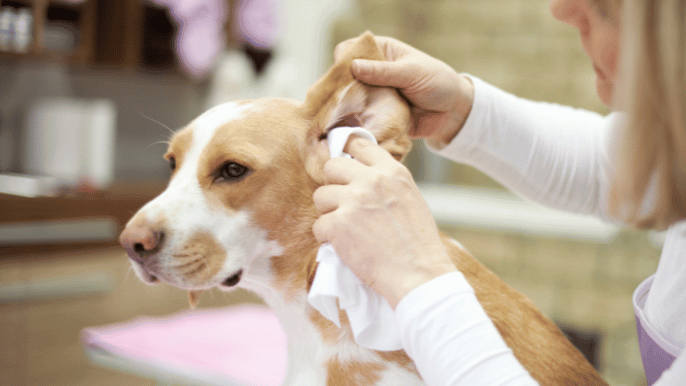
Lift the ear flap to expose the outer ear. Gently wipe visible areas of the ear flap and outer ear canal opening with Ear Wipes.
Use a fresh section of the wipe or a new wipe for each pass. Wipe until no more debris appears on the wipe.
The wipe method is particularly safe for nervous owners because you physically cannot insert the wipe too deep.
After Cleaning
Reward your dog immediately with high-value treats and praise. Positive associations make future dog ear cleaning sessions easier.
How Often to Clean Dog Ears
Frequency depends on breed, lifestyle, and individual ear health. More is not always better.
| Dog Type | Frequency | Notes |
|---|---|---|
| Dogs with healthy, low-risk ears | Check weekly, clean monthly or as needed | Do not over-clean |
| Dogs with floppy ears or hairy canals | Every 1 to 2 weeks | More airflow restriction |
| Dogs with chronic ear issues | As directed by veterinarian (often weekly) | Follow medical guidance |
| After swimming or bathing | Immediately after water exposure | Use Wellmark Ear Cleaning and Drying Solution |
| Dogs with allergies | More frequent during flare-ups | Monitor closely |
Over-Cleaning Risks
Excessive dog ear cleaning strips protective wax, irritates the ear canal lining, and can actually increase infection risk by damaging the ear's natural defences. Clean only when debris is visible or as recommended by your veterinarian.
Creating Positive Associations
Many dogs resist ear cleaning because of past negative experiences.
Desensitisation Steps
Week 1 (touch training): Gently handle ears daily with no cleaning. Just touch and reward. Build tolerance gradually.
Week 2 (visual introduction): Let your dog see and sniff cleaning supplies. Do not use them yet. Reward calm behaviour.
Week 3 (gradual process): Start with just lifting the ear flap and rewarding. Add one step at a time. Clean one ear per session initially if your dog is anxious.
Week 4 (full cleaning): Complete the full dog ear cleaning process. Keep sessions short. Use high-value rewards throughout.
Never force or pin down a resistant dog. End sessions before stress escalates. Building tolerance through gradual positive experiences makes ear care manageable rather than a battle.
Recognising Ear Infection Signs During Cleaning
Regular dog ear cleaning allows early detection of problems before they become serious and expensive.
Early Infection Indicators
Increased wax production or colour change (yellow to dark brown). Developing odour that was not present before. Mild redness in the ear canal. Your dog starting to scratch ears more frequently. Slight increase in head shaking.
Catching infections at this stage allows treatment with simple, inexpensive ear drops rather than waiting until systemic antibiotics or surgery becomes necessary.
Advanced Infection Signs (Seek Immediate Veterinary Care)
Thick, coloured discharge (yellow, green, black). Strong foul odour. Visible swelling or hot ears. Pain when ears are touched. Balance problems or head tilt. Hearing loss.
Home dog ear cleaning cannot treat active infections. Delaying care allows bacteria to spread deeper.
Special Considerations for Swimmers and Water Dogs
Dogs who swim regularly need different ear care protocols.
Post-Swimming Ear Care
Dry ears thoroughly after every swim using cotton balls. Use the Wellmark Ear Cleaning and Drying Solution after every water exposure to remove trapped moisture. This product is specifically formulated to help prevent swimmer's ear, a bacterial infection caused when lake or river water gets trapped in the ear canal.
Water-Prone Breeds
Labrador Retrievers, Golden Retrievers, Portuguese Water Dogs, and other swimming breeds are particularly susceptible to chronic ear infections that can cost $1,000 to $3,000 annually without proper preventive care.
For drying guidance after water exposure, see How to Dry a Dog After a Bath.
Breed-Specific Considerations
Different ear structures create unique cleaning needs.
Floppy-Eared Breeds
Cocker Spaniels, Basset Hounds, and similar breeds have long, heavy ear flaps that restrict airflow and create warm, moist environments. These breeds need more frequent dog ear cleaning and may benefit from ear hair trimming to improve ventilation.
Without preventive care, Cocker Spaniels and Basset Hounds average 2 to 4 ear infections annually, costing $800 to $2,000 per year.
Hairy-Eared Breeds
Poodles, Schnauzers, and similar breeds have hair growing inside the ear canal that traps wax and debris. Some groomers pluck ear hair, though this practice is controversial. See Dog Ear Plucking: Should You Pull Hair From Your Dog's Earsfor the full evidence-based guide.
Upright-Eared Breeds
German Shepherds, Corgis, and similar breeds have better natural airflow. They typically need less frequent cleaning. Check monthly and clean only when debris accumulates.
When Professional Veterinary Care Is Necessary
Not all ear problems are appropriate for home dog ear cleaning.
Any signs of infection (discharge, odour, redness, pain). Foreign objects lodged in the ear. Ear mites or parasites. Chronic ear problems despite regular cleaning. Sudden hearing loss or balance issues. Excessive wax production that returns immediately after cleaning. Growths, masses, or polyps visible in the ear.
Veterinarians can examine the eardrum with an otoscope, culture infections to identify specific bacteria or yeast, prescribe appropriate medications, and perform deep cleaning under sedation when necessary.
The Long-Term Cost of Chronic Ear Problems
Dogs who develop chronic ear infections face escalating veterinary costs and reduced quality of life.
| Stage | Description | Cost |
|---|---|---|
| Stage 1 | Simple infection | $300 to $500 per incident |
| Stage 2 | Recurring infections requiring culture and targeted antibiotics | $600 to $1,200 per incident |
| Stage 3 | Chronic inflammation causing ear canal narrowing | $1,500 to $3,000 ongoing management |
| Stage 4 | Irreversible ear canal changes requiring surgery | $3,000 to $6,000 |
Beyond financial costs, chronic ear infections cause constant pain, hearing loss, balance problems, and reduced quality of life.
Common Mistakes to Avoid
| Mistake | Why It Is a Problem |
|---|---|
| Using cotton swabs inside the ear canal | Pushes debris deeper and risks eardrum damage |
| Cleaning infected ears at home | Worsens infections and delays proper treatment |
| Over-cleaning | Strips protective wax and irritates ear canal lining |
| Using incorrect products | Household items cause irritation and damage |
| Forcing resistant dogs | Creates fear and makes future cleaning impossible |
| Ignoring warning signs | Delaying veterinary care allows infections to worsen |
| Not drying after cleaning | Leaves moisture that promotes bacterial growth |
Mondo's Pro Tip
Clean ears do not smell. If you lift the ear flap and get hit with odour, that is not wax. That is bacteria or yeast telling you something is already wrong. Do not clean it yourself. Take the dog to the vet. The infection needs treatment, not a wipe.
Related Reading
Ear and Health Care
- Dog Ear Plucking: Should You Pull Hair From Your Dog's Ears
- Dog Tear Stains: Causes, Cleaning, and Prevention
- The FurHQ Touch Test
Grooming Techniques
- How to Dry a Dog After a Bath
- Dog Grooming Brushes: A Complete Guide by Coat Type
- Dog Coat Types Explained
Related Topics
- Dog Nail Trimming for Nervous Dogs
- Why Dog Grooming Supports Skin Health and Comfort
The Bottom Line
Dog ear cleaning keeps ears healthy through regular maintenance that removes wax, dirt, and moisture before infections develop, preventing hundreds or thousands of dollars in veterinary costs.
Within the FurHQ 5-Step Grooming Method (Audit, Prep, Bath, Dry, Finish), the Audit checks ear condition weekly, the Prep phase handles cleaning before the bath, the Bath and Dry phases protect ears from moisture, and the Finish phase confirms ears are clean, dry, and healthy.
FurHQ recommends the Wellmark veterinary-grade ear health line. The Wellmark Ear Cleaning and Drying Solution is ideal for dogs that swim or are prone to ear infections. The Wellmark pH Balanced Ear Cleaning Solution works well for routine maintenance. Both are available in the FurHQ Store. For full product details, visit wellmark.ca/products/ear-health.
Use veterinary-approved cleaning solutions or Ear Wipes. Avoid cotton swabs. Clean only when debris is visible or as recommended by your veterinarian. Stop immediately if you see infection signs.
The minimal cost of preventive care ($30 to $60 annually) represents a tiny fraction of treating even a single ear infection ($225 to $500).
You got this. And we've got you. 🐾
FAQs
How do I clean my dog's ears at home safely?
Safe dog ear cleaning starts with veterinary-approved ear cleaning solution or FurHQ ear cleaning wipes that cannot be pushed too deep. Lift the ear flap, fill the canal with solution and massage for 20 to 30 seconds, then let your dog shake their head.
Wipe visible debris with cotton balls. Never use cotton swabs inside the ear canal, as they push debris deeper and risk eardrum damage costing thousands in surgical repair.
How often should I clean my dog's ears?
Most dogs need dog ear cleaning monthly or when visible debris accumulates. Dogs with floppy ears, hairy ear canals, or chronic allergies require cleaning every 1 to 2 weeks. After swimming or bathing, always clean and dry ears to prevent moisture buildup.
Check ears weekly and clean only when needed; over-cleaning strips protective wax and increases infection risk.
How much does it cost to treat a dog ear infection?
A single ear infection treatment costs 225 to 500 dollars including examination, cytology, medications, and follow-up.
Chronic ear infections average 600 to 1,500 dollars annually, with severe cases requiring 2,000 to 5,000 dollars yearly. Surgical intervention for irreversible damage costs 2,500 to 5,000 dollars per ear.
Preventive dog ear cleaning costs only 30 to 60 dollars annually, making it dramatically more cost-effective than treating infections.
What are signs my dog has an ear infection?
Ear infection signs requiring immediate veterinary care include foul or yeasty odour, thick yellow, green, or bloody discharge, redness and swelling, pain when ears are touched, excessive head shaking or scratching, head tilting, and balance problems.
Do not attempt dog ear cleaning when infection is present; home cleaning pushes bacteria deeper and worsens the condition. Early veterinary treatment costs 300 to 500 dollars versus 1,000+ dollars for delayed advanced infections.
Can I use hydrogen peroxide to clean my dog's ears?
Never use hydrogen peroxide, alcohol, vinegar, or water alone for dog ear cleaning. These household products have incorrect pH levels, cause painful stinging, damage healthy tissue, and may worsen infections.
Use only veterinary-approved ear cleaning solutions or FurHQ ear cleaning wipes designed specifically for dogs. Proper products cost 15 to 25 dollars and last months, preventing hundreds in infection treatment costs from using inappropriate cleaners.
Why do my dog's ears smell even after cleaning?
Persistent odour after dog ear cleaning indicates an active infection requiring veterinary care, not more home cleaning. Foul, yeasty, or rotten smells mean bacteria or yeast have colonized the ear canal.
Attempting to clean infected ears at home delays proper treatment and allows infections to worsen, increasing costs from 300 dollars for early treatment to 1,000+ dollars for advanced infections. Schedule a veterinary appointment immediately when odour persists.
Are certain dog breeds more prone to ear infections?
Yes, breeds with floppy ears (Cocker Spaniels, Basset Hounds, Beagles), hairy ear canals (Poodles, Schnauzers), and swimming breeds (Labrador Retrievers, Golden Retrievers) face higher infection risk. These breeds benefit most from regular preventive dog ear cleaning.
Without proper maintenance, Cocker Spaniels average 2 to 4 infections yearly costing 800 to 2,000 dollars annually. Consistent home cleaning reduces infection frequency dramatically for high-risk breeds.
Note: with Floppy eared dogs FurHQ loves when groomers trim the hair short at the base of the canal to help with air flow.
What ear cleaning products does FurHQ recommend?
FurHQ recommends the Wellmark veterinary-grade ear health line. The Wellmark Ear Cleaning and Drying Solution is best for dogs that swim or are prone to infections because it cleans and dries the ear canal, helping prevent swimmer's ear. The Wellmark pH Balanced Ear Cleaning Solution is ideal for routine maintenance cleaning. Both contain salicylic acid and aloe vera. Both are available in the FurHQ Store. Visit wellmark.ca/products/ear-health for full product details.
Can I use Q-tips to clean my dog's ears?
Never use Q-tips or cotton swabs for dog ear cleaning. They push wax and debris deeper into the L-shaped ear canal instead of removing it and risk perforating the eardrum if inserted too far.
Eardrum damage requires surgical repair costing thousands of dollars. Use cotton balls dampened with cleaning solution or FurHQ ear cleaning wipes that only clean visible outer ear areas safely.
How can I tell if my dog's ears are healthy or need cleaning?
Healthy ears are pale pink with minimal wax, no odour, and no discomfort when touched. Ears needing cleaning show visible brown or yellow wax, dirt or debris, and mild odour without redness or pain.
Weekly checks during dog ear cleaning routines catch problems early, saving 500 to 2,000 dollars in advanced treatment costs. If you see thick discharge, strong odour, redness, swelling, or your dog shows pain, skip home cleaning and visit your veterinarian immediately.
What is the FurHQ 5-Step Grooming Method?
Where does ear cleaning fit in the FurHQ 5-Step?
The Audit checks ear condition (colour, wax, odour, pain). The Prep phase handles cleaning before the bath so debris washes away during bathing. The Bath and Dry phases protect ears from moisture entry. The Finish phase confirms ears are clean, dry, and healthy. Weekly Audit checks catch problems early even between full cleaning sessions.