
Dog Brushing Frequency by Coat Type - The Complete Schedule
Table of Contents
- Introduction
- Why "Brush When They Look Bad" Always Fails
- Where Brushing Fits in the FurHQ 5-Step Grooming Method
- Smooth Single Coats: Once to Twice Weekly
- Short Double Coats: Two to Three Times Weekly
- Medium Plush Double Coats: Two to Three Times Weekly
- Feathered Long Double Coats: Every Two to Three Days
- Curly Wavy Coats: Daily, Non-Negotiable
- Drop Coats: Daily for Full Length
- Wire Coats: Two to Three Times Weekly
- The Puppy Coat Transition
- Seasonal Adjustments
- Lifestyle Factors That Change the Schedule
- The Spray Step Most Owners Skip
- How to Know If Your Schedule Is Working
- The Quick Reference Schedule
- Related Reading
- The Bottom Line
- Variation Clarity Statement
- FAQs
Introduction
Dog brushing frequency by coat type is the question that sends owners into internet rabbit holes at midnight, and the answers they find are almost always unhelpful. "It depends." "When they look messy." "Every dog is different." These answers are technically true but practically useless because they never explain what it depends on.
At FurHQ, we can give you the actual answer. Dog brushing frequency by coat type is the foundation of effective home grooming because a Poodle and a Labrador live in completely different grooming universes. A Maltese and a Boxer have nothing in common when it comes to brushing schedules. Telling every owner to brush the same amount is like watering a cactus and a fern on the same schedule and wondering why one of them dies.
There are seven distinct coat types, each with a different dog brushing frequency by coat type requirement, different tools, and different consequences when the schedule slips. This guide gives you the exact schedule for each one, explains why that frequency matters, and tells you what happens when you fall behind. Every schedule here fits within the FurHQ 5-Step Grooming Method, Audit, Prep, Bath, Dry, Finish, because brushing is not a standalone activity. It is part of a complete grooming system.
Why "Brush When They Look Bad" Always Fails
Before the specific schedules, it is worth addressing the most common approach: reactive brushing. This is where owners brush when the coat looks scruffy, feels tangled, or starts shedding on the black trousers.
The problem with reactive brushing is that by the time the coat looks bad, you are already behind. Mats do not announce themselves when they start forming. Dead undercoat does not send a reminder before it compresses against the skin. By the time you notice the problem, you are doing damage control instead of prevention.
Understanding dog brushing frequency by coat type keeps you ahead of problems. Not knowing keeps you permanently playing catch-up with a coat that has already developed issues. Every dog brushing frequency by coat type schedule in this guide is designed for prevention, not rescue.
Where Brushing Fits in the FurHQ 5-Step Grooming Method
Before diving into specific schedules, it helps to understand where regular brushing fits within the bigger picture of coat care.
The FurHQ 5-Step Grooming Method is Audit, Prep, Bath, Dry, Finish. Brushing plays a role in two of these steps. During the Prep phase, brushing removes loose coat, addresses tangles, and gets the coat ready for the bath. During the Finish phase, a final brush-through and comb check confirms the dog brushing frequency by coat type schedule has kept the coat smooth, tangle-free, and properly maintained.
Between bath sessions, your regular brushing schedule is essentially a mini Audit and Prep cycle. Every time you sit down to brush your dog, you start by running your hands through the coat to feel for changes, packed undercoat, early tangles, or areas of increased density. That is the Audit. Then you brush through the coat methodically, removing loose coat and addressing any tangles you found. That is the Prep.
This means your brushing sessions are not just about pulling dead hair out of the coat. They are structured check-ins that catch problems early and keep the coat in condition so that bath day runs smoothly. The schedules below tell you the correct dog brushing frequency by coat type so those check-ins happen frequently enough to prevent issues.
Smooth Single Coats: Once to Twice Weekly
Smooth single coats are the easiest coat type to maintain, which is why many owners never consider brushing frequency for this category. This is a mistake. Boxers, Beagles, Bulldogs, Dalmatians, and Dobermans still need regular brushing even though their coats are short and close-lying.
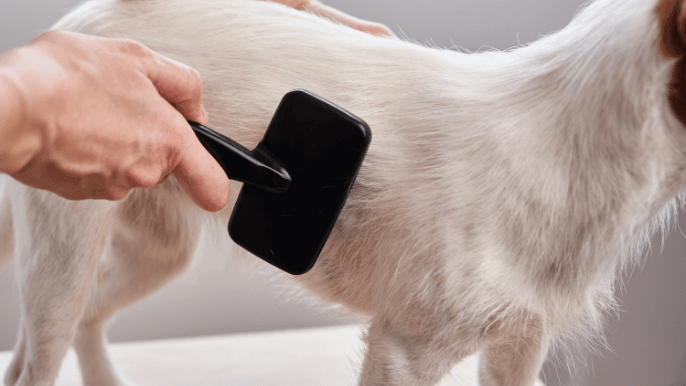
When it comes to dog brushing frequency by coat type, the standard schedule for smooth single coats is once to twice weekly using a rubber curry. The rubber curry grips and lifts loose dead hair from the surface through friction, stimulates blood flow, and distributes natural oils across the skin. Pin brushes and slicker brushes are not appropriate for this coat type because the pins pass over the short hair without gripping it or scratch the thinly protected skin beneath. The FurHQ Starter Grooming Kit: Smooth Single Coat includes the rubber curry and boar bristle brush matched to this coat type.
During seasonal shedding increases in spring and fall, increase to two to three times weekly. Even smooth single coats shed more during these periods, and those short, needle-like hairs embed in furniture, clothing, and carpeting more aggressively than longer hair does.
What happens when you skip: year-round shedding that seems excessive, a dull coat lacking natural shine, oil and dirt buildup that makes the skin greasy, and short hairs coating every surface in the house. The consequences are manageable compared to other coat types in the dog brushing frequency by coat type spectrum, but the difference between a brushed and unbrushed smooth single coat is visible.
Short Double Coats: Two to Three Times Weekly
Short double coats are the coat type most often underestimated when it comes to dog brushing frequency by coat type. Labrador Retrievers, Pembroke Welsh Corgis, and similar breeds look low-maintenance because the hair is short. Underneath that short topcoat is a dense undercoat that sheds constantly and requires regular attention.
The standard schedule is two to three times weekly using a Medium-Pinned Slicker to work through the surface layer and loosen dead coat, a Carding Rake to reach and remove packed dead undercoat from against the skin, and an Undercoat Depth Comb to verify that the job is done. All three steps matter for maintaining proper dog brushing frequency by coat type results. Using only a slicker leaves the undercoat untouched. The FurHQ Starter Grooming Kit: Short Double Coatincludes each of these tools matched to this coat density.
During spring and fall shedding seasons, increase to daily. Short double coats blow their undercoat twice yearly, and the volume of dead coat is genuinely surprising for owners who have never experienced it. Daily brushing during these four to six week periods prevents the dead undercoat from compressing against the skin, where it creates matting , hot spots, and skin irritation.
What happens when you skip: dead undercoat packs against the skin and felts into a compressed layer. That packed layer traps moisture, blocks airflow, and creates the conditions for hot spots and bacterial skin infections. The shedding does not stop. It just transfers from the brush to your furniture, your clothing, and every corner of the house.
Medium Plush Double Coats: Two to Three Times Weekly
Medium plush double coats carry the densest undercoat of any coat type, and understanding dog brushing frequency by coat type in this category prevents the most common hidden coat problems. Samoyeds, Chow Chows, Pomeranians, Siberian Huskies, and American Eskimo Dogs all fall into this group.
The standard schedule is two to three times weekly using a Medium-Pinned Slicker, a Carding Rake for deep undercoat removal, and an Undercoat Depth Comb for verification. During heavy shedding, a Deshedding Comb helps manage the sheer volume of dead coat these breeds produce. The FurHQ Starter Grooming Kit: Medium Plush Double Coat includes the tools matched to this coat's density and length.
During spring and fall shedding seasons, increase to daily. Medium plush double coats produce more dead undercoat during a coat blow than any other coat type. The volume is staggering, making daily sessions the essential dog brushing frequency by coat type standard during these periods. They are the difference between a manageable shed and a coat that felts against the skin. During blow-out season, this is where the real coat work lives. Stay ahead of undercoat release early, and the rest of the year stays easy.
What happens when you skip: the consequences are more severe than with short double coats because the undercoat is denser. Dead undercoat felts into a packed layer against the skin that blocks temperature regulation, traps moisture, and is invisible from the surface because the fluffy outer coat looks normal. Owners often have no idea the undercoat has felted until a groomer discovers it.
Feathered Long Double Coats: Every Two to Three Days
Feathered long double coats have a unique dog brushing frequency by coat type requirement because they need more frequent attention than the other double coat types because they have two distinct zones with different needs. Golden Retrievers, Australian Shepherds, Bernese Mountain Dogs, Rough Collies, and similar breeds have a double coated body plus feathered areas on the legs, chest, ears, and tail.
The standard schedule is every two to three days for the full body, with daily attention to the feathered areas. The body coat needs a Carding Rake and Long-Pinned Slicker for undercoat management. The feathered areas need a Long-Pinned Slicker that reaches through the longer hair without breaking it, plus an Undercoat Depth Comb for tangle detection. This dual-zone approach makes the feathered long double coat unique in the dog brushing frequency by coat type system. The FurHQ Starter Grooming Kit: Feathered Long Double Coat includes the Long-Pinned Slicker, Undercoat Depth Comb, Deshedding Comb, and Long Coat Carding Rake matched to this coat's dual-zone structure.
During shedding seasons, increase to daily for the full body. The feathered areas should already be receiving daily attention, but the body coat now needs the same frequency to manage the undercoat blow.
What happens when you skip: the feathered areas tangle first, especially behind the ears, in the armpits, and where the leg feathering rubs against the body. The body undercoat compresses against the skin just as it does in other double coats. The combination of tangled feathering and packed undercoat often results in a groomer recommending a shorter cut than the owner wanted because the coat cannot be saved at its current length.
Curly Wavy Coats: Daily, Non-Negotiable
Curly wavy coats have the most demanding brushing schedule of any coat type, and there is no way to soften this reality. Dog brushing frequency by coat type matters most here because getting it wrong has the fastest consequences.
Poodles, Goldendoodles, Labradoodles, Cockapoos, Bichons, and similar breeds have coats that trap shed hair inside the curl pattern instead of releasing it. Every hair that naturally sheds stays locked inside the curls, accumulating day after day. Without daily line brushing from skin to tip using a Long-Pinned Slicker Brush followed by a FurHQ Detail Comb, that trapped dead coat compresses against the skin and bonds with live hair, creating mats that are invisible from the surface. The FurHQ Starter Grooming Kit: Curly Wavy Coat includes the Long-Pinned Slicker Brush, FurHQ Detail Comb, and Pawfect Finish Coat Spray designed for this coat's daily demands.
Dog brushing frequency by coat type reaches its most critical level with curly wavy coats. A single day without brushing might not create disaster. Three days without brushing and mats are forming. A week without brushing and you are headed for a shave-down because those mats are not coming out without significant coat loss. This is why the daily schedule is non-negotiable for any curly wavy coat longer than one inch.
Curly wavy coats kept in very short clips under one inch can shift to every other day, but the moment the coat grows beyond that length, daily maintenance resumes. Pawfect Finish Coat Spray before every session adds slip that reduces friction and makes the brush glide through curls rather than pulling. After every bath, the coat must be dried with a high-velocity dryer while simultaneously brushing. Allowing a curly wavy coat to air dry creates mat bombs throughout the coat because the curls tighten as they dry and lock dead hair into place.
What happens when you skip: mats form at the skin level where they are invisible until they are already tight and painful. The groomer cannot maintain coat length when mats are present at every appointment. The coat gets shorter and shorter with each visit because the matted portions must be clipped off. This is not a style choice by the groomer. It is a consequence of dog brushing frequency by coat type not matching the coat's actual demands.
Drop Coats: Daily for Full Length
Drop coats share the daily dog brushing frequency by coat type standard with curly wavy coats, and the schedule scales directly with coat length. Shih Tzus, Yorkshire Terriers, Maltese, Lhasa Apsos, and Afghan Hounds have long, silky, continuously growing hair that tangles at the slightest friction.
The standard schedule for full-length drop coats is daily using a Long-Pinned Slicker Brush with light pressure, Pawfect Finish Coat Spray to add slip and reduce friction, and a FurHQ Detail Comb for verification. Work from the tips toward the roots to prevent pulling, and pay extra attention to high-friction zones behind the ears, under collars, in the armpits, and where the legs rub against the body. The FurHQ Starter Grooming Kit: Drop Coat includes each of these tools along with a Pin Brush for daily maintenance between deeper line brushing sessions.
Drop coats kept in shorter clips of one to three inches can shift to every other day. The shorter length reduces tangling opportunities, though the silky texture still creates tangles more readily than most other coat types. Each additional inch of length significantly increases the dog brushing frequency by coat type commitment. The difference between maintaining a three-inch coat and a six-inch coat is substantial.
What happens when you skip: tangles form in the high-friction zones within a day or two and progress to tight mats within a week. The fine, silky texture means mats tighten quickly and become painful. Drop coat mats are deceptive because the surface can look pristine while tight mats form at the roots. The longer the coat, the faster the consequences arrive.
Wire Coats: Two to Three Times Weekly
Wire coats follow different rules when it comes to dog brushing frequency by coat type because their maintenance involves technique beyond brushing. Miniature Schnauzers, Standard Schnauzers, Wire Fox Terriers, and many terrier breeds have a coarse outer coat that maintains its correct texture through hand-stripping.
The standard schedule is two to three times weekly. The body coat needs attention to remove dead hair and maintain skin health, but the real focus is the furnishings . The softer hair on the legs, beard, and eyebrows tangles differently from the coarse body coat and needs a Medium-Pinned Slicker and FurHQ Detail Comb to keep it mat-free. The FurHQ Starter Grooming Kit: Wire Coat includes the Medium-Pinned Slicker, FurHQ Detail Comb, Rubber Curry, and Carding Rake matched to wire coat maintenance.
Understanding dog brushing frequency by coat type for wire coats also means knowing that carding sessions should occur no more than once per week to maintain the correct wire texture without over-stripping. Brushing alone does not accomplish texture maintenance. If the wire coat is clipped rather than hand-stripped or carded, the texture gradually softens over time, which increases tangling and may require more frequent brushing.
What happens when you skip: the furnishings tangle and mat, especially the beard and leg hair. The body coat accumulates dead hair that dulls the texture and appearance. If carding is also neglected, the coat loses its characteristic harsh texture and becomes soft and cotton-like, which tangles more readily and changes the coat's appearance permanently.
The Puppy Coat Transition
Regardless of adult coat type, the puppy coat transition overrides normal dog brushing frequency by coat type and requires daily brushing. This transition typically occurs between four and ten months of age for most coat types, and between six and fourteen months for curly wavy coats.
During the transition, the puppy coat loosens and sheds while the adult coat grows in simultaneously. The two textures tangle together, creating rapid matting if not brushed daily. Curly wavy coats are especially vulnerable during this period because the transition coat can mat severely within days. Daily brushing during the puppy coat transition temporarily overrides normal dog brushing frequency by coat type standards but is essential.
Seasonal Adjustments
Seasons change dog brushing frequency by coat type for every double coated breed. Spring and fall trigger massive undercoat shedding that lasts four to six weeks. During these periods, the standard two to three times weekly schedule for double coats must increase to daily. The volume of dead undercoat released during a coat blow is genuinely enormous, and the only way to manage it is increased brushing frequency.
Curly wavy coats and drop coats do not have seasonal shedding cycles in the same way, but humidity affects them. Higher humidity makes curly coats expand and tangle more easily. Dry winter air increases static and friction, making drop coats more prone to breakage. Adjusting technique with the seasons, including using Pawfect Finish Coat Spray more liberally during dry winter months, prevents the seasonal problems that catch owners off guard.
Lifestyle Factors That Change the Schedule
Your dog's activities can shift dog brushing frequency by coat type beyond the standard schedule.
Dogs that swim regularly need brushing after every swim regardless of coat type. Water softens the coat and creates tangles even in coat types that normally resist them. Dogs that hike, visit dog parks, or spend significant time outdoors collect debris that creates tangles and increases friction. These activities increase dog brushing frequency by coat type beyond the baseline, so add at least one extra session per week for active outdoor dogs.
Collars and harnesses create continuous friction against the coat. Dogs that wear equipment all day need the area underneath brushed every time the equipment is removed. This is separate from the standard brushing schedule and applies to every coat type.
Dogs that are mostly indoor and low-activity may be able to maintain at the lower end of the recommended frequency for their coat type, but the schedule should never drop below the minimums.
The Spray Step Most Owners Skip
When owners focus only on dog brushing frequency by coat type, they often overlook how they brush. Brushing a completely dry coat creates static, increases friction, and causes hair breakage. This is why Pawfect Finish Coat Spray is part of every FurHQ Starter Grooming Kit except the Smooth Single Coat kit.
Lightly misting each section before brushing adds slip that allows the brush to glide through the coat rather than dragging and pulling. It reduces friction damage, helps detangle without painful pulling, and makes the brushing session faster because the brush moves through the coat more efficiently.
When to use Pawfect Finish Coat Spray: curly wavy coats and drop coats before every brushing session. Short double coats and medium plush double coats during pre-dry brushing sessions and before the Dry phase. Feathered long double coats before every brushing session, especially on feathered areas. Wire coats lightly on furnishings. Smooth single coats lightly after bathing for a smooth finish.
Maintaining proper dog brushing frequency by coat type only works when technique is also correct. Skipping this step does not save time. It creates friction damage that worsens the coat's condition and makes future sessions harder.
How to Know If Your Schedule Is Working
Once you establish the correct dog brushing frequency by coat type, you need to verify the schedule is working. The simplest test is the comb check. After brushing, glide the appropriate comb, either the FurHQ Detail Comb or the Undercoat Depth Comb depending on your coat type, through the coat from skin to tip. If it passes through every section without catching, your brushing schedule and technique are working. If the comb catches, there is still dead coat, tangles, or early-stage mats that the brush missed or that the schedule is not addressing frequently enough.
Signs that your dog brushing frequency by coat type is working: manageable household shedding, no mats forming between sessions, skin visible when you part the coat, a dog that tolerates or enjoys grooming, and the comb passes through smoothly from skin to tip.
If your dog brushing frequency by coat type is not sufficient, you will notice signs: finding tangles between sessions, overwhelming household shedding, inability to see skin when parting the coat, a dog that resists grooming because previous sessions were uncomfortable, and the comb catches or snags regularly.
The Quick Reference Schedule
Here is the complete dog brushing frequency by coat type at a glance.
| Coat Type | Standard Schedule | Shedding Season | Key Tools |
|---|---|---|---|
| Smooth Single Coat | Once to twice weekly | Two to three times weekly | Rubber Curry, Boar Bristle Brush |
| Short Double Coat | Two to three times weekly | Daily | Medium-Pinned Slicker, Carding Rake, Undercoat Depth Comb |
| Medium Plush Double Coat | Two to three times weekly | Daily | Medium-Pinned Slicker, Carding Rake, Undercoat Depth Comb |
| Feathered Long Double Coat | Every two to three days (daily on feathering) | Daily | Long-Pinned Slicker, Long Coat Carding Rake, Undercoat Depth Comb, Deshedding Comb |
| Curly Wavy Coat | Daily | Daily | Long-Pinned Slicker Brush, FurHQ Detail Comb, Pawfect Finish Coat Spray |
| Drop Coat | Daily (full length) | Daily | Long-Pinned Slicker Brush, FurHQ Detail Comb, Pin Brush, Pawfect Finish Coat Spray |
| Wire Coat | Two to three times weekly | Two to three times weekly | Medium-Pinned Slicker, FurHQ Detail Comb, Carding Rake, Rubber Curry |
Not sure which coat type your dog has? Getting the right dog brushing frequency by coat type starts with accurate coat identification. Upload a photo to the FurHQ AI Coat Identifier and it will tell you your dog's coat type and the kit that matches.
Related Reading
- Dog Coat Types Explained: Complete Guide to All Seven Types
- Curly Wavy Coat Dogs: Why Daily Brushing Is a Non-Negotiable Commitment
- How to Do a Comb Check on Your Dog
- Dog Grooming Brushes: A Complete Guide by Coat Type
- The Coat Release Method for Dogs with Undercoat
- Can Dog Coat Types Change? Puppy Coat Transitions Explained
- How Often Should You Bathe Your Dog by Coat Type
The Bottom Line
Dog brushing frequency by coat type has a specific, evidence-based answer for each classification. Smooth single coats need once to twice weekly. Short double coats need two to three times weekly. Medium plush double coats need two to three times weekly. Feathered long double coats need every two to three days with daily attention to feathering. Curly wavy coats need daily. Drop coats need daily at full length. Wire coats need two to three times weekly.
Dog brushing frequency by coat type increases during shedding seasons, after swimming, and during puppy coat transitions. They apply to the minimum standard for coat health, not the maximum. More frequent is always acceptable. Less frequent is where problems begin.
The owners who succeed are not the ones who brush the most. They are the ones who match their schedule to their coat type and brush consistently. Consistency with the correct dog brushing frequency by coat type prevents every problem that inconsistency creates. Every FurHQ Starter Grooming Kit includes the exact tools your coat type needs, plus access to step-by-step video tutorials that show you proper technique for every session.
You got this. And we have got you. 🐾
Variation Clarity Statement
Every dog is an individual. Coat density, shedding patterns, skin sensitivity, and tolerance levels vary even within the same breed. The information in this blog represents general guidance based on coat type classifications. Your dog's specific needs may require adjustments to frequency, tool selection, or technique. When in doubt, consult a Certified Professional Groomer familiar with your dog's coat type. If you are unsure about your dog's coat type, use the FurHQ AI Coat Identifier to get accurate identification and the right kit recommendation.
FAQs
How often should I brush my dog?
Short Double Coats and Medium Plush Double Coats need two to three times weekly during normal periods and daily during spring and fall shedding seasons. Feathered Long Double Coats need every two to three days with daily attention to feathered areas, increasing to daily for the full body during shedding seasons. The key is that double coats carry undercoat that compresses against the skin when not brushed frequently enough, leading to hot spots, matting, and excessive household shedding.
Why do curly wavy coats need daily brushing?
Curly wavy coats trap shed hair inside the curl pattern instead of releasing it. Every hair that naturally sheds stays locked inside the curls, accumulating day after day. Without daily line brushing from skin to tip, that trapped dead coat compresses and bonds with live hair, creating mats that are invisible from the surface until they are already tight and painful. Three days without brushing and mats are forming. A week and you are headed for a shave-down.
What tools do I need for brushing my specific coat type?
Each coat type uses different tools. Smooth Single Coats use a rubber curry. Short Double and Medium Plush Double Coats use a Medium-Pinned Slicker, Carding Rake, and Undercoat Depth Comb. Feathered Long Double Coats use a Long-Pinned Slicker, Long Coat Carding Rake, Undercoat Depth Comb, and Deshedding Comb. Curly Wavy and Drop Coats use a Long-Pinned Slicker and FurHQ Detail Comb. Wire Coats use a Medium-Pinned Slicker, FurHQ Detail Comb, Carding Rake, and Rubber Curry.
Does brushing frequency change with the seasons?
Yes. All double coated breeds (Short Double, Medium Plush, Feathered Long) need increased brushing during spring and fall shedding seasons when they blow their undercoat. The standard two to three times weekly increases to daily during these four to six week periods. Curly wavy and drop coats are already on daily schedules, but humidity and seasonal changes affect them differently, requiring adjusted technique rather than increased frequency.
How do I know if I am brushing often enough?
The simplest test is the comb check. After brushing, pass the appropriate comb through the coat from skin to tip. If it glides through every section without catching, your schedule is working. Other signs include manageable household shedding, no mats forming between sessions, visible skin when you part the coat, and a dog that tolerates or enjoys grooming.
What happens if I skip brushing for a week?
The consequences depend entirely on coat type. Smooth single coats accumulate loose hair and oil but recover quickly. Double coats begin compacting dead undercoat against the skin. Curly wavy coats develop mats at the skin level within three to five days. Drop coats tangle in high-friction zones. Wire coat furnishings tangle and mat. The longer you skip, the harder recovery becomes, and some coat types reach a point where the only option is a short clip.
Should I use Pawfect Finish Coat Spray before every brushing session?
For curly wavy coats and drop coats, yes, every session. The spray adds slip that reduces friction, prevents breakage, and makes the brush move through the coat more efficiently. For double coats, use it during dry brushing sessions. For wire coat furnishings, use it lightly. For smooth single coats, use it lightly after bathing. Brushing a completely dry coat without spray creates static and friction damage.
How often to brush dog coats during the puppy coat transition?
Daily, regardless of adult coat type. The puppy coat transition typically occurs between four and ten months for most coat types, and between six and fourteen months for curly wavy coats. During this period, the puppy coat loosens while the adult coat grows in, and the two textures tangle together rapidly. Daily brushing during the transition is temporary but essential to prevent matting.
Can I brush less often if my dog has a short coat?
It depends which short coat. Smooth single coats are the lowest maintenance at once to twice weekly. Short double coats look short but carry a dense undercoat that requires two to three times weekly, with daily brushing during shedding seasons. The mistake many owners make is assuming all short coats have the same needs. They do not. A Boxer and a Labrador have completely different coat structures and brushing requirements.
How does the FurHQ 5-Step fit into my regular brushing routine?
Your regular brushing sessions are essentially a mini Audit and Prep cycle from the FurHQ 5-Step Grooming Method. Every time you brush, you start by running your hands through the coat to feel for changes, packed undercoat, or early tangles (the Audit). Then you brush through the coat methodically to remove loose coat and address anything you found (the Prep). This keeps the coat in condition between bath sessions and catches problems early.
What is the FurHQ 5-Step Grooming Method?
The FurHQ 5-Step Grooming Method is Audit, Prep, Bath, Dry, Finish. It provides structure for every grooming session so nothing gets missed. The Audit assesses the coat before you start. The Prep phase removes loose coat and addresses tangles. The Bath phase handles cleansing and, for double coats and wire coats, the Coat Release Method . The Dry phase removes moisture. The Finish phase completes the groom with a final brush-through and comb check to confirm the coat is smooth and tangle-free.