
When To Skip Ear Cleaning - Signs Your Dog Needs a Vet
Table of Contents
- Introduction
- Why Cleaning Can Sometimes Make Things Worse
- Red Flags: When to Skip Ear Cleaning and See Your Vet
- Types of Ear Problems Your Vet Will Diagnose
- What Happens at the Veterinary Visit
- After the Vet Visit: Following Instructions
- Prevention: Keeping Ears Healthy
- Quick Reference: When to Skip Ear Cleaning
- The Bottom Line
- FAQs
 Introduction
Knowing when to skip ear cleaning is just as important as knowing how to clean your dog's ears. While routine ear cleaning prevents problems and keeps ears healthy, there are situations where cleaning at home can actually make things worse. Infected ears, ruptured eardrums, and certain conditions require veterinary diagnosis and treatment before any cleaning should happen.
This guide helps you recognise the warning signs that mean you should skip the ear cleaning and head to your veterinarian instead. Understanding when to skip ear cleaning protects your dog from pain, prevents complications, and ensures they get the right treatment for whatever is causing the problem.
Think of this as the companion guide to How to Clean Dog Ears at Home. That blog teaches you the technique. This one teaches you when not to use it.
Why Cleaning Can Sometimes Make Things Worse
Before we cover the specific warning signs that tell you when to skip ear cleaning, it helps to understand why cleaning an unhealthy ear can cause problems.
Ruptured Eardrums
The eardrum (tympanic membrane) separates the external ear canal from the middle ear. When the eardrum is intact, ear cleaning solution stays in the external canal where it belongs. If the eardrum is ruptured, cleaning solution can flow into the middle ear, causing pain, damage, and potentially permanent hearing loss.
Certain ear cleaning solutions contain ingredients that are safe for the external ear canal but harmful to the middle ear structures. Vigorous cleaning of an ear with a ruptured eardrum can also push debris and bacteria into the middle ear, causing serious infection.
You cannot see the eardrum yourself. Only a veterinarian with an otoscope can examine it and determine if it is intact.
Pain and Inflammation
Infected or inflamed ears are painful. Attempting to clean a painful ear at home causes your dog distress and can damage your relationship with them around ear handling. Dogs with painful ears may bite, even if they have never shown aggression before.
Additionally, cleaning inflamed tissue can cause further irritation and damage. What looks like helpful cleaning may actually be traumatising already compromised tissue.
Masking Problems
Cleaning an infected ear without proper diagnosis can temporarily reduce discharge and make the ear look better while the underlying problem continues or worsens. This delays proper treatment and allows infections to become more serious, more entrenched, and harder to treat.
Wrong Treatment
Different ear problems require different treatments. Bacterial infections, yeast infections, ear mites, allergies, and foreign bodies all cause similar symptoms but need different approaches. Cleaning alone will not resolve most of these issues, and using the wrong treatment can make things worse.
Red Flags: When to Skip Ear Cleaning and See Your Vet
If you observe any of the following signs, you need to know when to skip ear cleaning at home. Do not clean your dog's ears. Schedule a veterinary appointment instead.
Signs of Ear Infection: When to Skip Ear Cleaning
Ear infections (otitis externa) are one of the most common reasons dogs visit the veterinarian. They require proper diagnosis to identify the cause (bacterial, yeast, or both) and appropriate medication to resolve. Here is when to skip ear cleaning due to infection signs.
Skip ear cleaning and see your vet if you notice:
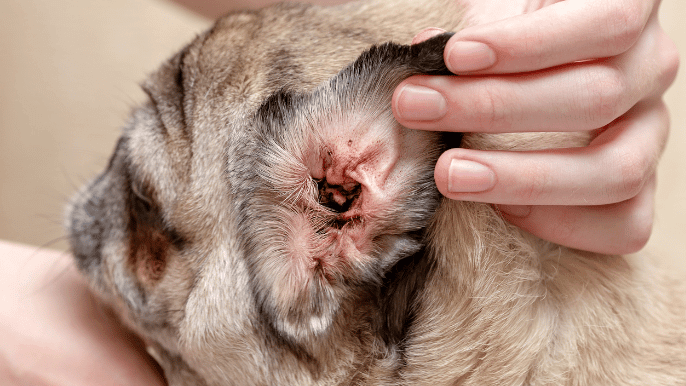
- Redness and swelling: The ear canal and inner ear flap appear red, inflamed, or swollen. Healthy ear tissue is light pink. Red, angry looking tissue indicates inflammation or infection.
- Unusual discharge: While some light tan wax is normal, discharge that is dark brown, yellow, green, or creamy indicates a problem. Pus like discharge is especially concerning.
- Strong odour: Infected ears often produce a distinctive, unpleasant smell. Yeast infections have a particular musty or sweet odour. Bacterial infections may smell foul or putrid. If your dog's ears smell bad, something is wrong.
- Pain when touched: If your dog pulls away, whimpers, growls, or shows discomfort when you touch their ears, they are experiencing pain. Do not attempt to clean painful ears.
- Warmth: Infected ears may feel warmer than usual to the touch due to inflammation.
Behavioural Signs: When to Skip Ear Cleaning
Dogs cannot tell us their ears hurt, but their behaviour communicates the problem. These behavioural signs tell you when to skip ear cleaning.
Skip ear cleaning and see your vet if you notice:
- Excessive head shaking: Occasional head shaking is normal. Constant, vigorous, or frantic head shaking indicates ear discomfort.
- Scratching at ears: Dogs scratch itchy ears. Persistent scratching, especially scratching that causes wounds or hair loss around the ears, signals a problem requiring veterinary attention.
- Head tilting: A persistent head tilt, especially to one side, can indicate middle or inner ear problems. This requires prompt veterinary evaluation.
- Rubbing ears on furniture or floor: Dogs with itchy or painful ears may rub their head against furniture, carpet, or the ground seeking relief.
- Reluctance to be touched: If your normally tolerant dog suddenly resists having their ears examined or touched, suspect ear pain.
- Changes in balance: Stumbling, circling, falling, or loss of coordination can indicate inner ear problems. This is serious and requires immediate veterinary attention.
Signs of Ear Mites: When to Skip Ear Cleaning
Ear mites (Otodectes cynotis) are tiny parasites that live in the ear canal, feeding on ear wax and skin oils. They cause intense itching and produce a characteristic discharge. While treatable, they require specific anti parasitic medication from your veterinarian. Knowing when to skip ear cleaning for mites is essential.
Skip ear cleaning and see your vet if you notice:
- Dark, crumbly discharge resembling coffee grounds: This is the classic sign of ear mites. The dark, dry, crumbly material is a combination of ear wax, dried blood, mite waste, and debris. It looks distinctly different from normal ear wax.
- Intense scratching: Ear mites cause severe itching. Dogs with mites scratch their ears almost constantly and may cause wounds from the scratching.
- Both ears affected: While ear infections may occur in one or both ears, ear mites almost always affect both ears.
- Recent contact with other animals: Ear mites are highly contagious between dogs, cats, and other pets. If your dog has recently been in contact with other animals (boarding, daycare, grooming, rescue) and develops ear symptoms, mites are a possibility.
Important: Ear mite symptoms closely resemble ear infection symptoms. Only your veterinarian can confirm whether mites are present by examining ear debris under a microscope. Do not assume mites and self treat. Treating for mites when the problem is actually a bacterial or yeast infection wastes time and allows the real problem to worsen.
Signs of Foreign Body
Grass seeds, plant material, and other debris can become lodged in the ear canal, causing sudden onset of symptoms.
Skip ear cleaning and see your vet if you notice:
- Sudden onset of symptoms: Your dog was fine, and then suddenly began shaking their head violently or pawing at one ear.
- One ear affected: Foreign bodies typically affect only one ear (the one the object entered).
- Recent outdoor activity: Symptoms that begin after time in tall grass, weeds, or brush are suspicious for foreign body.
Attempting to clean an ear with a foreign body lodged inside can push the object deeper into the ear canal, making removal more difficult and potentially causing damage.
Signs of Allergic Ear Disease
Allergies (environmental or food related) commonly manifest in the ears. Allergic ear disease may occur with or without secondary infection.
Signs that suggest allergies:
- Recurring ear problems (infections keep coming back)
- Symptoms that follow seasonal patterns
- Other allergy signs (itchy skin, paws, face)
- Both ears equally affected
- Ear inflammation without infection (your vet can determine this)
Dogs with allergic ear disease need the underlying allergy identified and managed, not just repeated ear cleaning.
Signs of Serious Complications: When to Skip Ear Cleaning Immediately
Some signs indicate potentially serious problems requiring urgent veterinary care. These are definite situations when to skip ear cleaning and seek immediate help.
Seek veterinary care promptly if you notice:
- Bleeding from the ear: Blood in the ear canal or on the ear flap suggests injury, severe scratching trauma, or potentially a ruptured eardrum.
- Swelling of the ear flap (aural hematoma): A soft, fluid filled swelling on the ear flap results from broken blood vessels, usually from violent head shaking or scratching. This requires veterinary treatment.
- Loss of balance or coordination: Inner ear infections can affect the vestibular system, causing balance problems. This is serious.
- Facial nerve problems: In severe cases, ear infections can affect the facial nerve, causing drooping of the face on the affected side.
- Lethargy or loss of appetite: If your dog is not eating or seems unwell in addition to ear symptoms, the infection may be more serious or spreading.
Types of Ear Problems Your Vet Will Diagnose
Understanding the different conditions that affect dog ears helps you appreciate why knowing when to skip ear cleaning matters. Proper diagnosis is essential because each condition requires different treatment.
Bacterial Ear Infection
Bacterial infections occur when bacteria overgrow in the ear canal. They can be caused by moisture, allergies, anatomical factors, or other underlying conditions. Bacterial infections require antibiotic treatment, either topical ear drops or sometimes oral antibiotics for severe cases.
Typical appearance: Yellow, tan, or greenish discharge. May have a foul odour.
Yeast Ear Infection
Yeast (fungal) infections occur when yeast organisms overgrow in the ear canal. Like bacterial infections, they often have underlying causes like allergies or excess moisture. Yeast infections require antifungal treatment.
Typical appearance: Dark brown, waxy discharge with a characteristic musty or sweet smell. Often described as smelling like bread or corn chips.
Mixed Infection
Many ear infections involve both bacteria and yeast. These require combination treatment addressing both organisms.
Ear Mites
Ear mites are parasites that require specific anti parasitic treatment. They are highly contagious between pets.
Typical appearance: Dark, dry, crumbly debris resembling coffee grounds. Intense itching.
Allergic Otitis
Inflammation of the ears caused by allergies, without infection. The ears may be red and itchy but without the discharge typical of infection. Requires management of the underlying allergy.
Foreign Body
Objects like grass seeds lodged in the ear canal. Requires removal, often under sedation.
Polyps or Tumours
Growths in the ear canal that obstruct normal drainage and may cause chronic problems. Require veterinary diagnosis and often surgical treatment.
Ruptured Eardrum
The eardrum can rupture from chronic infection, trauma, or vigorous cleaning. Requires veterinary assessment to determine severity and guide treatment.
What Happens at the Veterinary Visit
Once you recognise when to skip ear cleaning and make the vet appointment, understanding what your veterinarian will do helps you prepare and ensures your dog gets proper diagnosis.
History Taking
Your vet will ask questions about:
- How long symptoms have been present
- Which ear or ears are affected
- Whether this is a first time or recurring problem
- Your dog's other health conditions
- Medications your dog is taking
- Your dog's lifestyle (swimming, allergies, etc.)
Physical Examination
The vet will examine your dog's ears, looking for:
- Redness and swelling
- Type and amount of discharge
- Pain response
- Condition of the ear canal
- Condition of the eardrum (using an otoscope)
In very painful ears, or ears with severe swelling, a complete examination may not be possible on the first visit. Your vet may prescribe pain medication and anti inflammatory treatment first, then reexamine in a few days when your dog is more comfortable.
Diagnostic Tests
Ear cytology: The most common test. Your vet takes a sample of ear discharge, smears it on a slide, and examines it under a microscope. This reveals whether bacteria, yeast, or mites are present and guides treatment.
Culture and sensitivity: For severe or recurrent infections, a sample may be sent to a laboratory to identify the specific bacteria and determine which antibiotics will be effective.
Otoscopic examination: Using an otoscope, your vet can look deep into the ear canal and examine the eardrum. This determines if the eardrum is intact (important for choosing safe medications) and whether foreign bodies or other abnormalities are present.
Treatment
Treatment depends on diagnosis but may include:
- Ear cleaning (done professionally in the clinic)
- Topical ear medications (drops or ointments)
- Oral medications (antibiotics, antifungals, steroids, pain medication)
- Anti parasitic treatment for mites
- Allergy management
- Surgery in severe chronic cases
After the Vet Visit: Following Instructions
Once your veterinarian has diagnosed the problem and prescribed treatment, following their instructions precisely is essential for resolution.
Completing Medication Courses
Ear infections often improve quickly once treatment begins, but stopping medication early allows the infection to return. Complete the full course of medication even if the ears look better.
Cleaning During Treatment
Your vet will give specific instructions about ear cleaning during treatment. In some cases, cleaning before applying medication helps the medication work better. In other cases, cleaning is not recommended during the initial treatment period. Follow your veterinarian's specific guidance.
Recheck Appointments
Rechecks are important. Your vet needs to confirm the infection has resolved and the eardrum is healthy. Skipping rechecks can allow partially treated infections to return.
Addressing Underlying Causes
If your dog has recurring ear infections, your vet will work with you to identify underlying causes like allergies. Managing these underlying factors prevents future infections.
Prevention: Keeping Ears Healthy
Understanding when to skip ear cleaning is critical, but once your dog's ear problem is resolved, prevention becomes the focus.
Routine Cleaning
For dogs with healthy ears, routine cleaning with appropriate products like the Ear Wipes included in every FurHQ kit helps maintain ear health and allows you to catch problems early.
For complete guidance on ear cleaning technique, see: How to Clean Dog Ears at Home
After Swimming and Bathing
Always clean and dry ears after your dog swims or bathes. Moisture in the ear canal promotes bacterial and yeast growth. Proper drying prevents swimmer's ear.
Regular Inspection
Make a habit of looking at your dog's ears regularly. Know what healthy looks like for your dog so you can recognise changes early. The grooming sessions you do with your FurHQ kit are perfect opportunities to check ears.
Managing Allergies
If your dog has allergies contributing to ear problems, work with your veterinarian on ongoing allergy management.
Keeping Ears Dry
For dogs with floppy ears or those prone to ear problems, ensure good airflow to the ears and keep them dry.
Quick Reference: When to Skip Ear Cleaning
| Warning Sign | What It May Indicate | Action |
|---|---|---|
| Redness and swelling | Infection or inflammation | See vet |
| Unusual discharge (brown, yellow, green) | Bacterial or yeast infection | See vet |
| Strong or foul odour | Infection | See vet |
| Pain when touched | Infection or injury | See vet |
| Excessive head shaking | Ear discomfort | See vet |
| Dark coffee ground debris | Ear mites | See vet |
| Head tilting | Middle or inner ear problem | See vet promptly |
| Balance problems | Inner ear infection | See vet immediately |
| Bleeding | Injury or ruptured eardrum | See vet immediately |
| Ear flap swelling | Aural hematoma | See vet |
The Bottom Line
Knowing when to skip ear cleaning is essential for your dog's ear health. Learning when to skip ear cleaning protects your dog from unnecessary pain and prevents well intentioned home care from making problems worse. Cleaning infected, injured, or otherwise compromised ears at home can cause pain, worsen problems, and delay proper treatment.
When to skip ear cleaning and see your veterinarian:
- Redness, swelling, or inflammation
- Unusual discharge (dark brown, yellow, green, or pus like)
- Strong or foul odour
- Pain when ears are touched
- Excessive head shaking or scratching
- Dark, coffee ground like debris (possible mites)
- Head tilting or balance problems
- Bleeding or swelling of the ear flap
- Any sudden onset of ear symptoms
Your veterinarian can properly diagnose the problem, check whether the eardrum is intact, identify the specific cause (bacteria, yeast, mites, allergy, foreign body), and prescribe appropriate treatment.
Once the problem is resolved, you can return to routine ear cleaning to maintain healthy ears and prevent future problems. The Ear Wipes included in every FurHQ Starter Grooming Kit make routine maintenance simple.
You got this. And we've got you. 🐾
FAQs
How do I know if my dog has an ear infection versus just dirty ears?
Dirty ears have light tan or brownish wax without redness, swelling, odour, or pain. Infected ears typically show redness, swelling, unusual discharge (dark brown, yellow, green, or pus like), strong odour, and pain when touched. If you are unsure, see your veterinarian rather than cleaning at home.
What does ear mite debris look like compared to regular ear wax?
Ear mite debris is dark brown to black, dry, and crumbly, often described as resembling coffee grounds. Regular ear wax is lighter (tan to light brown), softer, and waxy in texture. Ear mites also cause intense itching and usually affect both ears.
Can I use ear cleaning solution if my dog has an infection?
Not without veterinary guidance. Some solutions are safe for infected ears, while others can cause harm, especially if the eardrum is ruptured. Your veterinarian will advise whether cleaning is appropriate and which products to use.
Why does my dog keep getting ear infections?
Recurring ear infections usually have an underlying cause such as allergies (environmental or food), anatomical factors (floppy ears, narrow canals, hairy ear canals), excess moisture, or hormonal conditions. Your veterinarian can help identify and manage the underlying cause.
Can ear infections spread to the brain?
While rare, severe inner ear infections can potentially spread to the brain. This is why prompt treatment of ear infections is important. Signs of serious complications include severe balance problems, facial nerve issues, or your dog becoming systemically unwell.
How do dogs get ear mites?
Ear mites spread through direct contact with infected animals or their bedding. Dogs can pick up mites from other dogs, cats, or ferrets. Environments where many animals congregate (boarding, daycare, shelters) increase exposure risk.
Can I treat ear mites at home?
You should not attempt to treat ear mites without veterinary diagnosis. Many ear conditions look similar to mite infestations, and incorrect treatment wastes time and allows the real problem to worsen. Your vet can confirm mites and prescribe effective anti parasitic treatment.
What if my dog will not let me look at their ears?
Resistance to ear handling usually indicates pain. If your normally tolerant dog suddenly will not let you touch their ears, this itself is a sign to see the veterinarian rather than forcing an examination at home.
Is ear discharge always a sign of infection?
Not always. Some wax production is normal. However, excessive discharge, discharge with unusual colour or consistency, or discharge accompanied by other symptoms (odour, redness, pain) indicates a problem requiring veterinary attention.
How long do ear infections take to heal?
Uncomplicated ear infections typically improve within one to two weeks with proper treatment. Severe or chronic infections may take longer, sometimes months. Complete the full treatment course even if ears look better.
Should I clean my dog's ears before a vet appointment?
Generally, no. Your veterinarian needs to see the discharge to properly diagnose the problem. Cleaning before the appointment removes the material they need to examine.
What happens if an ear infection goes untreated?
Untreated ear infections can worsen, becoming more painful and harder to treat. They can spread to the middle and inner ear, potentially causing balance problems, hearing loss, or rarely, spreading to the brain. Chronic infections can cause permanent changes to the ear canal.
Can I use hydrogen peroxide to clean my dog's ears?
No. Hydrogen peroxide can irritate healthy ear tissue and is not appropriate for dog ear cleaning. Use products specifically formulated for dog ears.
My dog's ear infection keeps coming back. What should I do?
Work with your veterinarian to identify the underlying cause. Common culprits include allergies, anatomical factors, and incomplete treatment of previous infections. Your vet may recommend allergy testing, more aggressive treatment, or referral to a veterinary dermatologist.
How often should I check my dog's ears for problems?
Examine your dog's ears weekly as part of your regular grooming routine. This allows you to catch problems early when they are easier to treat.