
How to Groom Your Dog's Face Safely at Home
Table of Contents
- Introduction
- Why Learning to Groom Your Dog's Face Matters
- Understanding Facial Grooming Needs by Coat Type
- Which Dogs Need the Most Active Facial Grooming?
- Essential Safety Rules Before You Groom Your Dog's Face
- High-Risk Facial Areas
- Where Facial Grooming Fits in the FurHQ 5-Step
- Eye Area Care: The Most Critical Facial Zone
- Beard and Muzzle Care
- Wrinkle and Fold Cleaning for Brachycephalic Breeds
- Ear Area Care as Part of Facial Grooming
- Building Your Dog's Tolerance for Facial Handling
- Common Facial Grooming Mistakes to Avoid
- When to Seek Professional Help
- Related Reading
- The Bottom Line
- Variation Clarity Statement
- FAQs
 Introduction
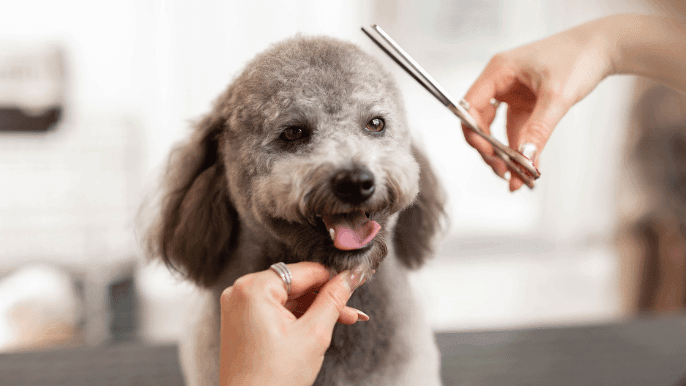
Groom your dog's face incorrectly and you risk eye injury, lasting fear, infected skin folds, and a dog who fights every future grooming session, yet most pet parents either skip facial grooming entirely or rush through it without understanding the safety protocols that protect sensitive structures like eyes, ears, nose, and the delicate skin around the muzzle. The face is the highest-risk grooming zone because it combines your dog's natural instinct to protect this vulnerable area with the proximity of structures that can be permanently damaged by careless technique, and knowing how to groom your dog's face properly transforms this intimidating task into a manageable routine that keeps your dog comfortable, healthy, and trusting of the grooming process.
Why Learning to Groom Your Dog's Face Matters
Many pet parents avoid facial grooming completely, which leads to tear stains that permanently discolour facial hair, matted beards that harbour bacteria and cause skin infections, eye-obstructing hair that impairs vision and causes chronic irritation, and hygiene problems that affect your dog's comfort and health between professional grooming appointments.
When you groom your dog's face regularly and safely, you prevent these problems before they develop, catch early signs of eye or ear issues, maintain your dog's comfort and vision, and reduce the amount of corrective work needed at professional appointments.
Understanding Facial Grooming Needs by Coat Type
Different coat types have dramatically different requirements when you groom your dog's face, and understanding what your dog needs prevents both neglect and unnecessary intervention.
| Coat Type | Facial Hair | Daily Needs | Weekly Needs | Key Concerns |
|---|---|---|---|---|
| Curly Wavy Coat | Grows continuously; requires trimming | Eye check, beard wipe after meals | Full facial brush, trim check | Eye visibility, beard matting, tear stains |
| Drop Coat | Very long; may need topknots | Eye cleaning, topknot check, beard wipe | Full facial brush, topknot rebanding | Topknot tension, eye irritation, beard tangles |
| Wire Coat | Beard and eyebrows; distinctive texture | Beard wipe after meals | Beard combing, eyebrow check | Beard cleanliness, food debris, eyebrow shaping |
| Smooth Single Coat | Minimal facial hair | Eye wipe if needed | General face check | Wrinkle cleaning if applicable (Boxers) |
| Short Double Coat | Minimal facial hair | Eye wipe, wrinkle clean for some breeds | General face check | Wrinkles for Pugs and Bulldogs |
| Medium Plush Double Coat | Moderate ruff around face | Eye check | Ruff brushing | Debris in facial ruff |
| Feathered Long Double Coat | Moderate ear and facial feathering | Eye check | Ear feathering brush | Mats behind ears |
Not sure which coat type your dog has? Use the FurHQ Coat Identifier to find out before establishing your facial grooming routine.
Which Dogs Need the Most Active Facial Grooming?
Daily attention required: Curly Wavy Coats (Poodles, Doodles, Bichons), Drop Coats (Yorkies, Maltese, Shih Tzus, Lhasa Apsos), Wire Coats (Schnauzers, many Terriers), and brachycephalic breeds with wrinkles (Bulldogs, Pugs, Shar Peis). These dogs need you to groom your dog's face as part of your daily routine.
Weekly attention required: Feathered Long Double Coats (Goldens, Collies, Setters) and Medium Plush Double Coats with facial ruffs (Chows, Keeshonds).
As needed: Smooth Single Coats (Boxers, Dalmatians) and Short Double Coats without wrinkles (Labs, Rottweilers).
Essential Safety Rules Before You Groom Your Dog's Face
The risks are higher than body grooming due to the proximity of eyes, ears, and other sensitive structures. Following safety protocols protects both you and your dog.
- Choose the right shear for the task. Near the eyes, thinning shears are the safest option for home groomers. Curved shears are appropriate only if you are confident in your handling and your dog's temperament allows it. Never use straight shears near eyes.
- Always cut away from the eye. Position scissors so any slip moves the blade away from, never toward, the eye.
- Secure your dog's head with gentle but firm control of the muzzle or chin before bringing any tools near the face.
- Work in excellent lighting. Facial grooming requires seeing fine details, and inadequate lighting increases injury risk.
- Stop immediately if your dog moves. Movement plus scissors or clippers equals injury. Freeze and reposition before continuing.
- Watch for the tongue. Dogs lick when stressed or nervous, and tongues get nicked during beard, muzzle, or chin trimming. If your dog starts licking, stop and gently hold the muzzle closed until the licking stops. Never trim around the mouth while the tongue is active.
- Never rush. Speed is the enemy of safety when you groom your dog's face around sensitive structures.
- Know when to stop entirely. If your dog shows stress signals, end the session rather than forcing through resistance that creates lasting fear.
High-Risk Facial Areas
| Area | Risk Level | Primary Dangers | Essential Precautions |
|---|---|---|---|
| Eyes | Critical | Permanent vision damage, corneal scratches | Thinning shears safest; curved shears only if confident; always cut away from eye |
| Ear tips | High | Bleeding (ear tips bleed profusely), pain, cuts | Feel for ear leather before cutting; use thinning shears for blending |
| Nose | Moderate | Sensitivity, startling the dog | Avoid pressure; never obstruct nostrils |
| Lips and mouth | Moderate | Cuts, catching lip skin | Hold muzzle firmly; work slowly; watch for tongue |
| Tongue | High | Nicks and cuts from licking during trimming | Keep mouth closed; pause if dog starts licking; never trim with an active tongue |
| Whiskers | Low | Sensory disorientation | Avoid cutting unless specifically requested; whiskers serve a sensory function |
If your dog will not tolerate facial grooming despite weeks of patient desensitisation, seek professional grooming help rather than forcing the issue. Professional groomers have handling techniques and experience that allow them to groom your dog's face safely on difficult dogs without creating negative associations.
Where Facial Grooming Fits in the FurHQ 5-Step
The FurHQ Protocol: A 5-Step Grooming Method designed to take the guesswork out of every groom structures facial grooming across multiple phases.
Audit: Check the face for tear buildup, eye visibility, beard condition, wrinkle health, and ear area tangles. This assessment tells you what needs attention during the session and is where you determine whether it is safe to groom your dog's face that day.
Prep: Remove beard tangles, clean wrinkles, wipe eyes, and trim any hair obstructing vision. Completing this work before the bath ensures shampoo can reach the skin around the muzzle and face. Use Pawfect Finish Coat Spray for slip when combing through beards.
Bath: Wash the face last, working carefully around the eyes and ears. Avoid getting water directly into the ear canal. For bearded breeds, work shampoo through the beard in downward strokes. Use the correct coat-specific shampoo: Texture-Tastic Shampoo for Curly Wavy and Wire Coats, Shimmer and Shine Shampoo for Drop Coats, and Deep Clean Delight Shampoo for all others. Follow with Coat-Quench Conditioner (for Wire Coats, apply selectively to beard furnishings only, never to the jacket or guard hairs).
Dry: Dry the face and beard thoroughly. For Wire Coats and Curly Wavy Coats, comb through the beard while drying to prevent tangles from setting. For wrinkled breeds, ensure every fold is completely dry.
Finish: Final face check. Confirm eyes are clear, beard is tangle-free, wrinkles are clean and dry, and any trimming looks balanced. Compare to what you found during the Audit. Apply Pawfect Finish Coat Spray lightly to beards for a polished finish.
Learn the Method. Follow the Protocol. Complete the Mission.
Eye Area Care: The Most Critical Facial Zone
When you groom your dog's face, the eyes require the most careful attention and should be addressed before any other facial grooming task.
Daily Eye Cleaning Technique
All dogs benefit from daily eye area cleaning regardless of coat type. What you need: soft, lint-free cloth or cotton rounds (not cotton balls, which leave fibres), warm water or veterinarian-approved eye cleaning solution, and a separate cloth or round for each eye.
Dampen the cloth with warm water or eye cleaning solution. Support your dog's head gently with one hand. Starting at the inner corner of one eye, wipe outward following the natural direction of the fur. Use gentle pressure and never press on the eyeball. Remove all discharge, debris, and crusty buildup. Use a fresh section of cloth or a new cotton round for the second eye to prevent cross-contamination. Dry the area gently with a clean, dry cloth if needed.
Managing Tear Stains
Tear stains appear as reddish-brown discolouration on the facial hair below the eyes, most visible on light-coloured coats. Prevent them through daily eye area cleaning to stop oxidation of tears on fur, keeping hair trimmed away from eye corners where tears collect, addressing underlying causes with your veterinarian (allergies, blocked tear ducts, eye irritation), and considering water quality and food factors that may increase tear production.
Trimming Hair Around Eyes
When you groom your dog's face on Curly Wavy, Drop, and some Wire Coats, hair grows into the eye area and must be trimmed to maintain vision and prevent irritation.
Tools required: thinning shears (safest for eye area work), FurHQ Detail Comb for separating hair, and good lighting. Curved shears may be used by confident groomers on calm dogs.
Before picking up any shears, assess two things. First, rate your dog's temperament: does your dog hold still during facial handling? A dog that flinches, pulls away, or mouths at tools is not ready for shear work near the eyes. Build tolerance first. Second, rate your own energy: if you are nervous, your dog will mirror your tension. If you feel anxious about working near the eyes, use thinning shears or leave this task to a professional.
Safe technique using thinning shears (recommended for home groomers): Secure your dog's head by placing your hand under the chin. Use the FurHQ Detail Comb to lift hair away from the eye. Position the thinning shears parallel to the face, never pointing toward the eye. Close once through the lifted hair. Re-comb and assess. Repeat, taking small amounts at a time. Always work in a direction that moves the shears away from the eye. Stop immediately if your dog moves.
Safe technique using curved shears (for experienced handlers with calm dogs only): Secure the head under the chin. Use the FurHQ Detail Comb to lift hair away from the eye. Position the curved shears with the curve following the natural contour of the brow, always angled away from the eye. Cut small amounts at a time. Check your work by viewing from your dog's eye level.
Beard and Muzzle Care
When you groom your dog's face on breeds with beards (Wire Coats, Curly Wavy Coats, some Drop Coats), the muzzle requires regular maintenance to prevent matting , odour, and skin problems.
Daily Beard Maintenance
After meals: Use a dry cloth or paper towel to wipe food debris from the beard. For stubborn food, dampen the cloth slightly with plain water. Gently squeeze excess moisture from the beard and allow to air dry or pat dry.
After drinking: Beards absorb significant water and can stay damp for hours. Wipe and gently squeeze out excess water. Chronic dampness leads to skin irritation and yeast growth. Consider a raised water bowl to reduce beard soaking.
Weekly Beard Grooming
Lightly mist the beard with Pawfect Finish Coat Spray. Using the FurHQ Detail Comb, work through the beard starting at the ends and moving toward the skin. Check for developing mats, especially at the chin and where the beard meets the neck. Remove any trapped debris. Tidy stray hairs with thinning shears for a natural finish or curved shears for more defined shaping. Watch for the tongue throughout beard work, as dogs frequently lick during muzzle and chin grooming and a darting tongue can be nicked by open shears. If your dog starts licking, pause and gently hold the muzzle closed until the licking stops.
Preventing Beard Problems
| Problem | Cause | Prevention |
|---|---|---|
| Food matting | Debris drying in beard hair | Wipe immediately after every meal |
| Red or brown staining | Chronic moisture, saliva oxidation | Keep beard dry; address underlying causes |
| Tangles and mats | Insufficient combing | Daily attention to friction areas; weekly full combing with Pawfect Finish Coat Spray |
| Persistent odour | Trapped moisture, bacteria, yeast | Thorough drying after eating and drinking; ensure beard dries completely |
| Skin irritation under beard | Chronic dampness, debris against skin | Daily cleaning; ensure beard dries completely |
Wrinkle and Fold Cleaning for Brachycephalic Breeds
Wrinkle care is a critical component when you groom your dog's face on breeds with facial folds including Bulldogs, Pugs, French Bulldogs, Shar Peis, and similar breeds. Wrinkles trap moisture, debris, and bacteria, making daily cleaning essential to prevent infection.
Facial folds create warm, dark, moist environments where bacteria and yeast thrive. Without daily cleaning, bacteria multiply rapidly, yeast infections develop causing odour and irritation, skin becomes inflamed and painful, chronic infections can lead to permanent skin damage, and your dog experiences ongoing discomfort.
Daily Wrinkle Cleaning Technique
Gently lift each facial fold to expose the skin inside. Wipe inside the fold, removing all debris, discharge, and moisture. Pay attention to the deepest part of each wrinkle where problems start. Use a fresh section of cloth for each fold to prevent spreading bacteria. Dry each fold thoroughly, as this step is critical. Apply any veterinarian-recommended products. Check for signs of problems during each cleaning.
Warning Signs Requiring Veterinary Attention
| Sign | What It Indicates | Action |
|---|---|---|
| Redness inside folds | Early irritation or infection | Monitor closely; see vet if worsening |
| Odour from wrinkles | Yeast or bacterial overgrowth | Schedule veterinary appointment |
| Discharge (especially coloured) | Active infection | Veterinary attention needed |
| Hair loss within folds | Chronic moisture damage, infection | Veterinary evaluation required |
| Dog pawing at face | Discomfort, itching | Check wrinkles; likely needs treatment |
| Swelling around folds | Infection spreading | Urgent veterinary care |
Ear Area Care as Part of Facial Grooming
When you groom your dog's face, ears are part of the package and require attention to the external ear and surrounding hair.
Weekly tasks: Check ear flaps for debris, scratches, or irritation. Examine the entrance to the ear canal for excessive wax, odour, or discharge. Brush feathered ears to prevent matting. Check behind and under ears for developing mats.
What to look for: Redness or swelling, unusual odour, excessive head shaking or ear scratching, dark or coloured discharge, and sensitivity when ears are touched.
Trimming around ears: Feel for the ear leather before making any cuts. Use thinning shears rather than straight scissors for natural blending. Work in good lighting. Hold the ear flap gently but securely. Never insert scissors into the ear canal.
Building Your Dog's Tolerance for Facial Handling
Dogs naturally protect their faces. Building tolerance through gradual, positive desensitisation creates dogs who accept facial grooming calmly throughout their lives, making it significantly easier to groom your dog's face at home.
Week one (touch only): During calm moments, briefly touch your dog's face, muzzle, ears, and around the eyes. Use high-value treats immediately after each touch. Keep sessions under two minutes. End on a positive note before any resistance.
Week two (extended handling): Hold the muzzle gently for increasing durations, starting with two seconds and building to ten. Lift ear flaps and hold briefly. Touch around the eyes with your finger. Continue treating generously.
Week three (tool introduction): Let your dog see and sniff grooming tools. Touch closed scissors to the face without cutting. Rest a comb against the beard without pulling through. Run a cloth over the face. Treat and praise throughout.
Week four (gradual grooming): Begin very brief actual grooming tasks. Wipe one eye and treat immediately. Comb through the beard once and treat immediately. One small task per session initially. Build duration slowly over subsequent weeks.
For dogs with existing facial grooming fear, work when your dog is already calm and slightly tired. Use the highest-value treats reserved exclusively for facial grooming practice. Stop before stress escalates. Multiple short positive sessions are far more effective than one long struggle. For severe cases, consult a professional.
Common Facial Grooming Mistakes to Avoid
Using the wrong shears near eyes. Straight shears do not follow facial contours and increase the risk of eye injury. Near the eyes, use thinning shears (safest) or curved shears (only if confident and your dog is calm).
Cutting toward the eye. If scissors slip while cutting toward the eye, the blade moves toward the eye. Always position scissors so any slip moves the blade away.
Skipping daily eye care. Tear stain buildup, debris accumulation, and missed early signs of eye problems result from inconsistent cleaning. Make daily eye wiping part of your routine even for low-maintenance coat types.
Leaving beards damp. Chronic moisture creates ideal conditions for yeast and bacteria. Dry beards thoroughly after meals, drinking, and cleaning. Never leave a beard wet.
Neglecting wrinkle folds. Brachycephalic breeds develop painful skin infections when wrinkles are not cleaned daily. Clean and dry every facial fold every single day.
Forcing resistant dogs. Forcing facial grooming creates lasting fear and resistance that worsens with each negative experience. Use gradual desensitisation. Seek professional help for dogs with severe resistance rather than forcing through and creating lasting trauma.
When to Seek Professional Help
See a professional groomer when: Your dog shows severe fear or aggression during facial handling, eyes need careful trimming you are not confident performing, beard matting is extensive or close to the skin, desensitisation has not succeeded after several weeks, or breed-specific facial styling is needed (Schnauzer eyebrows, Poodle topknots). Professional groomers have the experience to groom your dog's face safely even on difficult dogs.
See your veterinarian when: Wrinkle infections are present, eye discharge is coloured, thick, or persistent, ear problems accompany facial issues, skin problems have developed under the beard or in wrinkles, your dog's eyes appear irritated, red, or painful, or any lumps, bumps, or growths are found during facial grooming.
Related Reading
The Bottom Line
Learning to groom your dog's face safely requires choosing the right shears for each task (thinning shears near eyes for safety, curved shears only when confident), always cutting away from sensitive structures, securing your dog's head before working, ensuring excellent lighting, and stopping immediately when your dog shows stress rather than forcing through resistance.
The FurHQ 5-Step structures facial grooming within the Audit (checking face condition), Prep (addressing tangles and cleaning before the bath), Bath (careful face washing with the correct coat-specific shampoo and Coat-Quench Conditioner), Dry (thorough drying especially for beards and wrinkles), and Finish (final face check confirming results).
Daily eye area cleaning prevents tear stain buildup, while beard maintenance focuses on removing food debris after meals, thorough drying after drinking, and weekly combing with Pawfect Finish Coat Spray. Brachycephalic breeds with facial wrinkles require daily cleaning and complete drying of every fold.
Building tolerance through four weeks of gradual desensitisation creates dogs who allow you to groom your dog's face calmly and cooperatively throughout their lives. When facial grooming exceeds your comfort level, professional help protects both your dog and your relationship with them.
Every FurHQ Starter Grooming Kit includes the tools needed for safe facial grooming within the 5-Step framework.
Learn the Method. Follow the Protocol. Complete the Mission.
Variation Clarity Statement
Every coat is unique. Even within the same breed, individual dogs can vary in texture, density, and grooming needs. If you are unsure about your dog's coat type, use the FurHQ Coat Identifier to find the right match.
FAQs
What shears should I use to groom your dog's face?
The FurHQ shear kit includes thinning shears, straight shears, and curved shears. Near the eyes, thinning shears are the safest choice for home groomers because they remove hair gradually and are more forgiving if your angle is slightly off. Curved shears can be used near the eyes by confident handlers with calm dogs because the curve follows facial contours naturally. Straight shears are best kept for beard and body work rather than the eye area. Before picking up any shears near your dog's face, assess your dog's temperament (will they hold still?) and your own energy (are you calm and confident?). If either answer is no, leave eye trimming to a professional.
How often do I need to groom your dog's face?
It depends on coat type. Curly Wavy, Drop, and Wire Coats need daily facial attention (eye checks, beard wipes after meals). Brachycephalic breeds with wrinkles need daily fold cleaning. Medium Plush and Feathered Long Double Coats need weekly face checks. Smooth Single and Short Double Coats need attention as needed, primarily eye wipes and wrinkle care for applicable breeds.
Why does my dog resist facial grooming?
Dogs naturally protect their faces because the face contains their most vulnerable sensory organs. Resistance is normal and does not mean your dog is "bad." It means the dog needs gradual desensitisation through the four-week protocol: starting with brief touches, progressing to extended handling, then tool introduction, and finally brief grooming tasks. Forcing through resistance creates lasting fear that makes future sessions harder.
How do I clean my dog's facial wrinkles?
Gently lift each fold to expose the skin inside. Wipe with a soft cloth or unscented baby wipe, removing all debris and moisture. Use a fresh section of cloth for each fold. Dry each fold thoroughly because trapped moisture causes bacterial and yeast infections. Do this daily for all brachycephalic breeds with wrinkles.
Where does facial grooming fit in the FurHQ 5-Step?
Facial grooming happens during the Audit (checking face condition), Prep (cleaning, detangling, trimming before the bath), Bath (careful face washing), Dry (thorough drying of beards and wrinkles), and Finish (final face check). The Audit identifies what needs attention. The Prep and Finish phases handle the most active facial grooming work.
How do I prevent beard matting?
Wipe the beard immediately after every meal and after drinking. Dry thoroughly every time because chronic dampness causes yeast growth and odour. Comb through weekly with the FurHQ Detail Comb, misting with Pawfect Finish Coat Spray before combing to add slip and reduce pulling. Address tangles as soon as they form rather than waiting for weekly combing.
Can I use clippers on my dog's face?
On Curly Wavy Coats, careful clipping with a #10 blade is appropriate for face work, always clipping away from the eyes. On most other coat types, scissors are safer for facial work. Never use clippers directly around the eyes. If you are not confident with facial clipping, leave this to a professional groomer.
How do I trim hair away from my dog's eyes?
Use thinning shears (safest) or curved shears (only if confident and your dog is calm). Secure your dog's head by placing your hand under the chin. Use the FurHQ Detail Comb to lift hair away from the eye. Position the shears parallel to the face (flat), never pointing toward the eye. With thinning shears, close once through the lifted hair, re-comb, and assess before repeating. Cut small amounts at a time. Always work in a direction that moves the shears away from the eye. Stop immediately if your dog moves. Do not use straight shears for eye area work.
What causes tear stains and how do I prevent them?
Tear stains are reddish-brown discolouration caused by porphyrin in tears oxidising on the fur. Prevention includes daily eye area cleaning, keeping hair trimmed away from eye corners, and addressing underlying causes (allergies, blocked tear ducts, irritation) with your veterinarian. Water quality and food factors can also influence tear production.
When should I take my dog to a professional instead of doing facial grooming at home?
Seek professional help when your dog shows severe fear or aggression during facial handling, when eyes need careful trimming you are not confident performing, when beard matting is extensive or close to the skin, when desensitisation has not succeeded after several weeks, or when breed-specific facial styling is needed. See your veterinarian when wrinkle infections, abnormal eye discharge, or skin problems are present.
What is the FurHQ 5-Step Grooming Method?
The FurHQ 5-Step Grooming Method is Audit, Prep, Bath, Dry, Finish. It provides structure for every grooming session so nothing gets missed. The Audit assesses the coat before you start. The Prep phase removes loose coat and addresses tangles. The Bath phase handles cleansing. The Dry phase removes moisture. The Finish phase completes the groom with a final assessment and comb check.